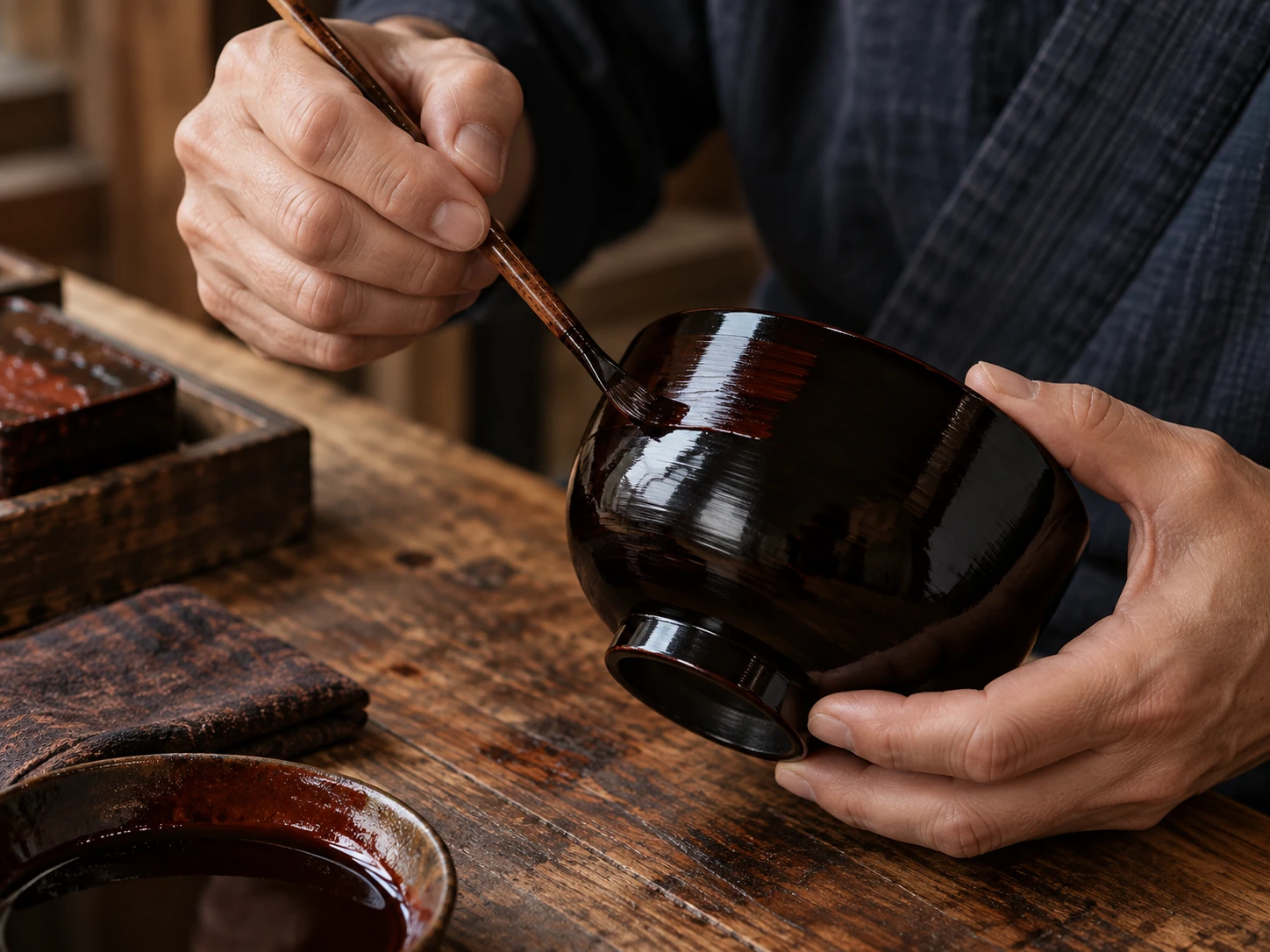
Six months for a bowl
A soup bowl involves about sixty to eighty interventions in our workshop, including more than twenty coating stages. With curing, production takes six months to a year. Workshops count stages differently; our concern is that no necessary layer is omitted.
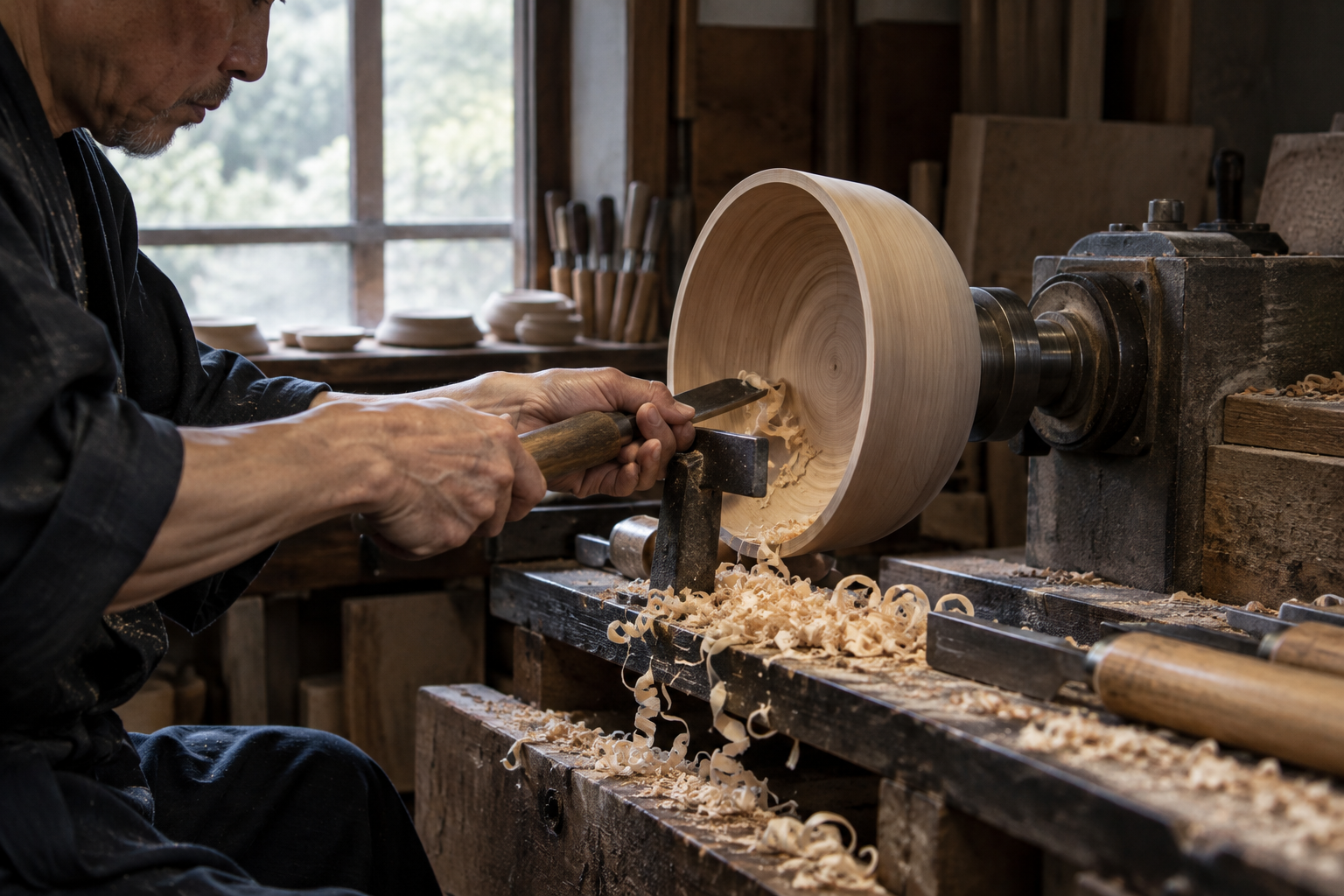
1. Turning the wood
Seasoned timber turns on a lathe while the artisan shapes it with a cutting tool. The bowl interior is thin, with more material at the rim and foot. Fine decorative lines on the exterior are cut in a continuous movement, a skill passed down among local woodturners.
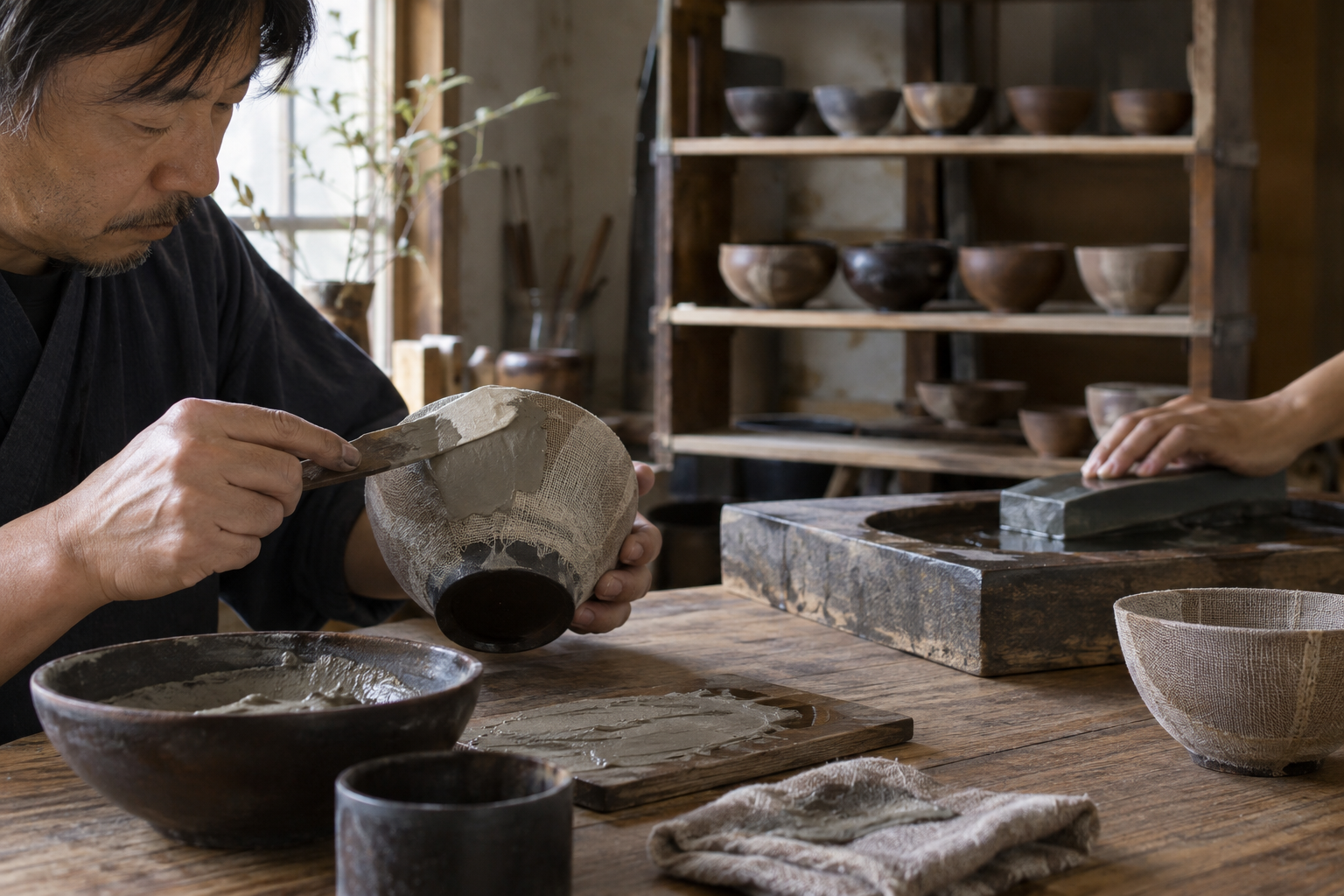
2. Building the foundation
Raw lacquer first seals the grain. Hemp cloth reinforces the rim and foot, followed by successively finer layers of lacquer and mineral foundation. Every layer is cured and levelled with a whetstone. Much of the work is hidden beneath the final surface.
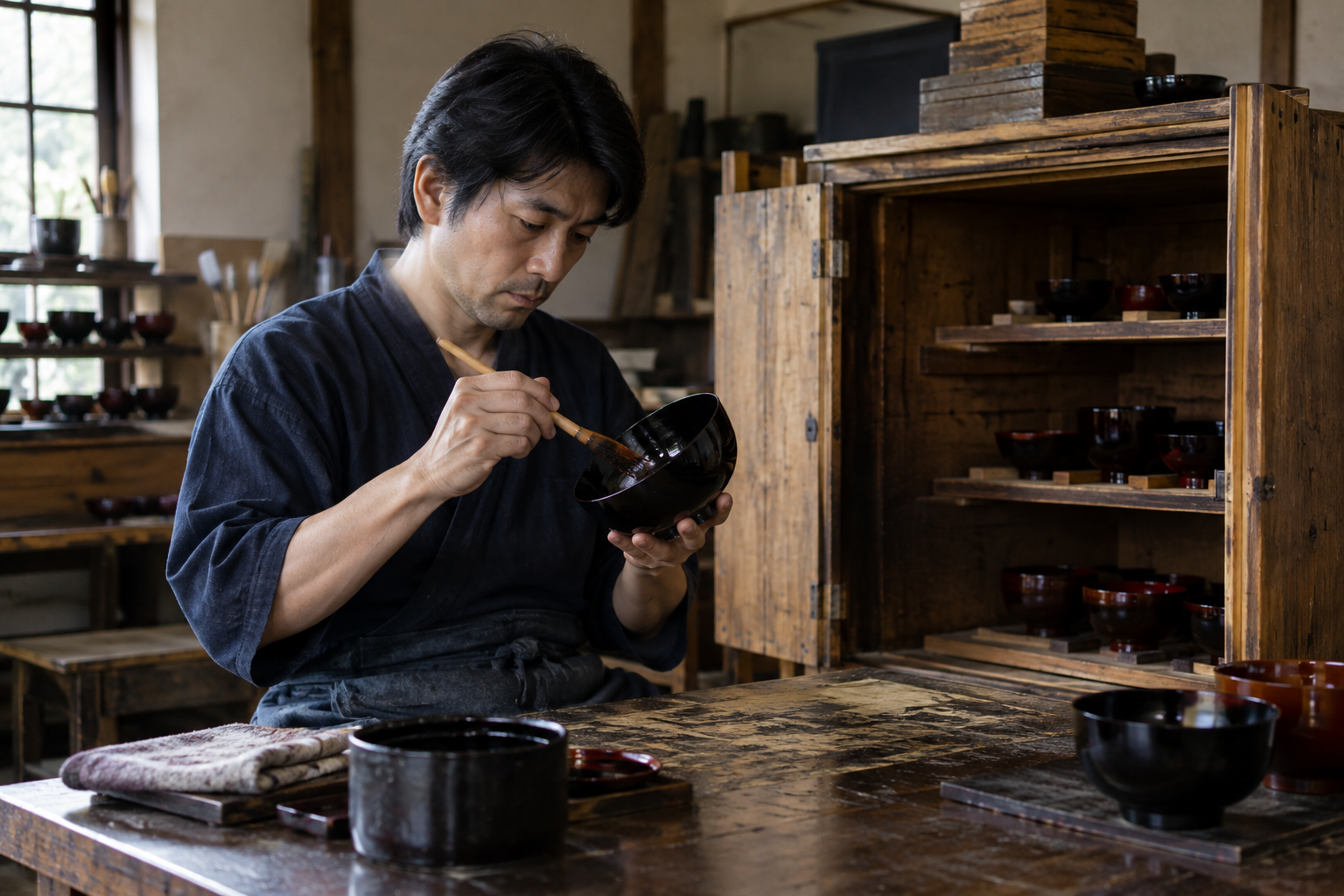
3. Coating and curing
Intermediate coats are applied, cured in a humidity-controlled cabinet, then polished before the next coat. Urushi cures through moisture, so conditions change with the season. Finishes include hana-nuri, retaining the brush-applied surface, and roiro, polished with charcoal to a mirror-like lustre.
4. Decoration
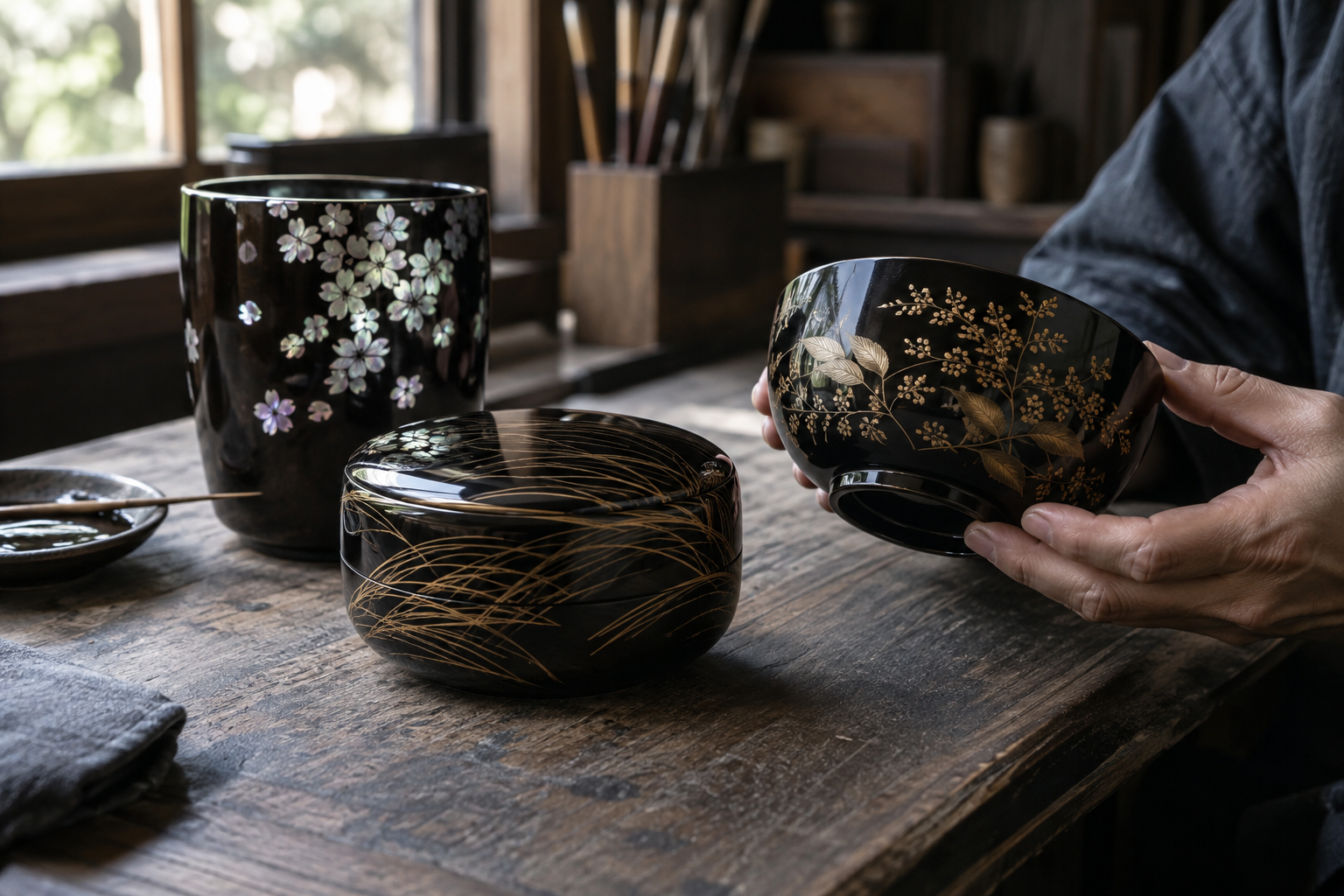
Maki-e fixes gold or silver powder to a lacquer drawing. Chinkin places gold in engraved lines, and raden uses thin pieces of shell. Designs are drawn in the workshop to suit the vessel and its intended setting, with attention to how the decoration will look beside food.
5. Inspection
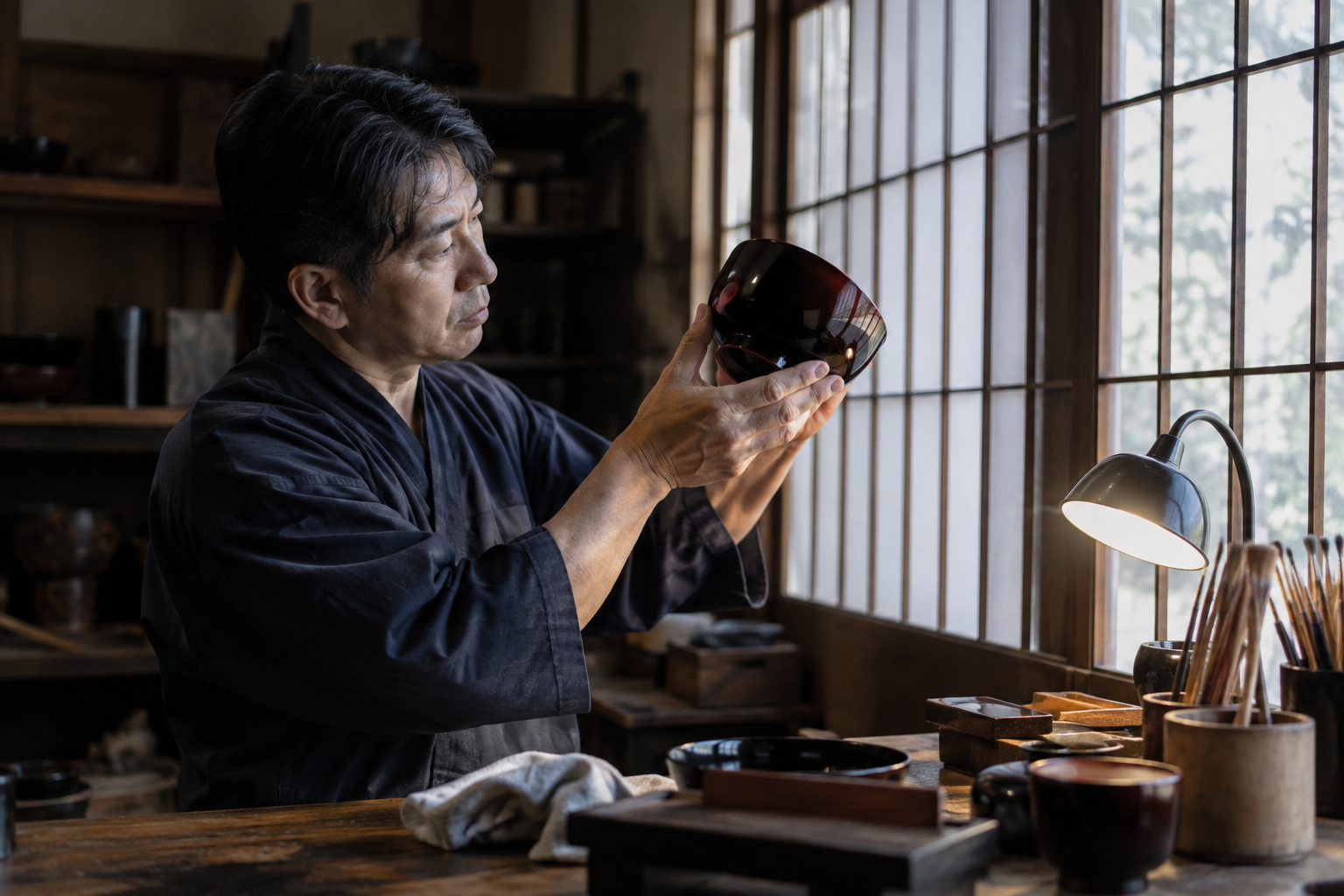
Every piece is examined in natural daylight and again under evening light. Different lighting reveals uneven coating or powder. A piece may return for refinishing at this final stage, even after months of work.