Seasoning timber
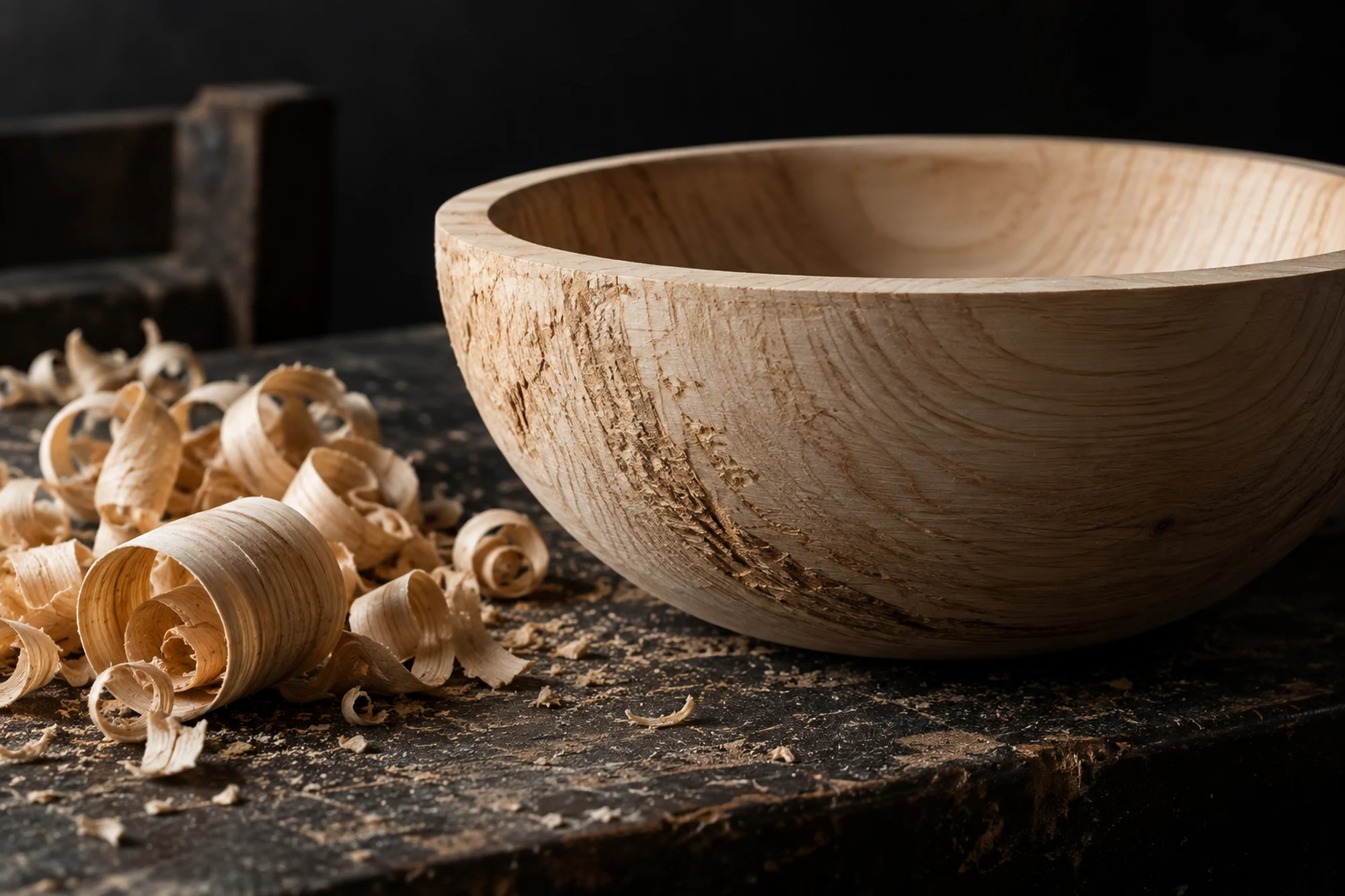
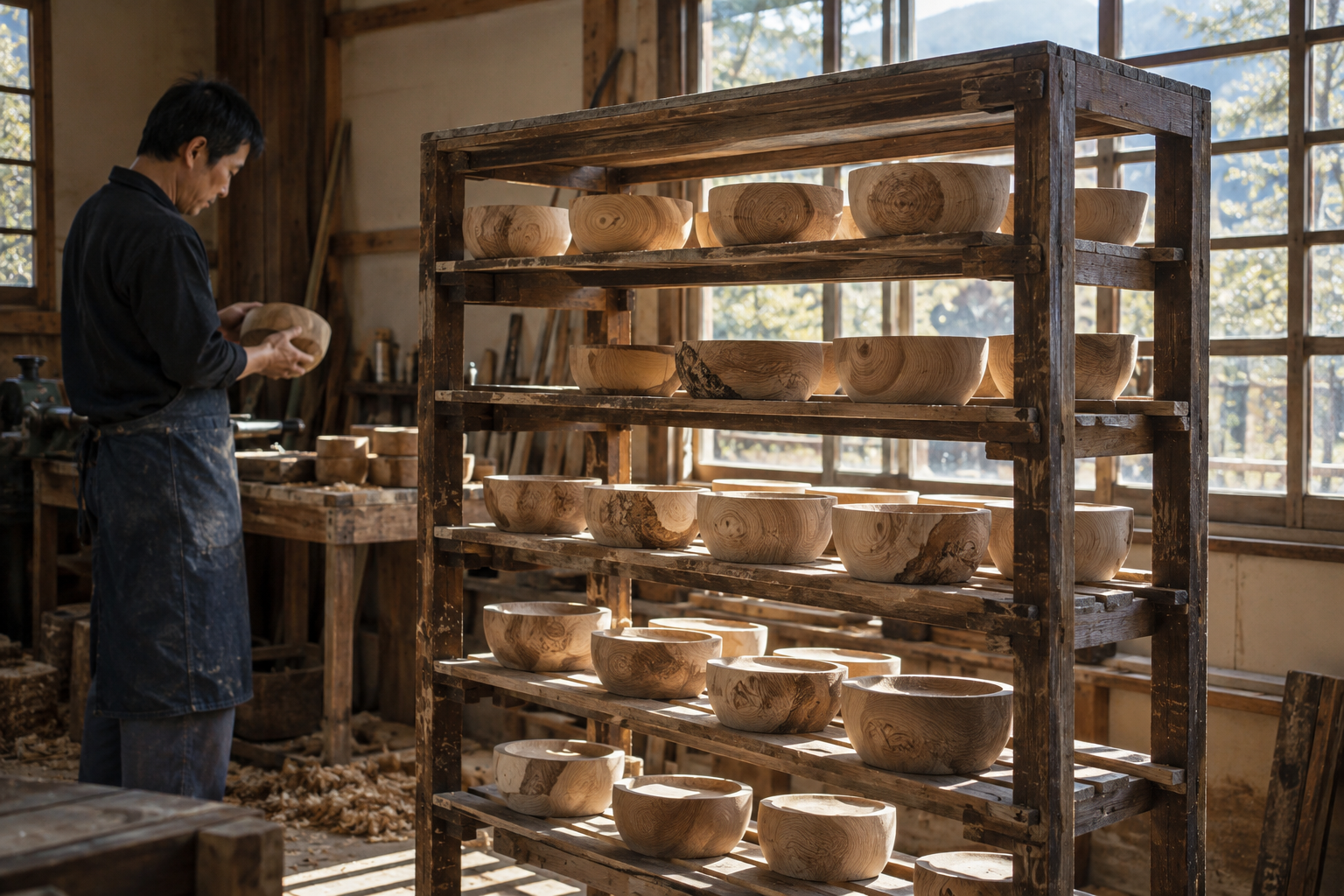
We use Japanese zelkova and horse chestnut for bowls, and magnolia and katsura for trays and boxes. Rough-turned wood rests on ventilated shelves for one to two years. Rushing this stage can cause distortion after completion; the seasoning time cannot simply be shortened.
Lacquer from tree sap
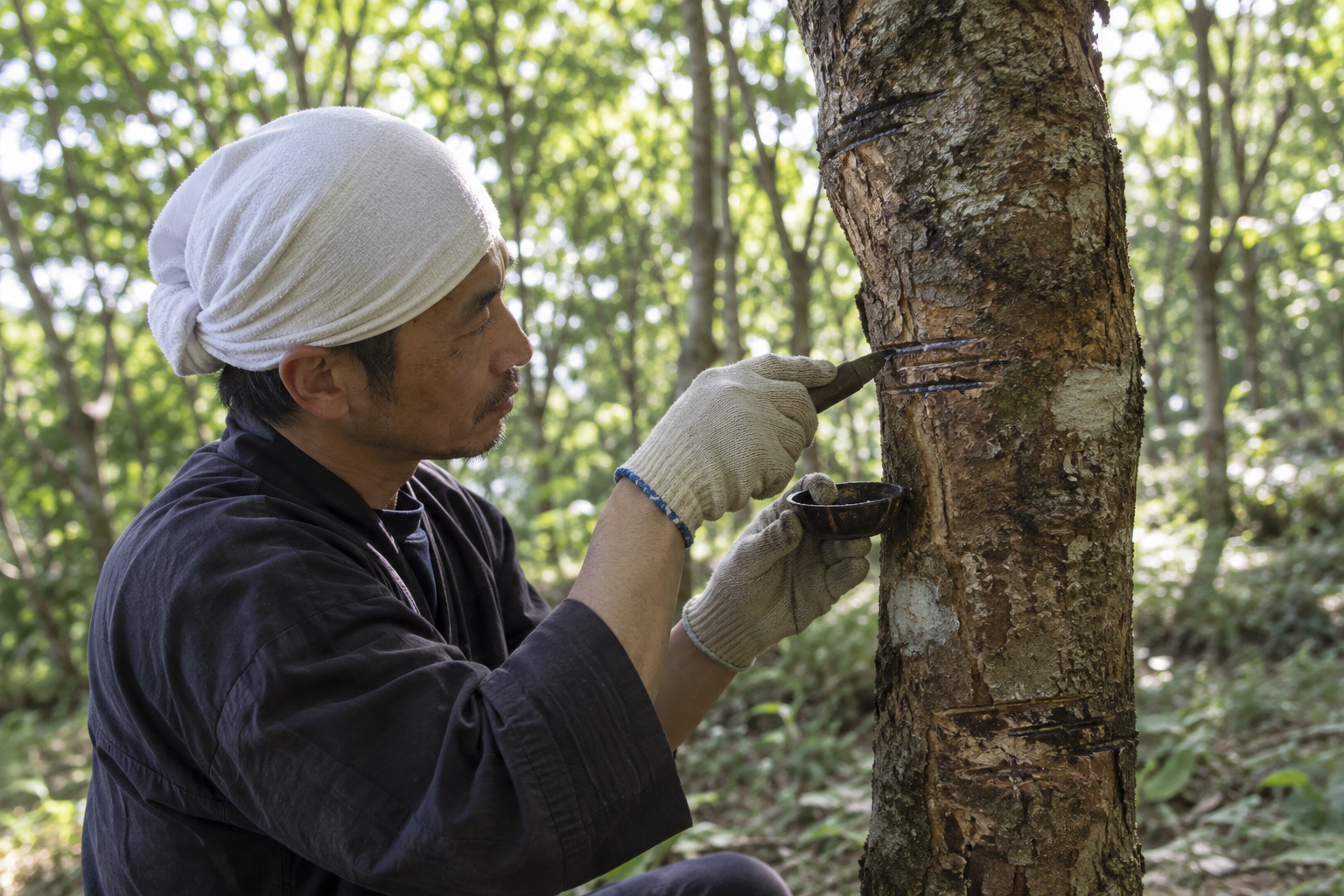
Urushi is sap collected from cuts in a lacquer tree. It is a scarce material. We use Japanese-grown lacquer for finishing coats, and lacquer refined in Japan for foundations and intermediate coats. We explain which materials are used in each piece when you enquire.
Cloth and a mineral foundation
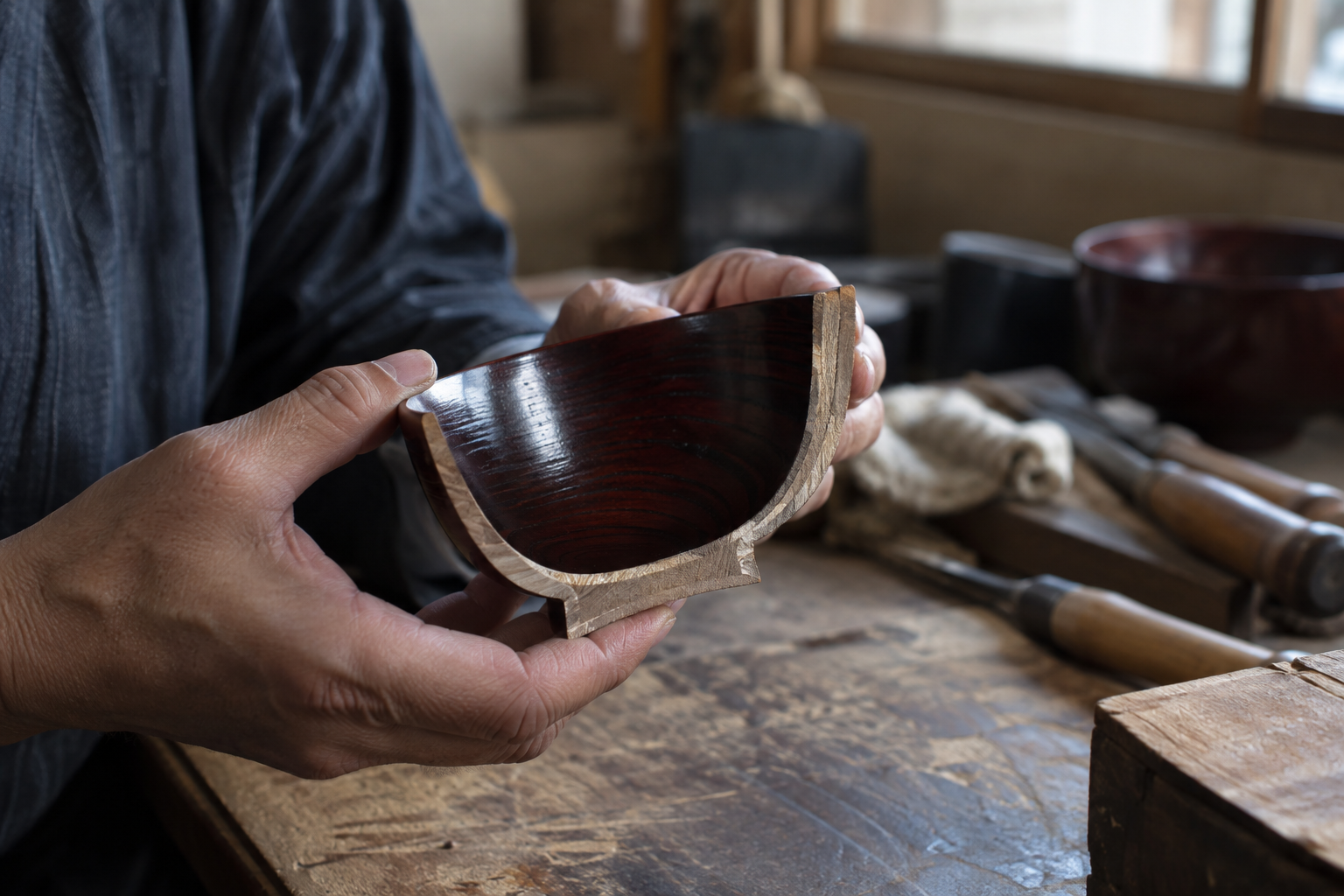
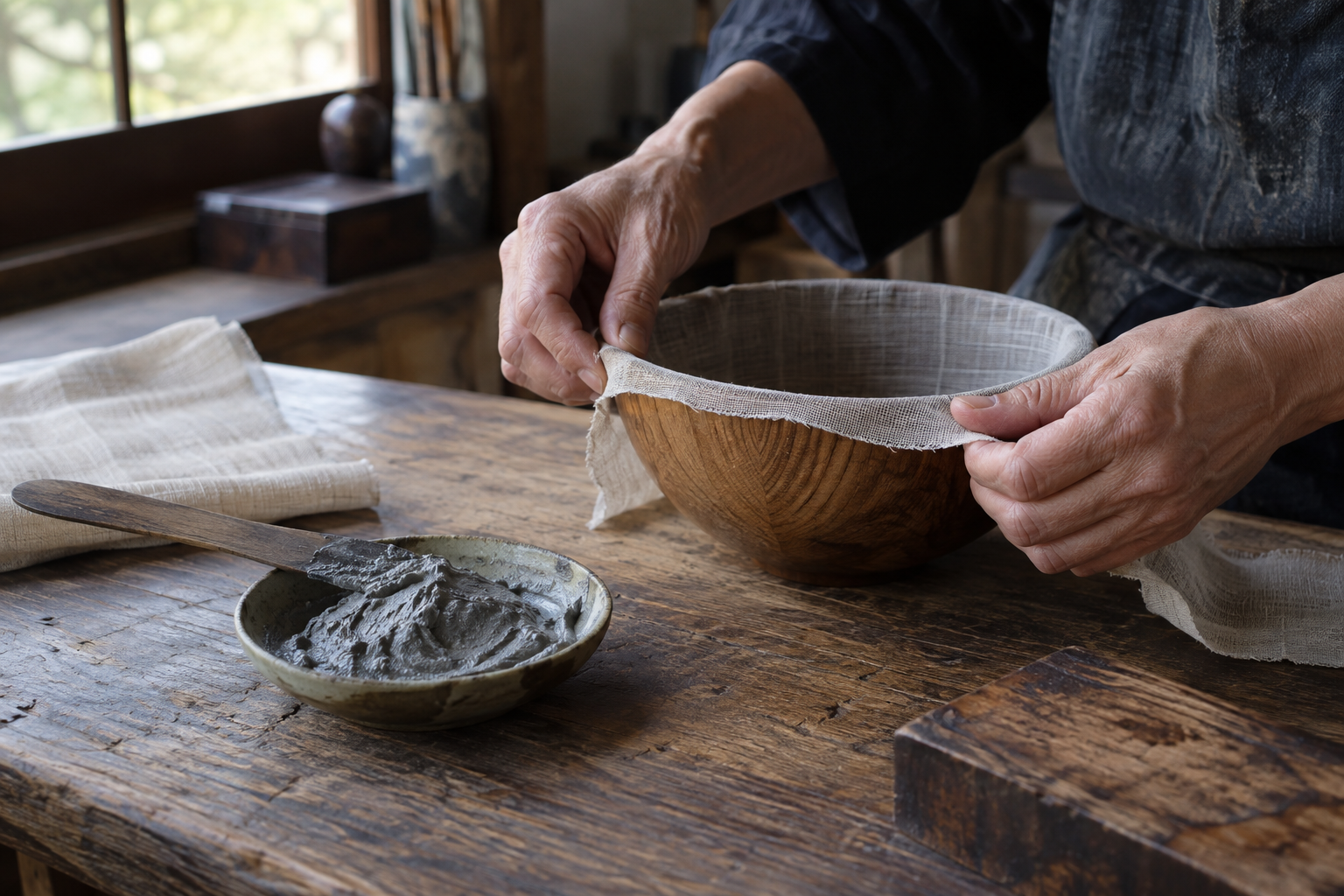
Vulnerable rims and feet are reinforced with hemp cloth and lacquer. Layers of fired diatomaceous earth, lacquer and rice paste form the foundation. These layers are hidden in the finished piece, but help determine whether it can be repaired after the surface wears.
A surface that changes
The lacquer film becomes more transparent over time. Black gains depth; vermilion or gold beneath it becomes clearer. Lustre appears first where hands touch the vessel. This is the natural evolution of lacquerware, rather than simply deterioration.
Materials and food contact
Our pieces use wood, lacquer, hemp, diatomaceous earth, rice paste, and gold, silver or shell for decoration, without synthetic resin or paint. Pieces are checked for curing before shipment. Uncured lacquer can cause a rash; please consult us if you have reacted to lacquer or related tree sap. Written origin and species information is available for individual pieces.