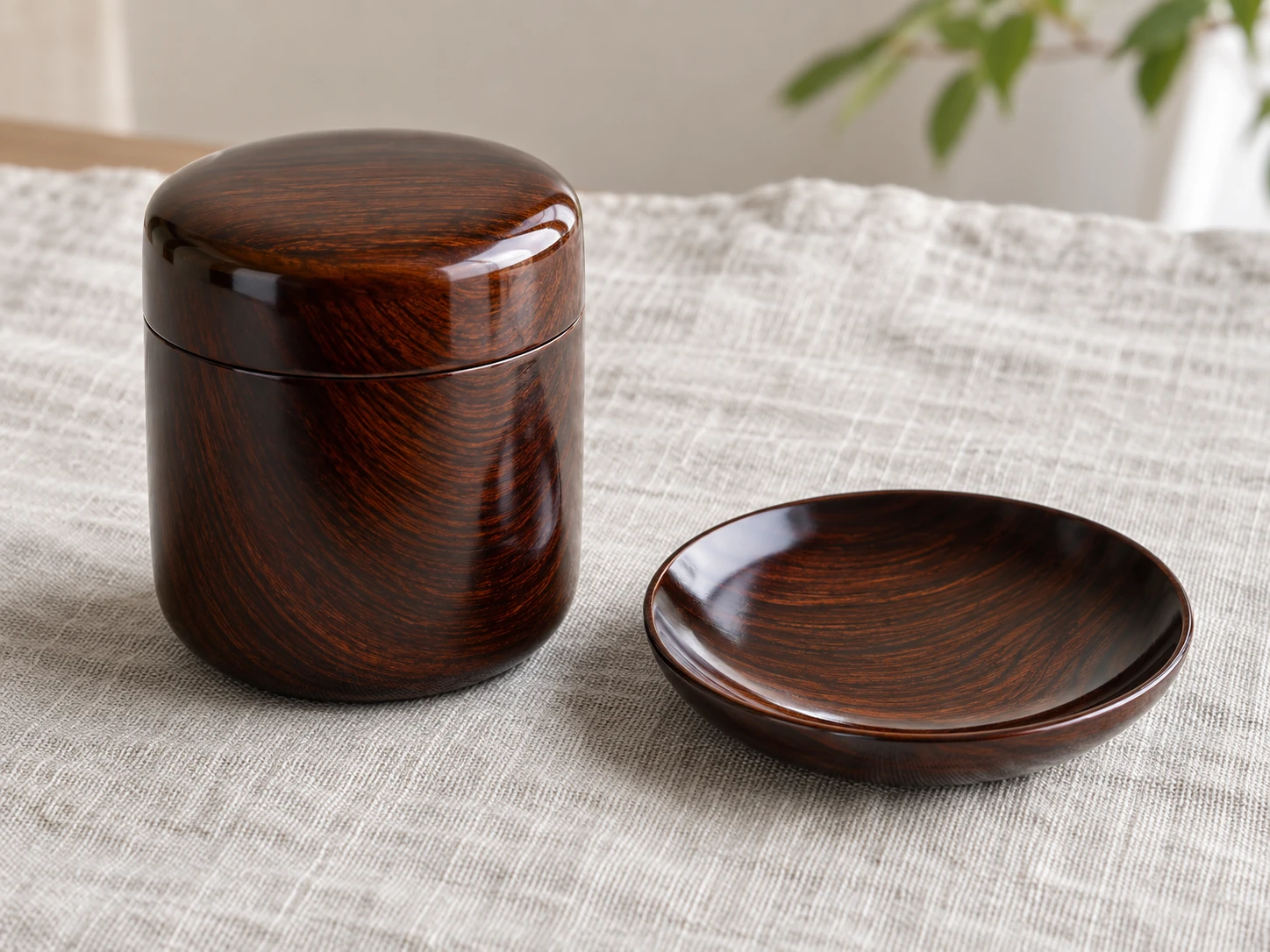

Three simple habits
Wash with lukewarm water and a soft sponge, dry promptly with a cloth, and avoid prolonged direct sunlight. Everyday use is welcome and helps develop the surface. Lacquerware does not need to remain stored away.
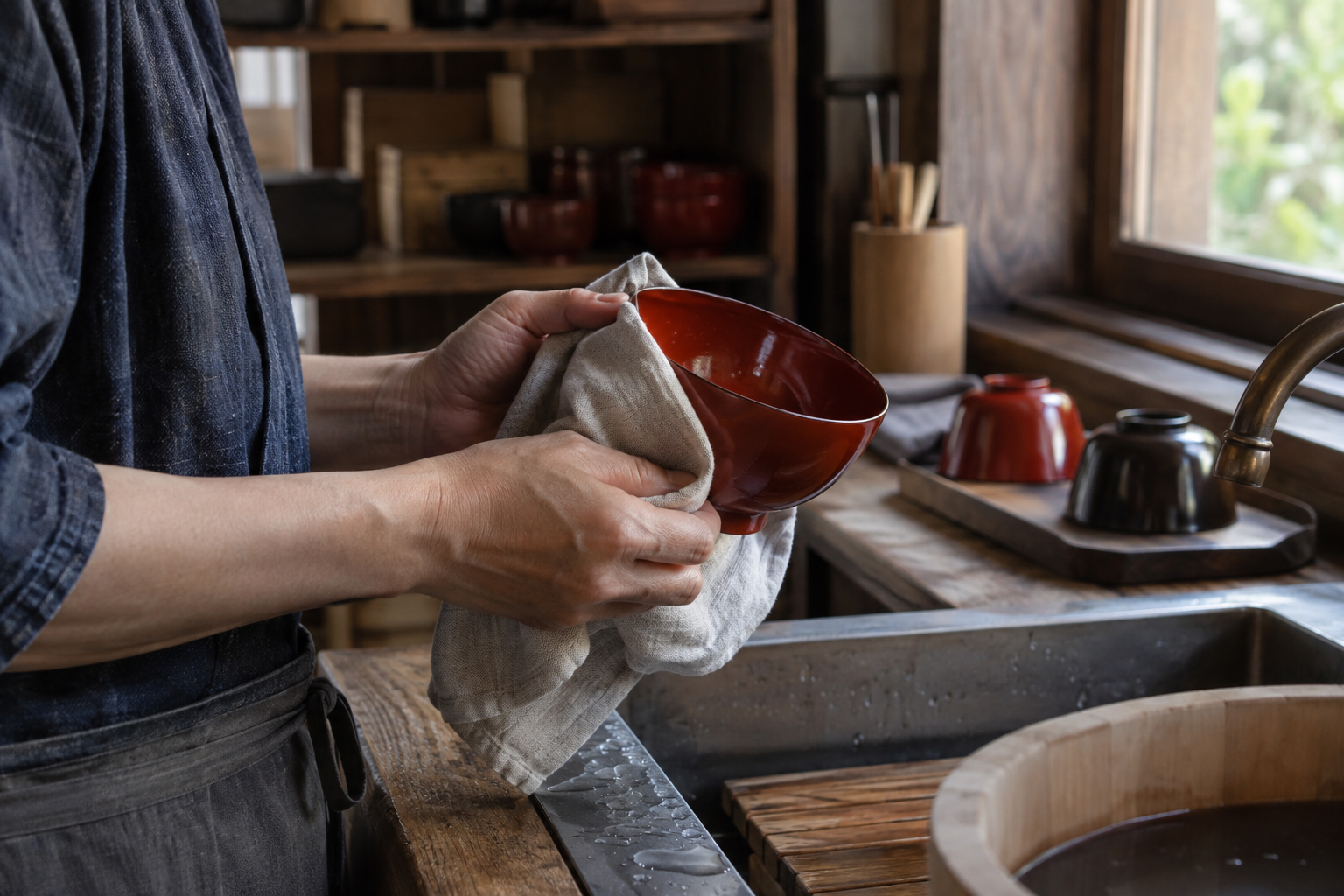
Washing
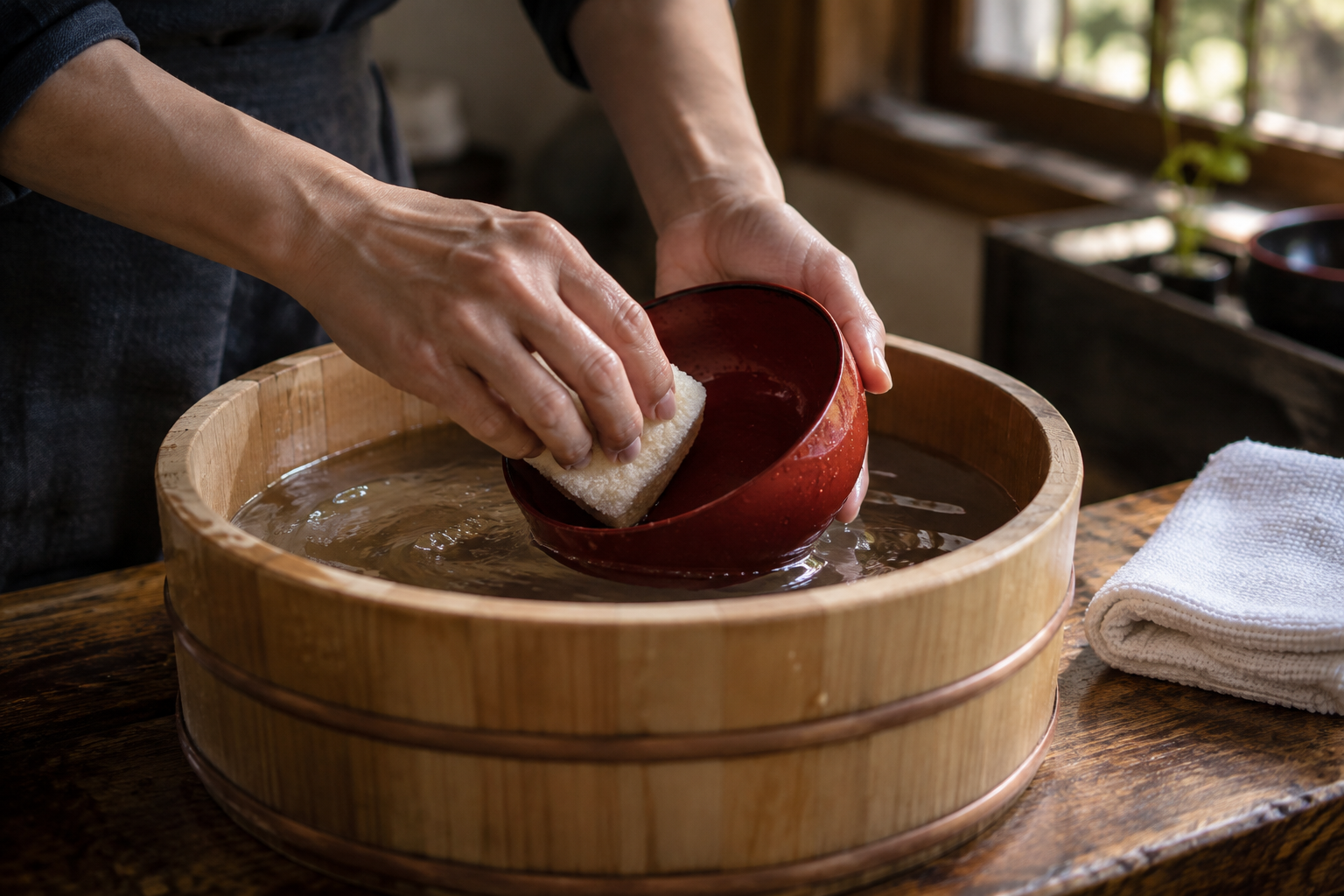
Use a little neutral dishwashing detergent in water at roughly 40°C or below, with your hand or a soft sponge. Avoid metal scourers, abrasive sponges and powdered cleansers. Drain and wipe with a dry cotton cloth. Do not leave pieces soaking for long periods.
What to avoid
Do not use a dishwasher, microwave, oven or direct heat. Hot food is suitable, but do not leave boiling water standing in the vessel. Brief storage in a refrigerator is possible. High heat and drying can damage the wood and lacquer layers.
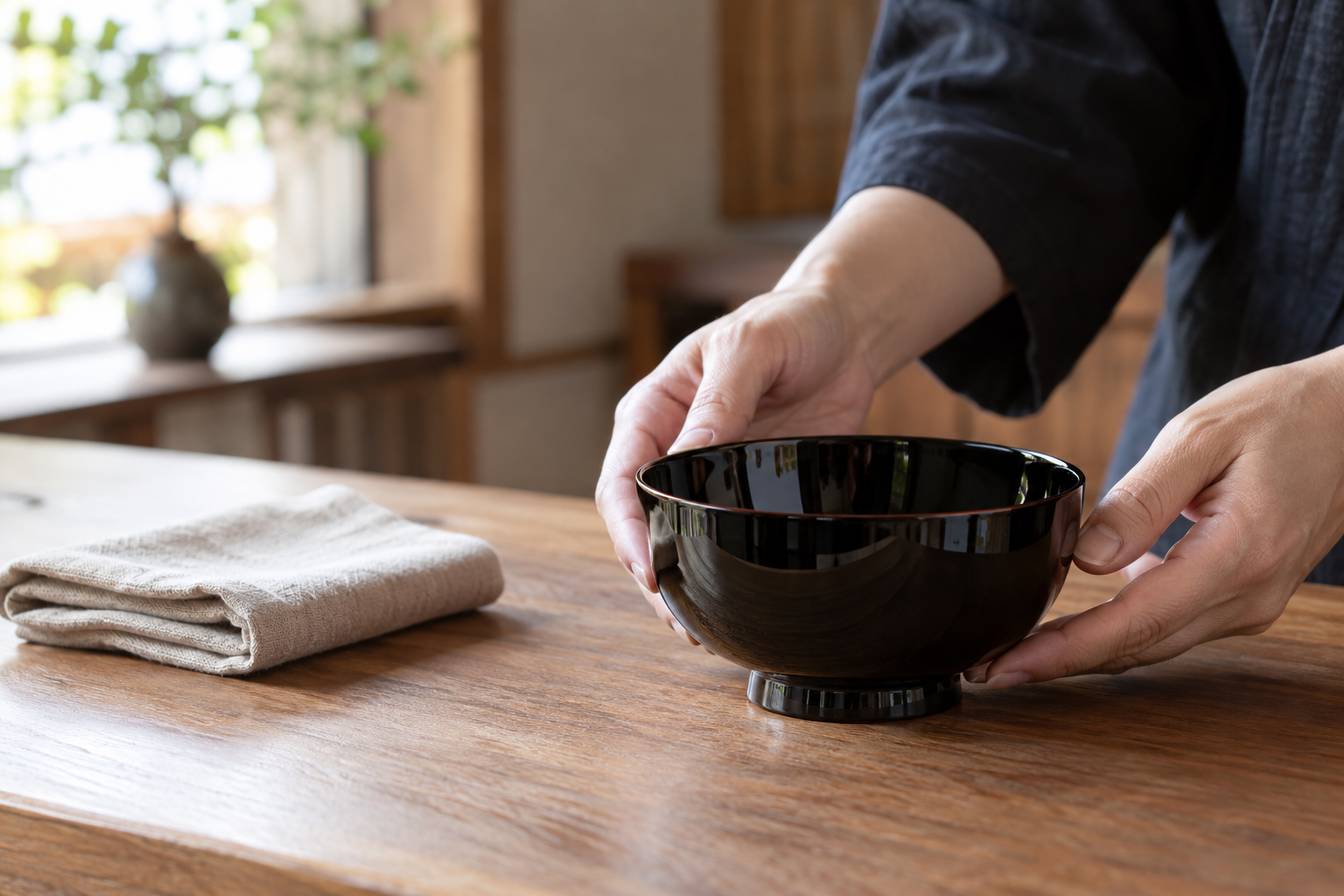
Storage and dry climates
Avoid very low humidity, direct sunlight, heaters and hot cars. For long storage, wrap in soft paper or cloth and place in a box in a stable environment, away from moth repellents. In dry climates, occasional washing and use are better than leaving a piece unused for months.
Changes over time
Lustre develops first where hands touch the surface. Black deepens and vermilion becomes clearer. Fine everyday marks often become less noticeable through use. Noticeable damage or thinning at the rim may call for repair; around ten years is a guide for a daily-use bowl.
Common questions
Allergy: fully cured lacquer rarely causes a reaction, but consult us about any previous lacquer or tree-sap reaction. Smell: a faint smell in a new piece fades; ventilate in shade and contact the workshop if concerned. Do not soak it to remove the smell. Air travel: carry-on or checked transport is possible; use cushioning and the wooden box to protect against handling and dry conditions.