1. Rice polishing
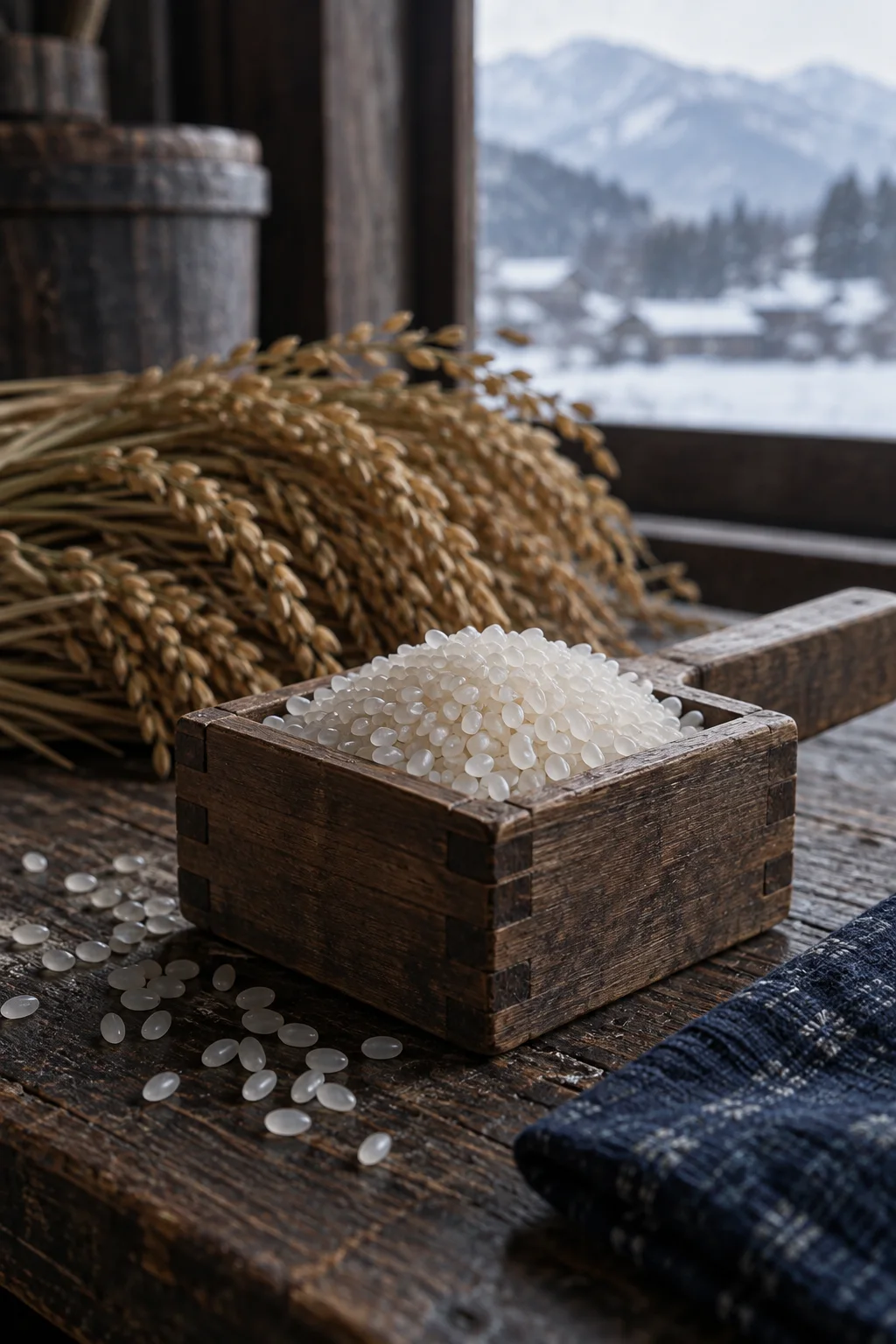
Brown rice from our partner fields is polished on our own machine. Depending on the sake, 40% to 65% of the grain remains. Reaching 40% for junmai daiginjo (sake made from highly polished rice without added alcohol) takes about 60 hours, with slow rotation to prevent the rice from heating. The polished rice rests in bags in the brewery for over a month.
2. Washing and soaking
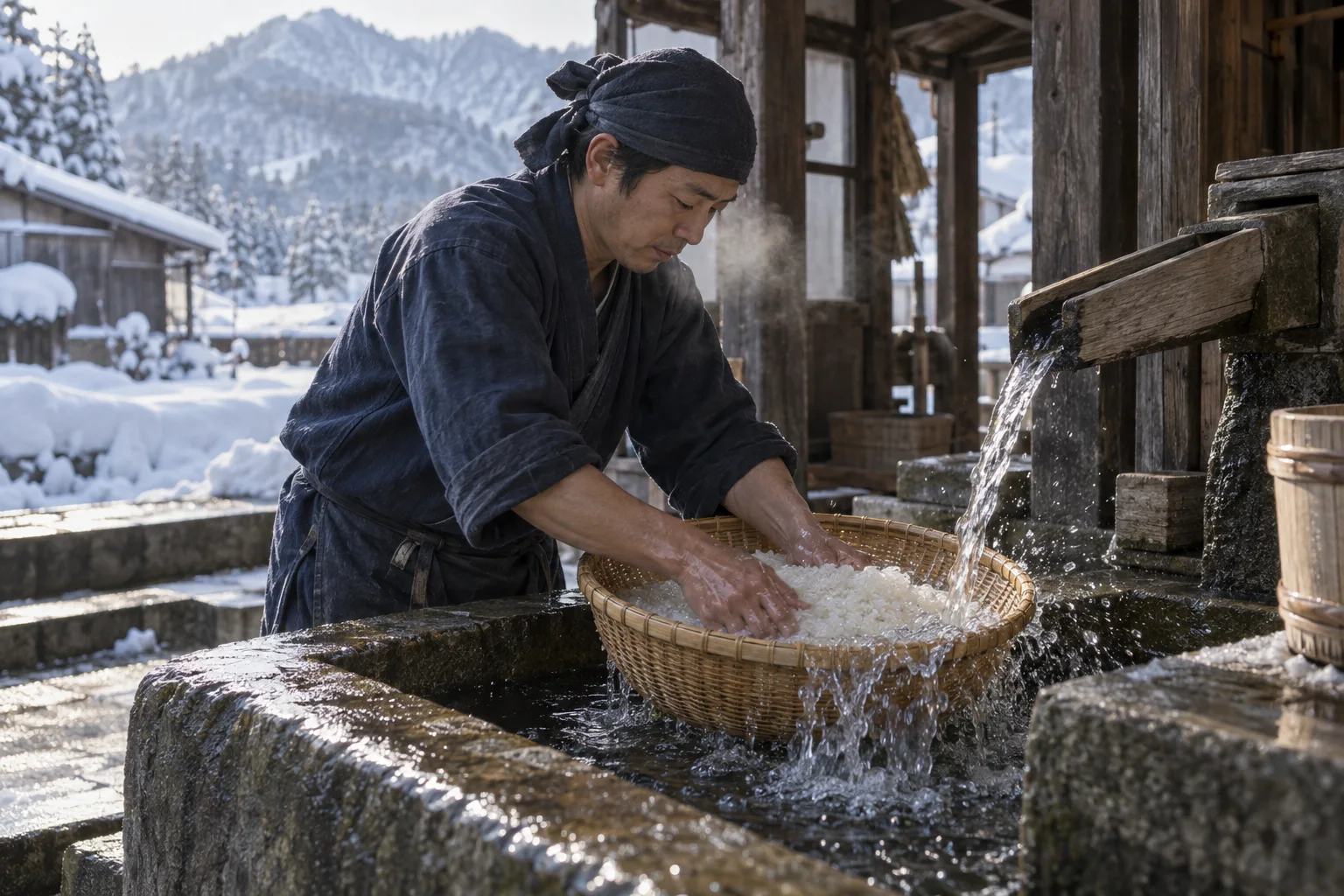
We wash the polished rice with well water to remove bran, then let it absorb water. Since absorption shapes the sake, rice for daiginjo is divided into 10 kg portions and timed to the second with a stopwatch. The timing changes with the condition of the rice each day.
3. Steaming
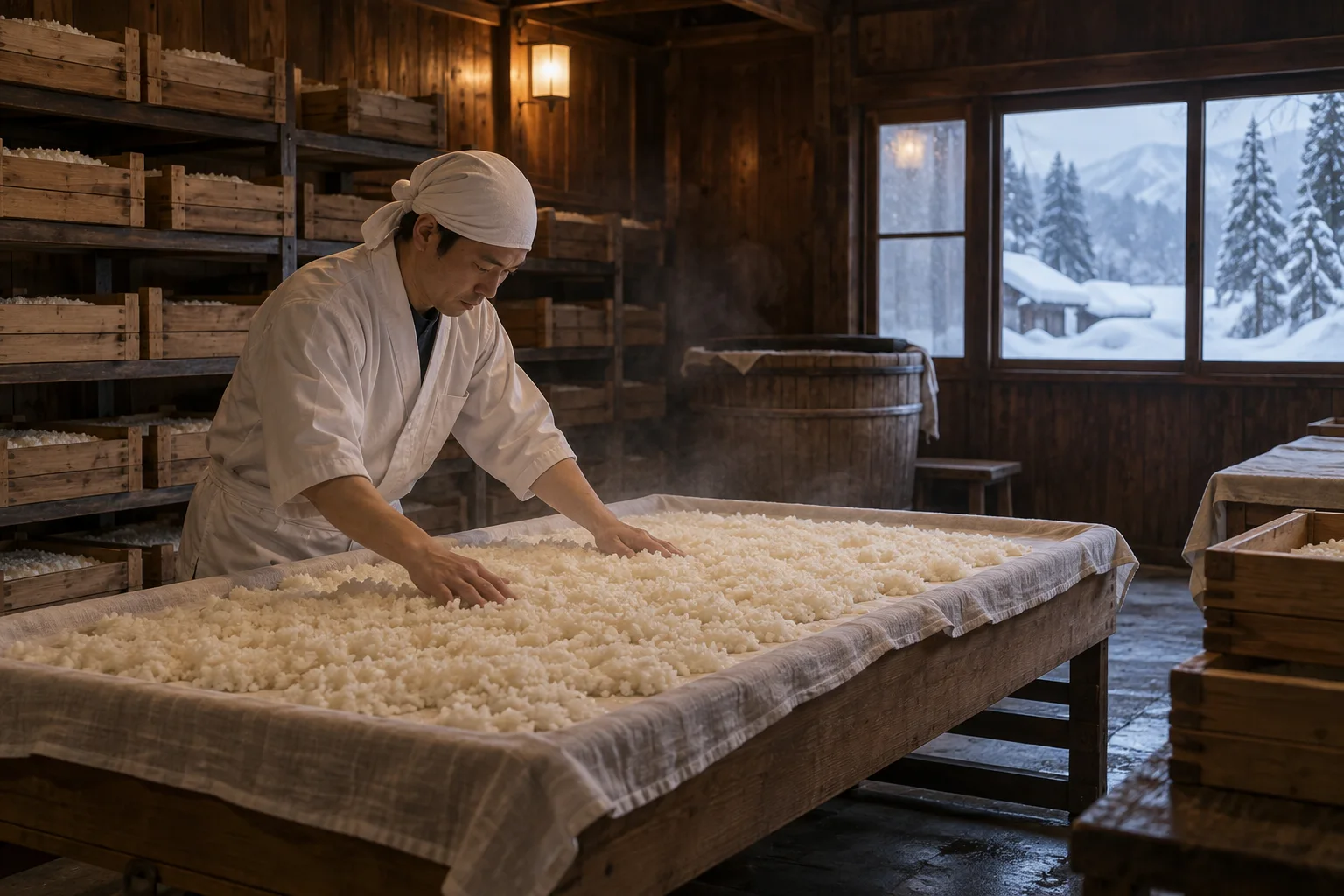
The rice steams for about 60 minutes over a traditional kettle in a wooden koshiki steamer. We aim for firm grains on the outside and softness within. After cooling, the rice is divided for koji production, yeast starter and the main mash.
4. Making koji
Steamed rice enters the koji room, kept near 30°C, and is sprinkled with mold spores. Koji is rice cultivated with a mold that converts starch to sugar. After portioning into wooden trays, we tend it every two hours over two nights, controlling its temperature. Finished koji has a sweet, chestnut-like aroma when chewed.
5. The yeast starter
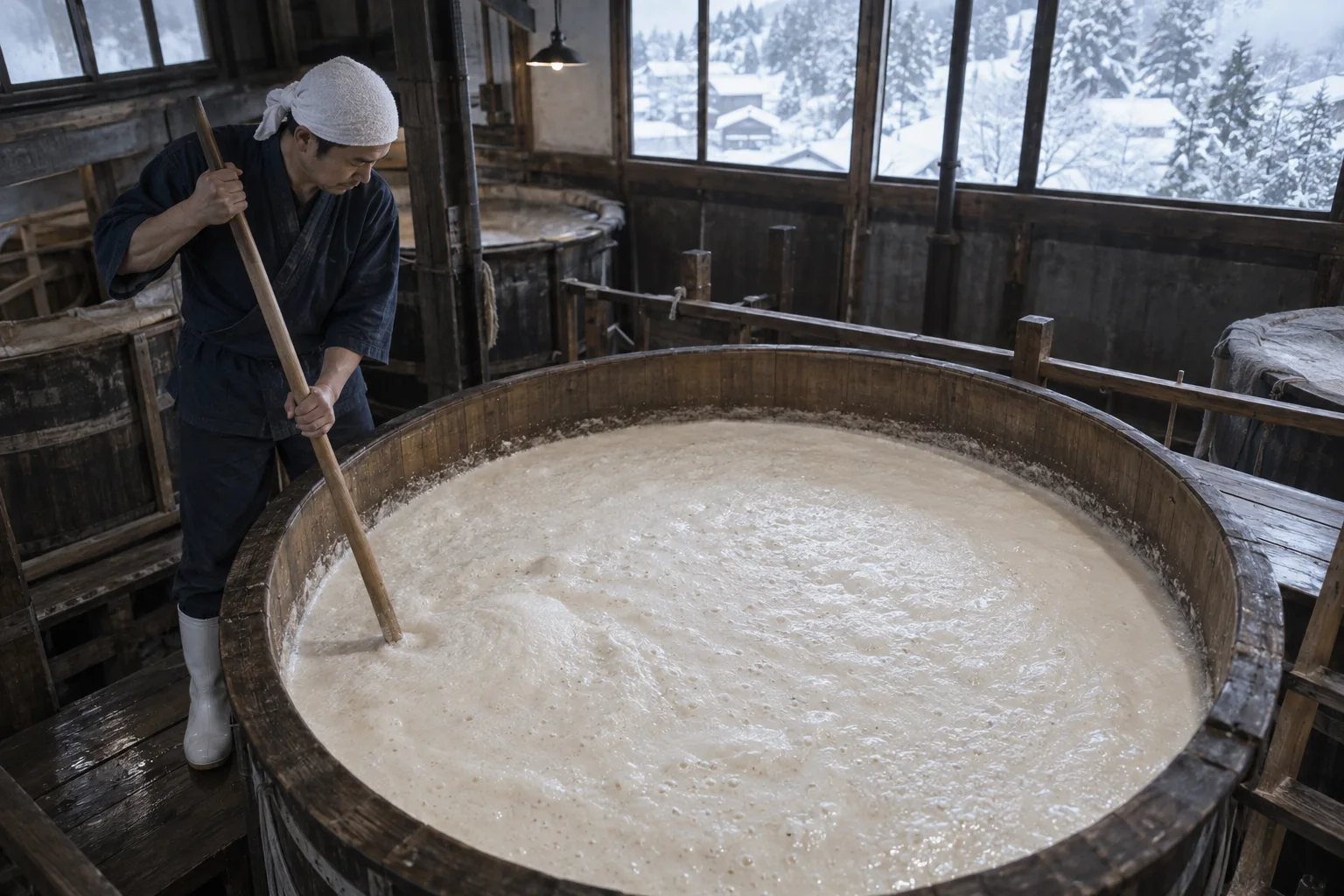
We add yeast to koji, steamed rice and water to build a strong yeast population. This shubo (yeast starter) takes about 14 days by the sokujo method with added lactic acid, or 30 days by yamahai, which relies on natural lactic acid bacteria. If unwanted microbes prevail here, the batch cannot recover. No room in the brewery demands closer temperature control.
6. Three-stage fermentation
Koji, steamed rice and water are added to the starter in three stages, increasing its volume about tenfold. Gradual additions prevent the yeast from being diluted too quickly. After the final addition, the moromi (fermentation mash) ferments for 25 to 35 days. We record its temperature and sake meter value, a density-based measure, every day.
7. Pressing and settling
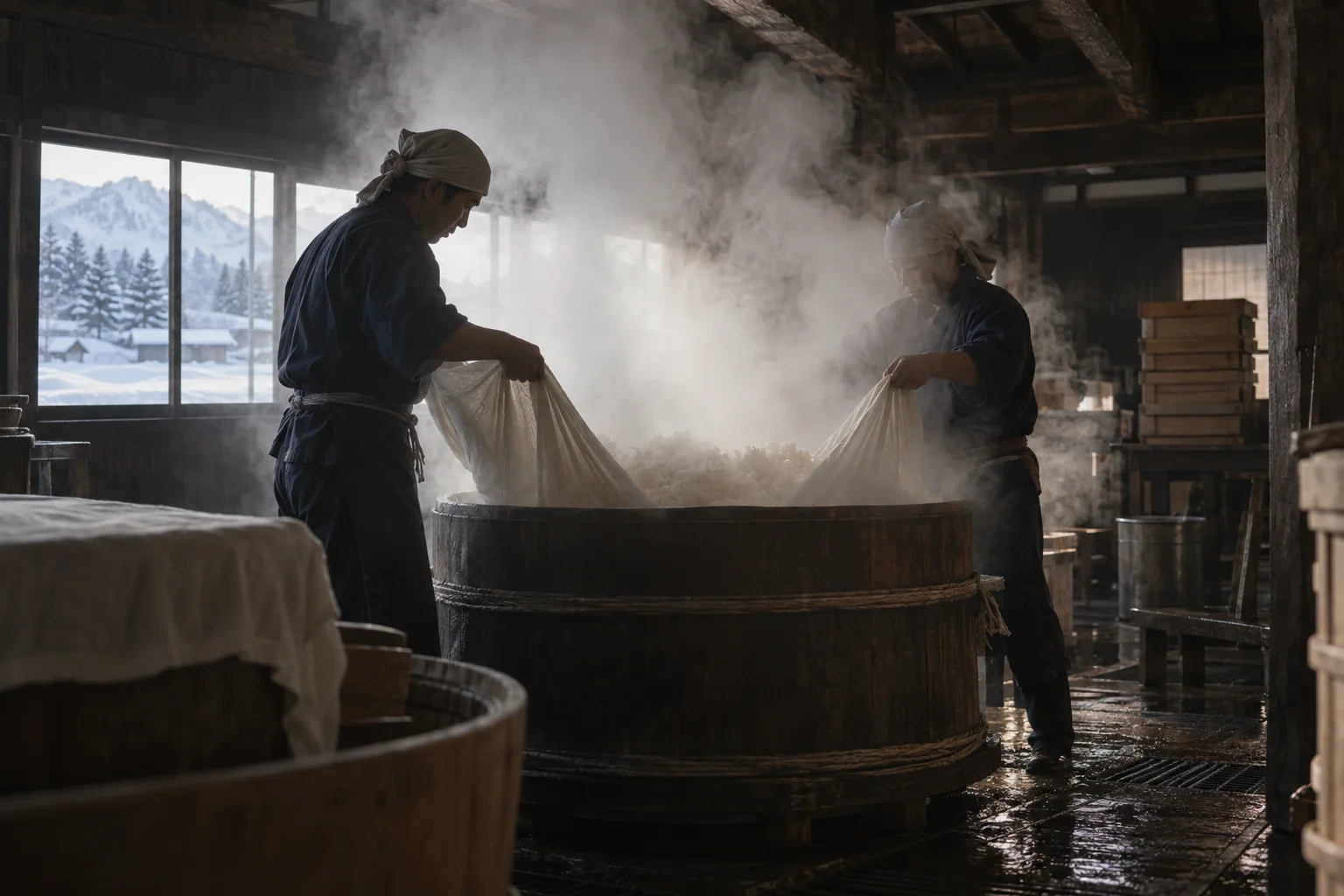
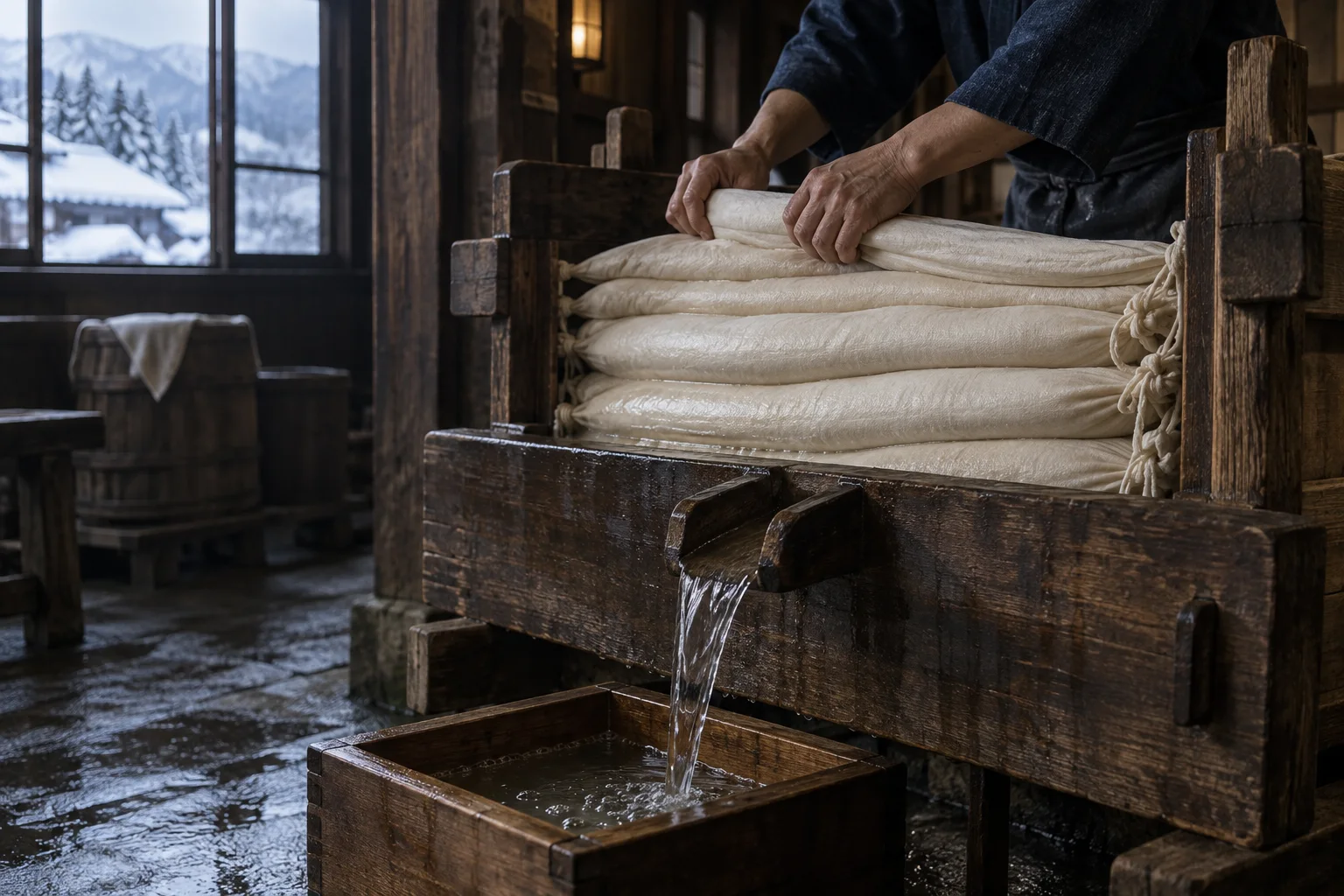
The fermented mash is placed in cloth bags and pressed in a fune, a traditional trough-shaped press. Freshly pressed sake is cloudy, so it rests in a tank for several days while sediment settles, before the clear sake is drawn off. Filtration is kept to a minimum, and some products use no activated charcoal.
8. Pasteurizing and bottling
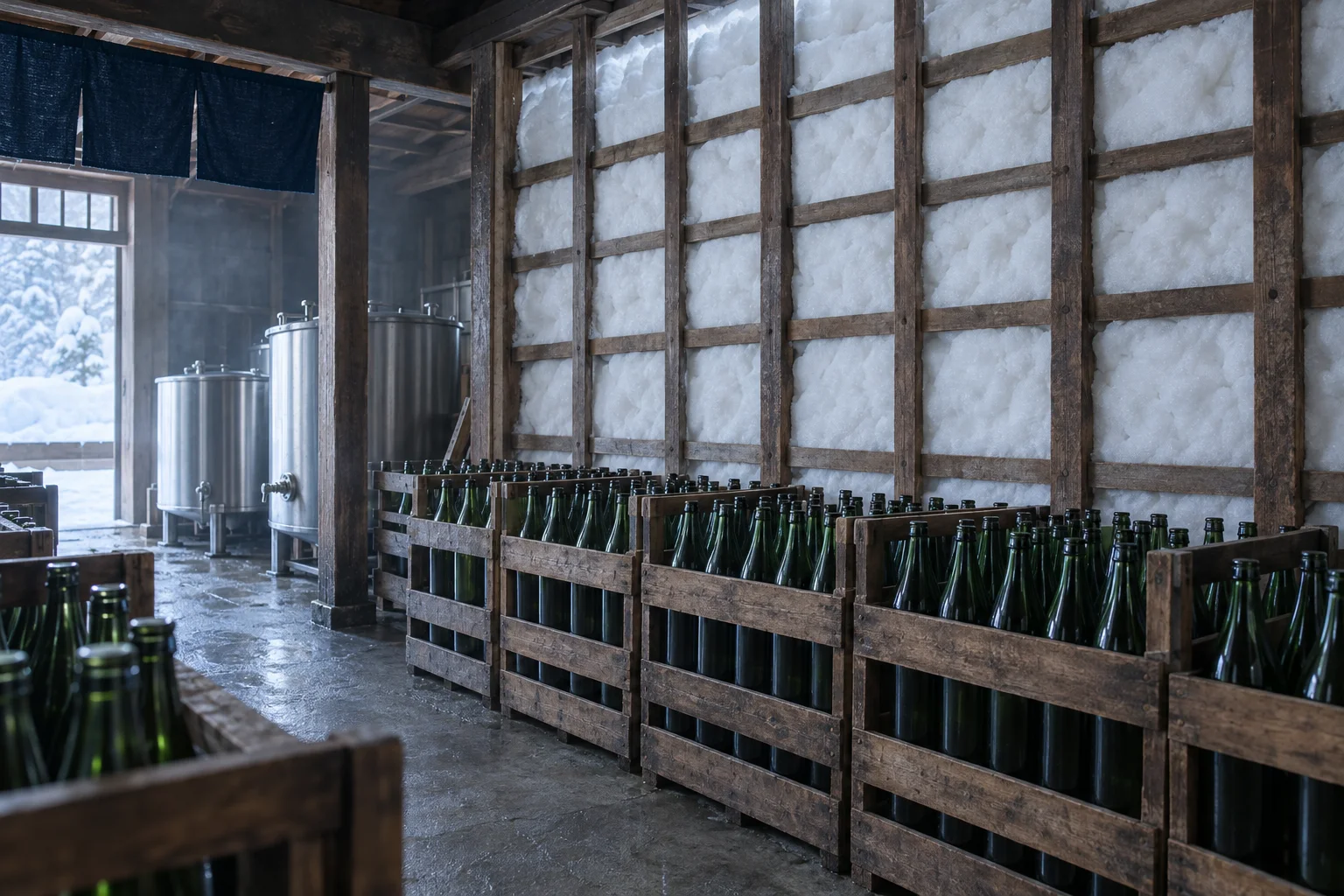
Most products are pasteurized twice at about 65°C and stored in our snow-cooled cellar. Namazake (unpasteurized sake) is shipped refrigerated without heat treatment. We bottle in small quantities to order and print the bottling date on the label. From the start of brewing, the whole process takes about six months to a year.