1838: a miso merchant begins brewing
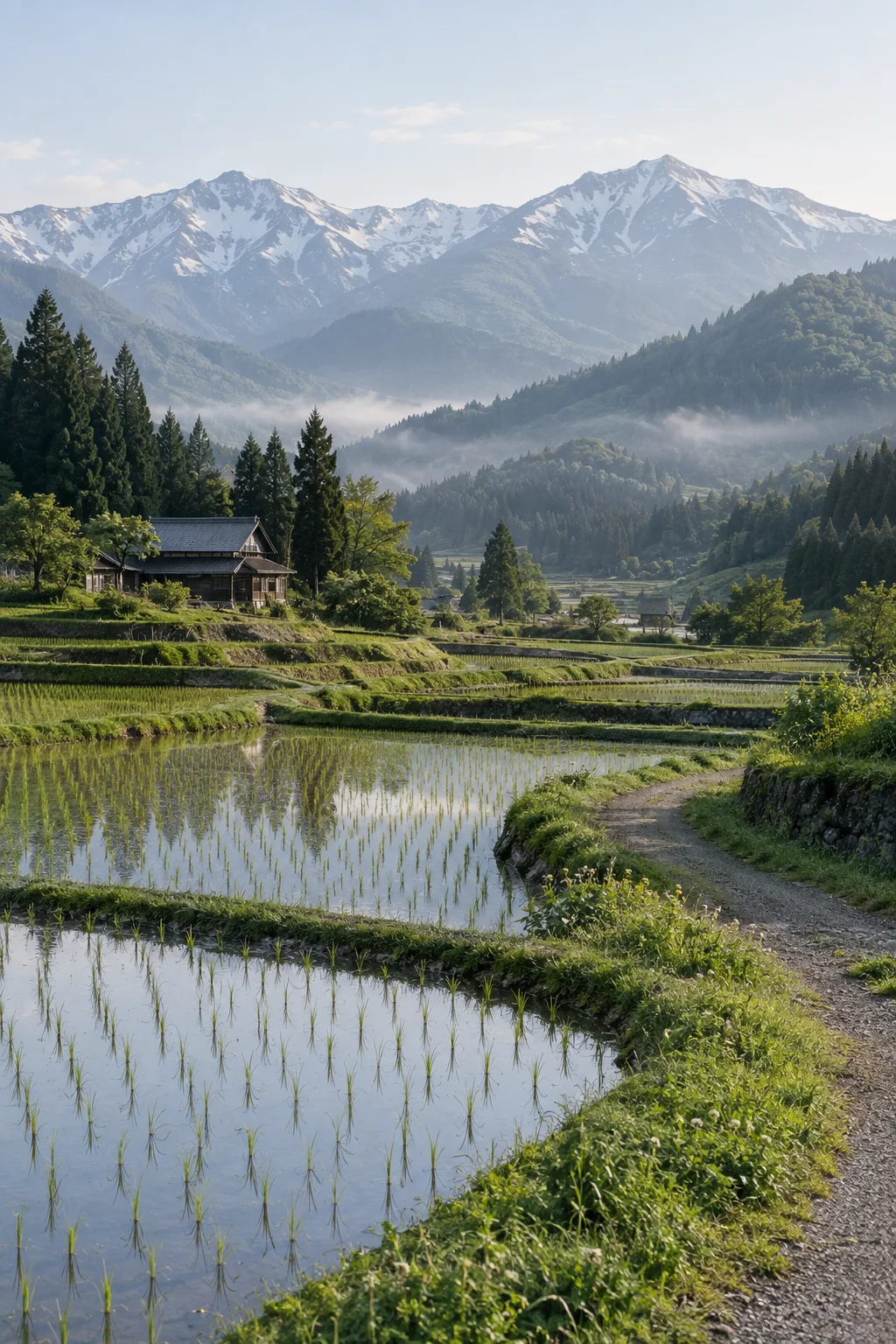
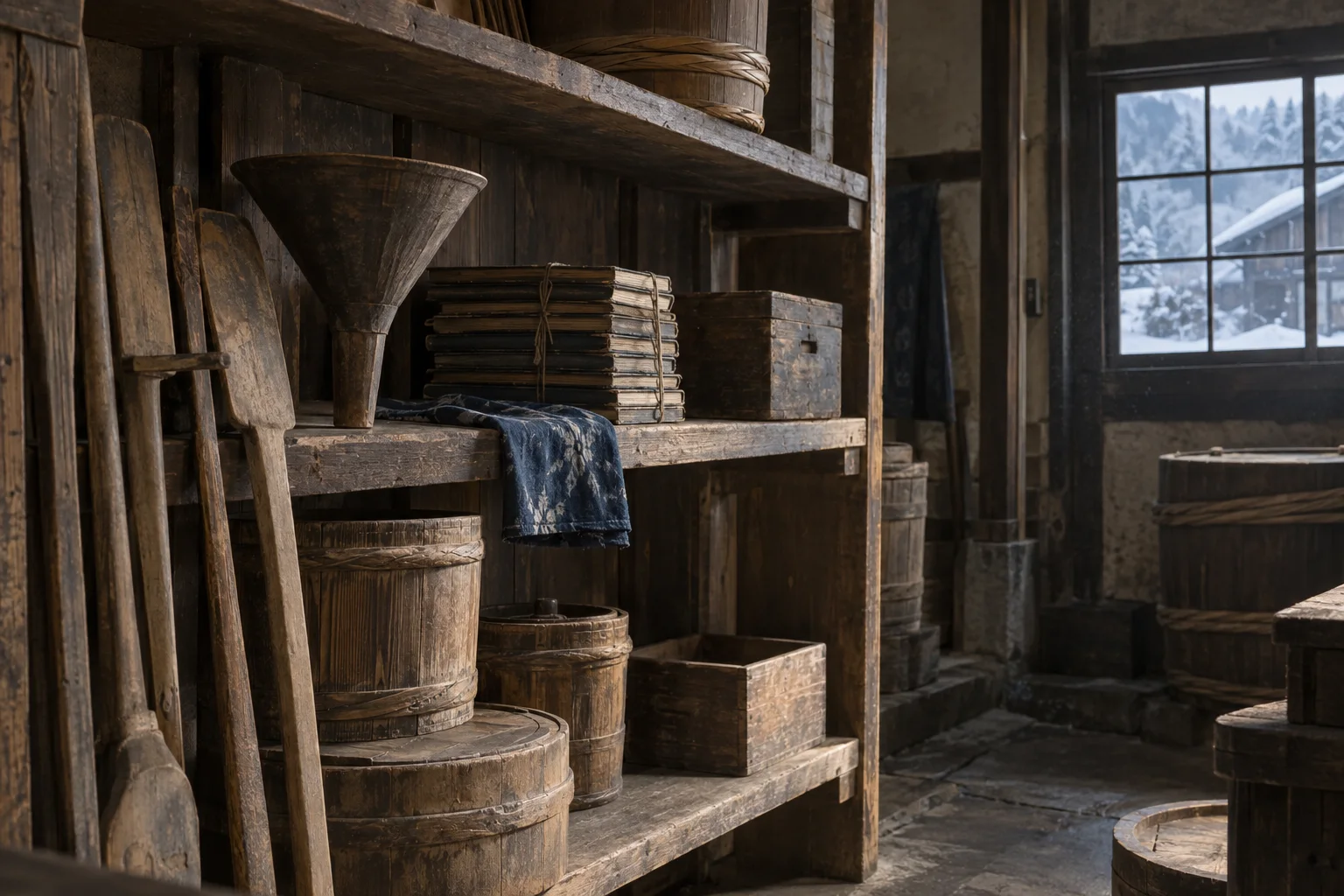
Our founder, Tobei Fujino, originally sold miso and soy sauce in Yukimihara village. The local spring water used in production was noticeably softer than water nearby and gave his miso a rounder flavor. In 1838, the ninth year of Japan's Tenpo era, he wondered what sake made with that water might taste like. There were already two breweries in the village, but he chose not to compete on volume. He insisted on building where he could draw the spring water. Our present brewing-water well stands beside the one dug then.
Beyond the valley
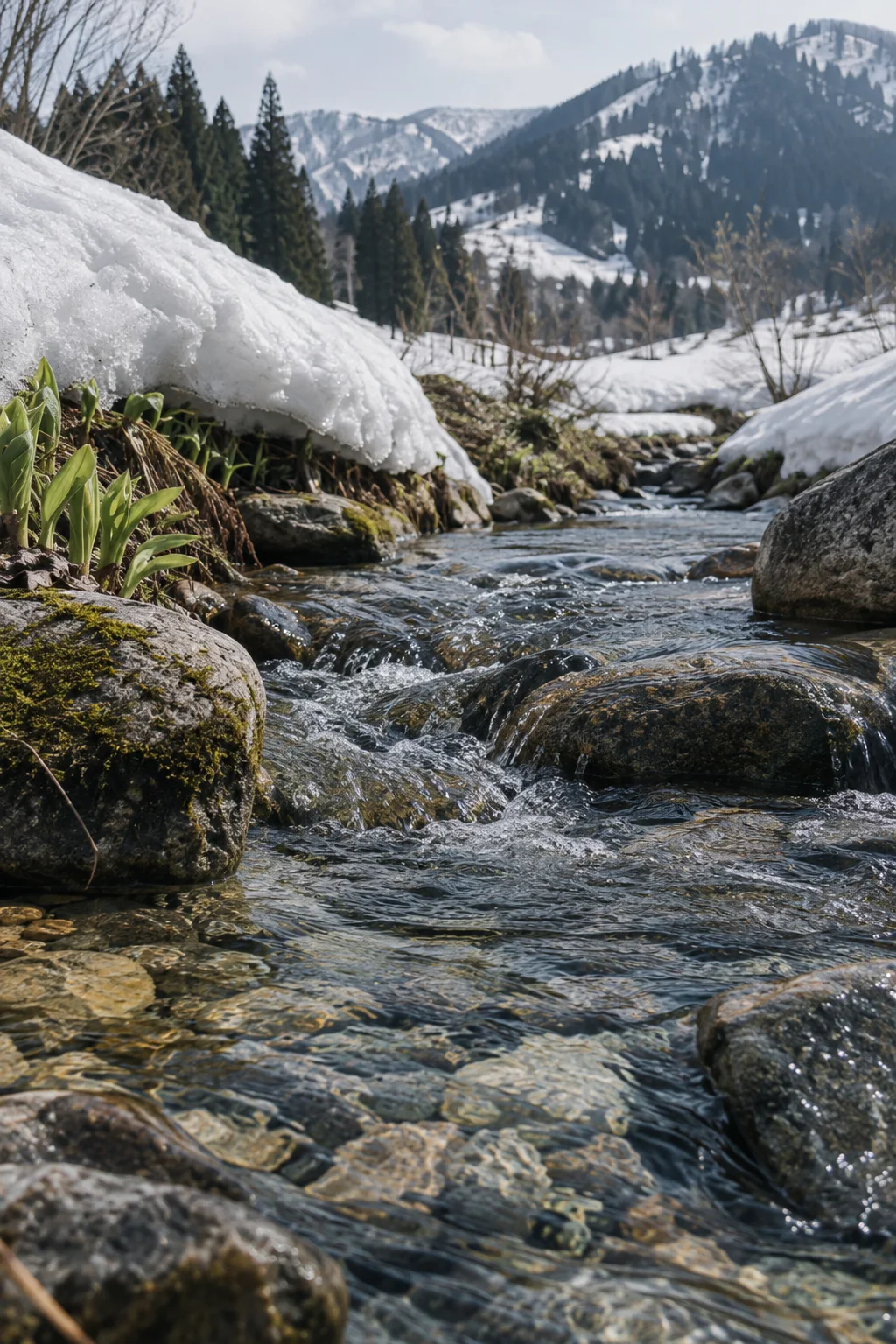
When the railway reached the valley in the middle of the Meiji era (1868-1912), sake previously consumed within the village began traveling to towns across Niigata and eventually to Tokyo. The wooden production brewery and stone storage building still in use today were built under the third generation. The date carved by the stonemasons remains on the stone walls. In this period, the sake was named Tobei, and the family crest became the circle and snowflake design we use today.
1944: protecting the yeast starter
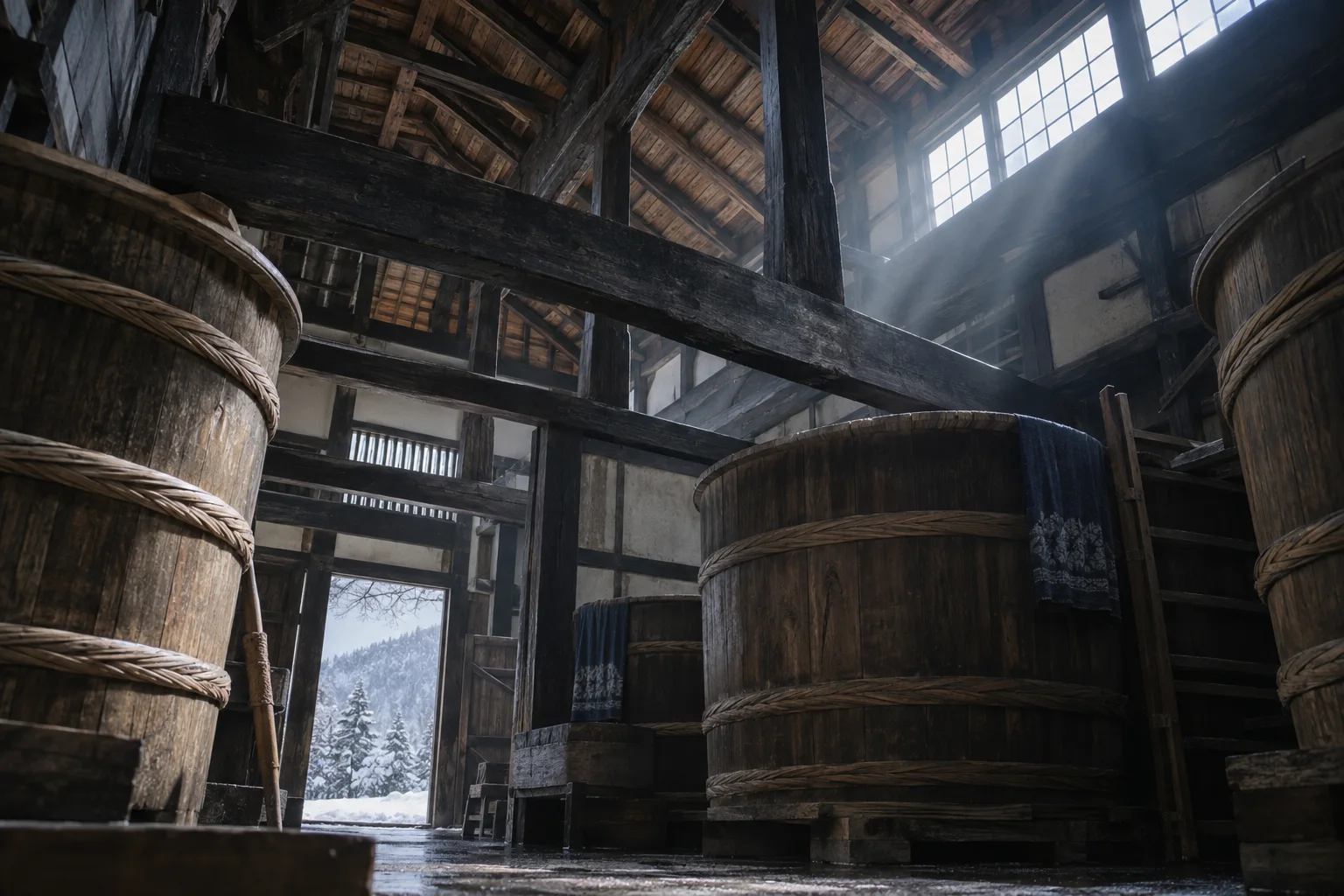
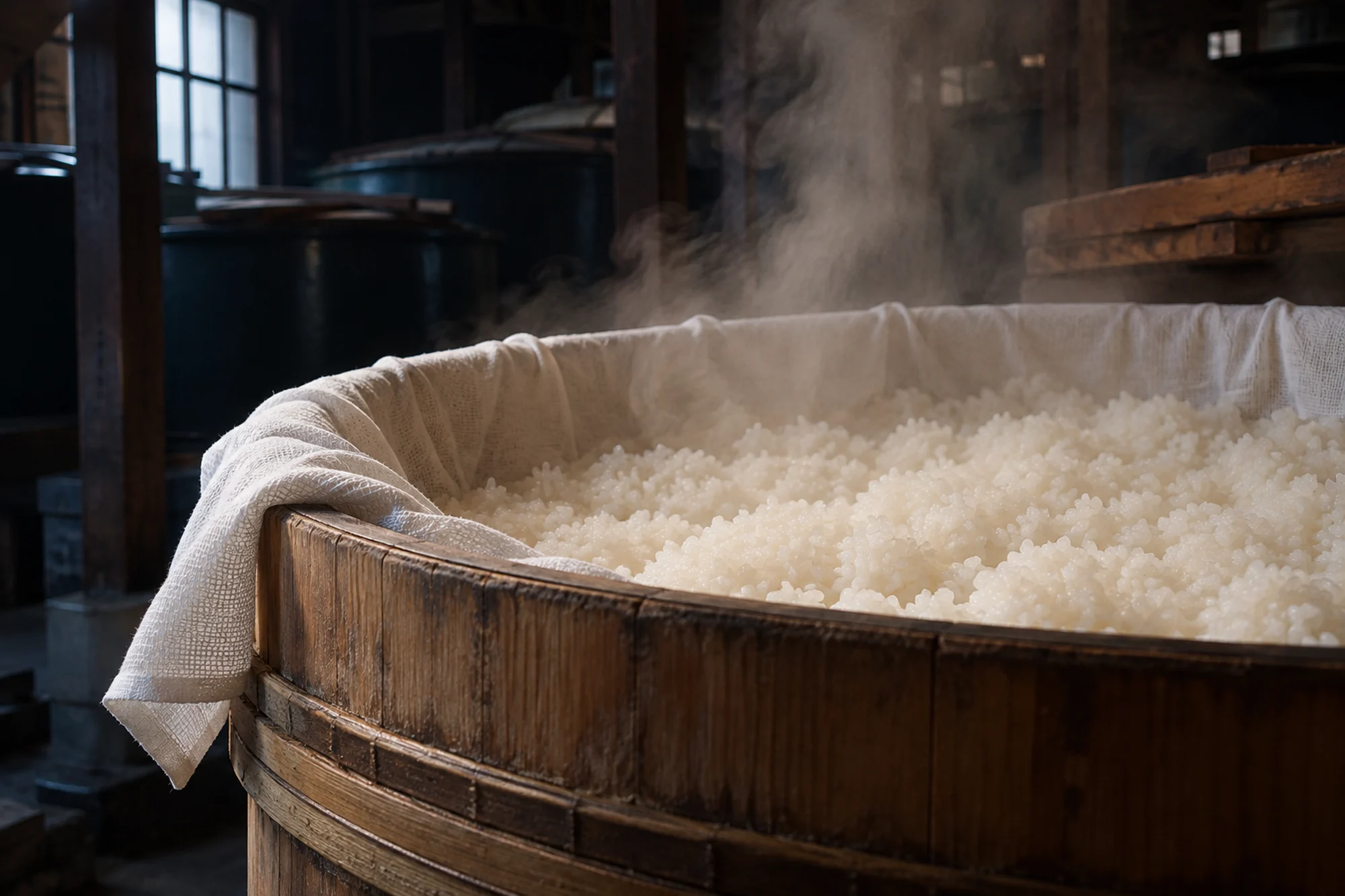
In 1944, wartime industrial consolidation required us to merge with neighboring breweries. As many small breweries and their names disappeared, the fifth generation moved a full set of equipment and the shubo (yeast starter) to a branch of the family in the mountains, copying and hiding the brewing records. Brewing resumed in 1947 using the yeast kept safe during the war. The handwritten brewing ledger survives and can be seen in our archive on a brewery tour.
From volume to quality
For a time after the war, production focused on volume and ordinary table sake. Plans to expand the equipment arose more than once, but the sixth generation chose to install our own rice-polishing machine and move toward specially designated sake grades instead of increasing the number of batches. Our first junmai sake, made without added distilled alcohol, was released in 1985. At a time when such sake was widely considered difficult to sell, almost all of the first three years' production stayed local.
Light and dry, with depth
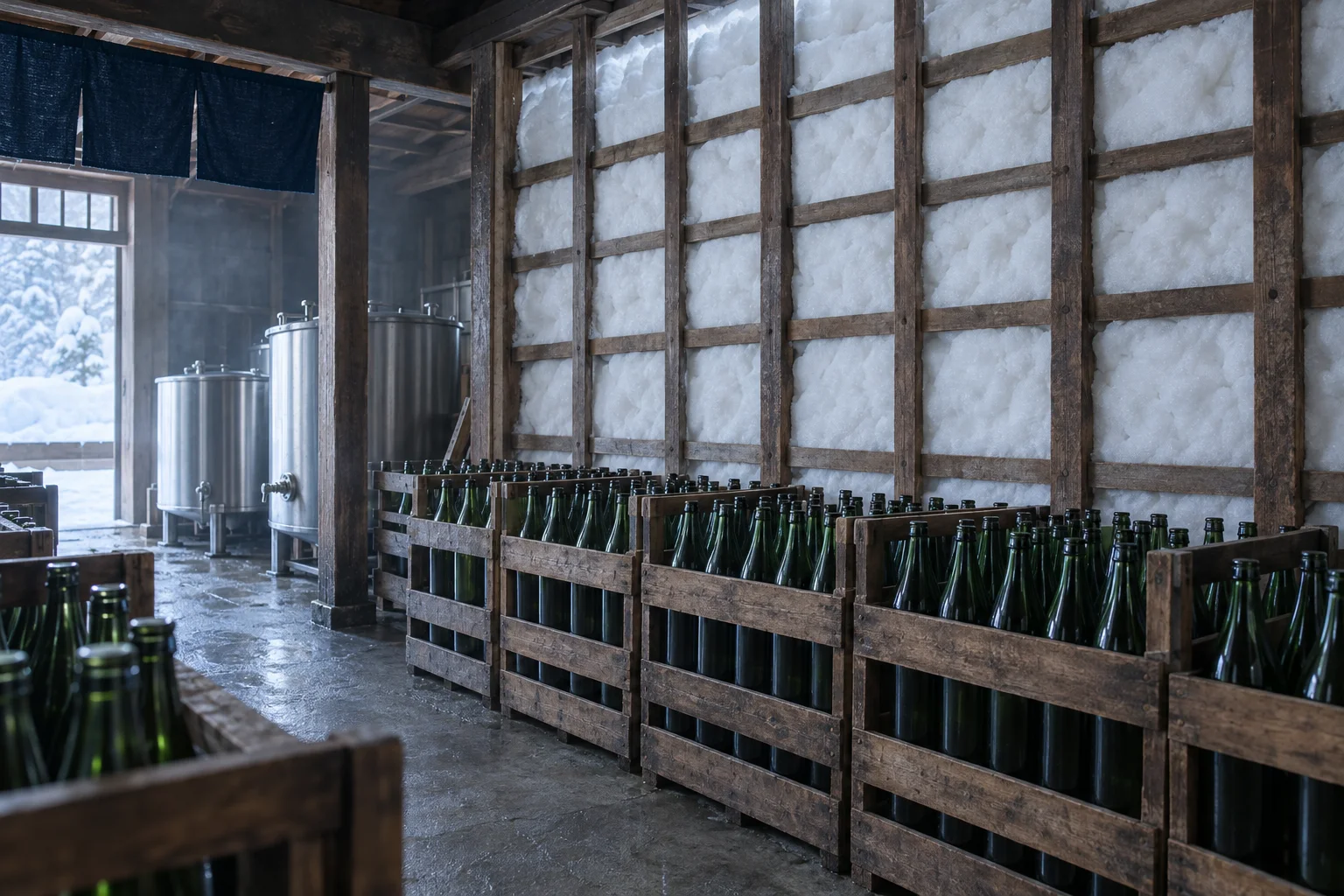
In the Heisei era (1989-2019), Niigata sake became nationally known for its light, dry style, and our bottles reached more customers outside the prefecture. The seventh generation resisted making the sake too light to follow that trend, keeping the sake meter value (a density-based dryness indicator) near +4 to retain umami. In 2012 we built a yukimuro, a cellar cooled by the snow that falls on the brewery. It stays near 3°C without electricity and underpins our aged sake and hiyaoroshi, sake matured over summer for autumn release.
The eighth generation
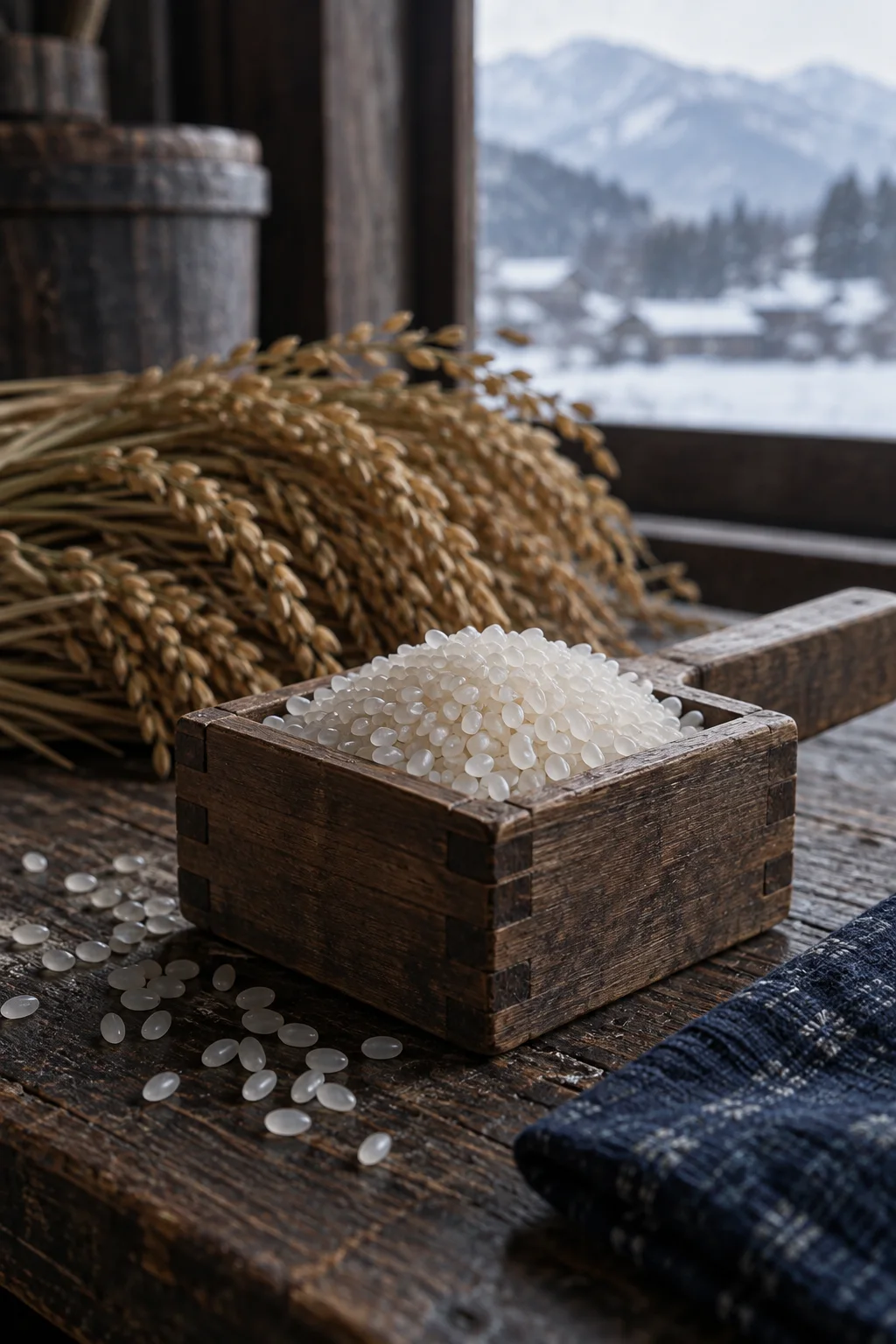
Soichi, our eighth-generation owner, took over in 2021. His first focus was sake rice. He increased our partner farms from four to six and began managing rice separately by plot. That year he launched Yukimushiro, a small-batch range brewed from individual plots. Our approach today is to deepen the connection between field and brewery without increasing the number of batches.