Water from the Makihata mountains
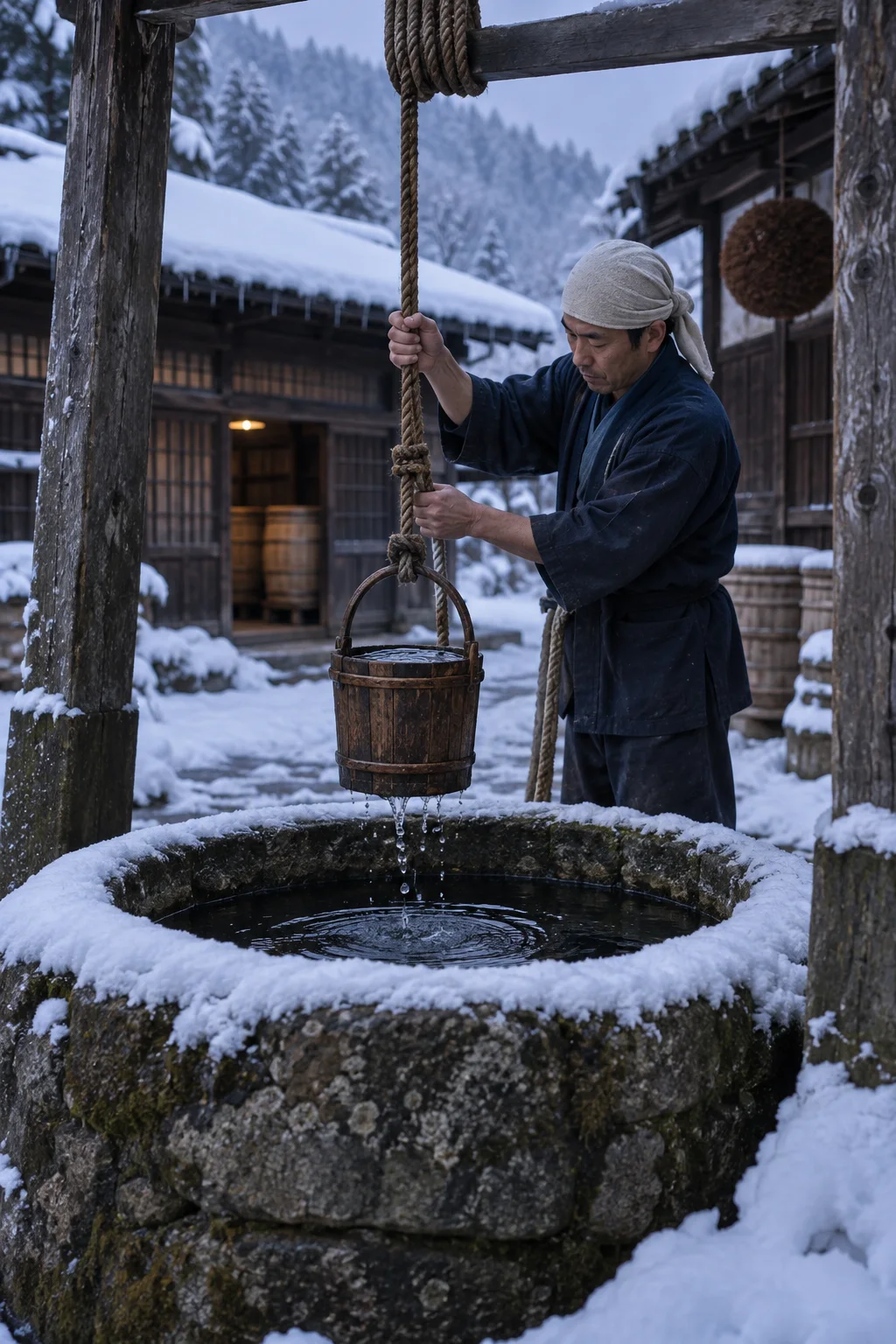
Our shikomi-mizu (brewing water) is groundwater from the Makihata mountains, drawn from a well about 60 meters deep on our grounds. Its hardness is about 22 mg/L, with almost no detectable iron. With fewer minerals for the yeast, fermentation proceeds gently and the moromi (fermentation mash) takes three to five days longer than at a typical brewery. The extra work brings a fine, smooth texture. Every use of water here, from washing rice and brewing to dilution and washing bottles before filling, draws on the same well.
Rice grown in Yukimihara
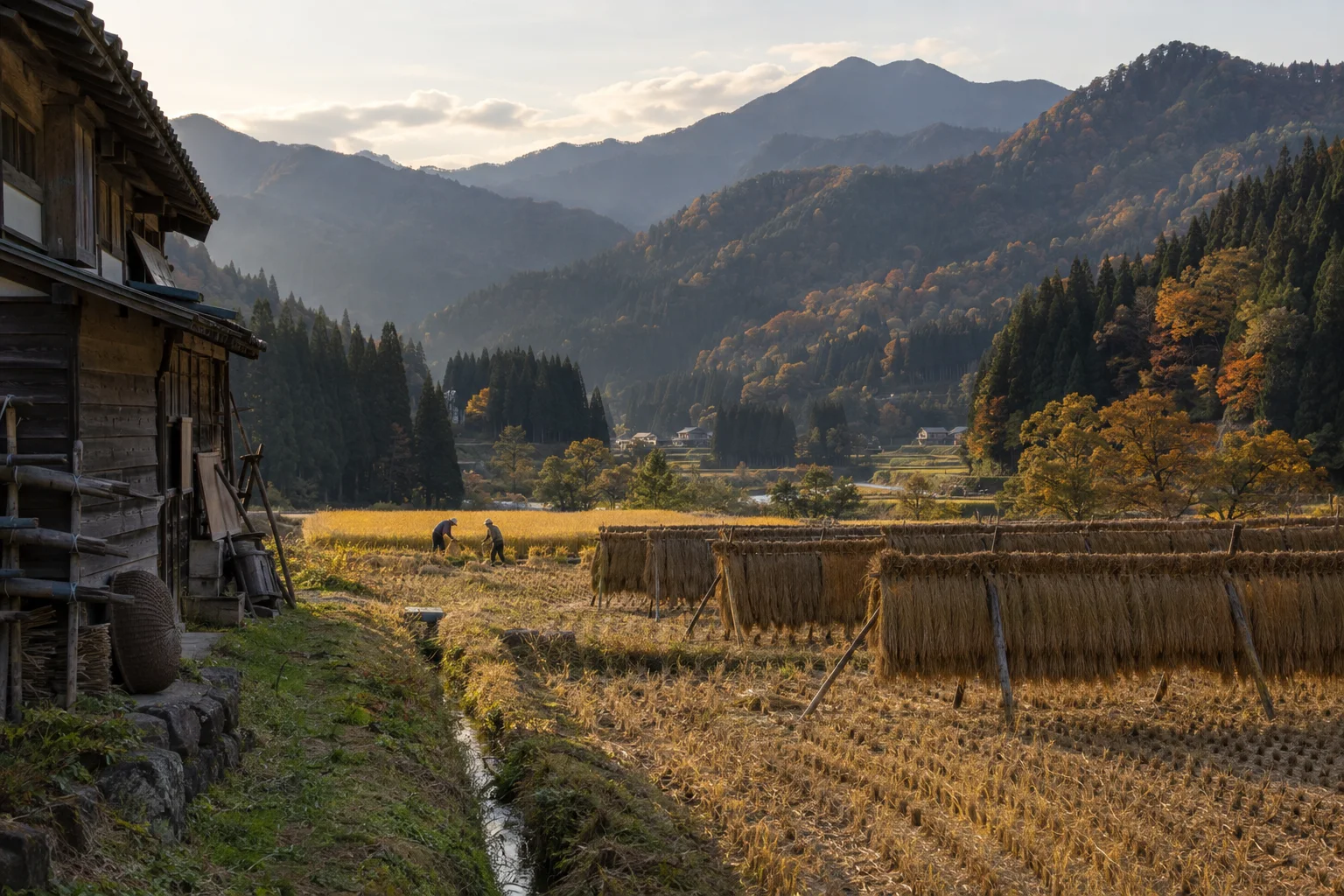
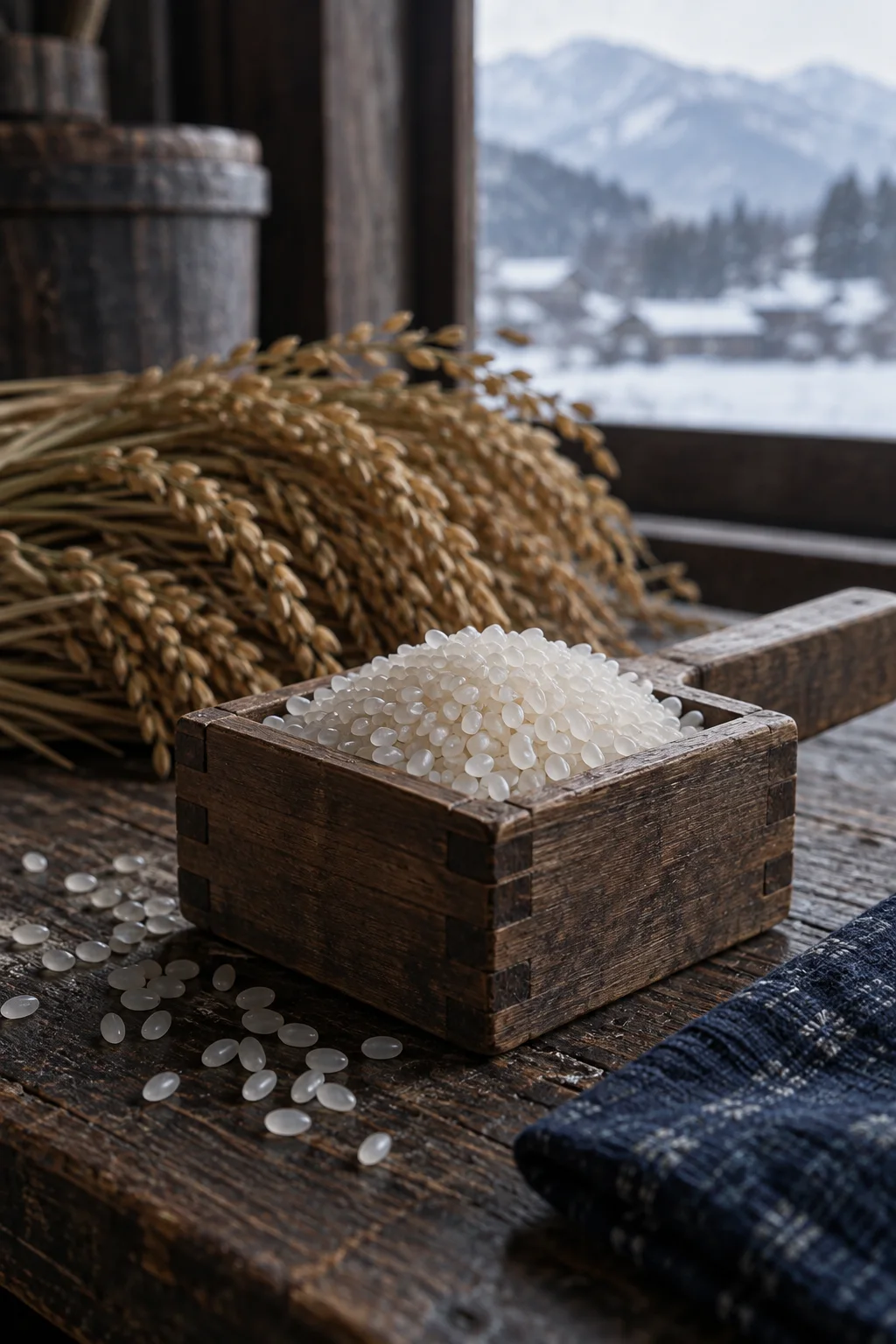
About 80% of our sake rice comes from partner fields within two kilometers. Gohyakumangoku has a large, readily dissolving starchy core and forms the foundation of our range, from honjozo (with a small addition of distilled alcohol) to junmai ginjo (premium sake made without added alcohol). Koshi Tanrei, developed in Niigata by crossing Gohyakumangoku and Yamada Nishiki, withstands extensive polishing and is used for junmai daiginjo, sake made from highly polished rice without added alcohol. We buy a very small amount of Yamada Nishiki from Hyogo exclusively for competition entries. The six farms' plots are numbered, and their rice is stored separately after harvest.
Polishing only as far as needed
We have polished rice in-house since 1985. Keeping this work here lets us polish slowly without heating the grain. Reaching the 40% polishing ratio for junmai daiginjo (40% of the original grain remaining) takes about 60 hours. But more polishing is not always better. Our Tokubetsu Junmai retains 58% of the grain to preserve the rice's umami. After polishing, the rice rests for over a month to stabilize its moisture before washing.
Koji made by hand
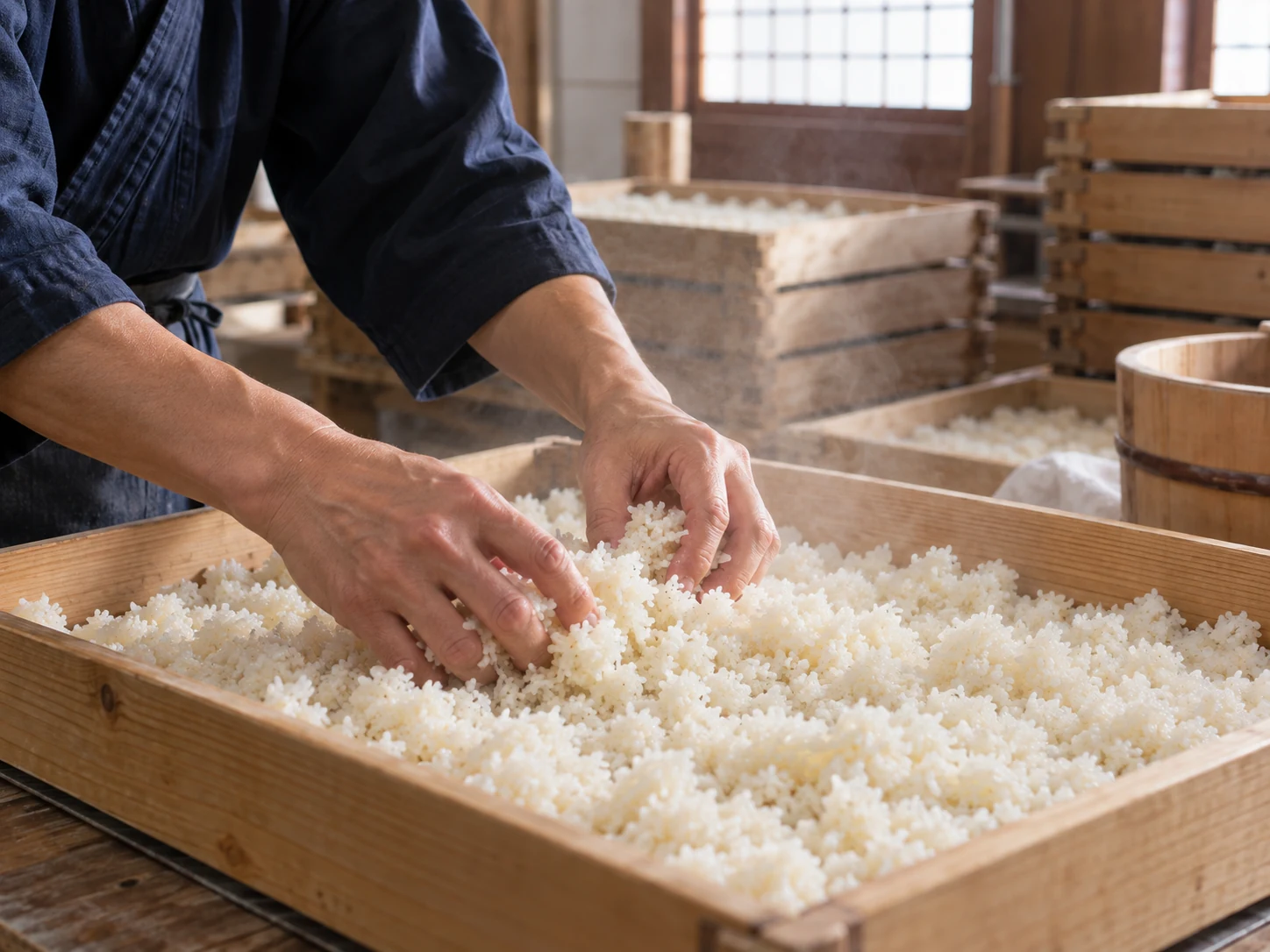
We make koji (rice cultivated with a starch-converting mold) by hand in wooden kojibuta trays. Each holds about 1.5 kg of steamed rice. A batch of junmai daiginjo uses around 300 trays. Over two nights, brewers enter the room every two hours to portion, mix and rearrange the rice. It is laborious, but controlling the temperature of each tray lets us respond closely to how that year's rice dissolves. The koji room still has cedar-board walls.
Yeast starter and three-stage brewing
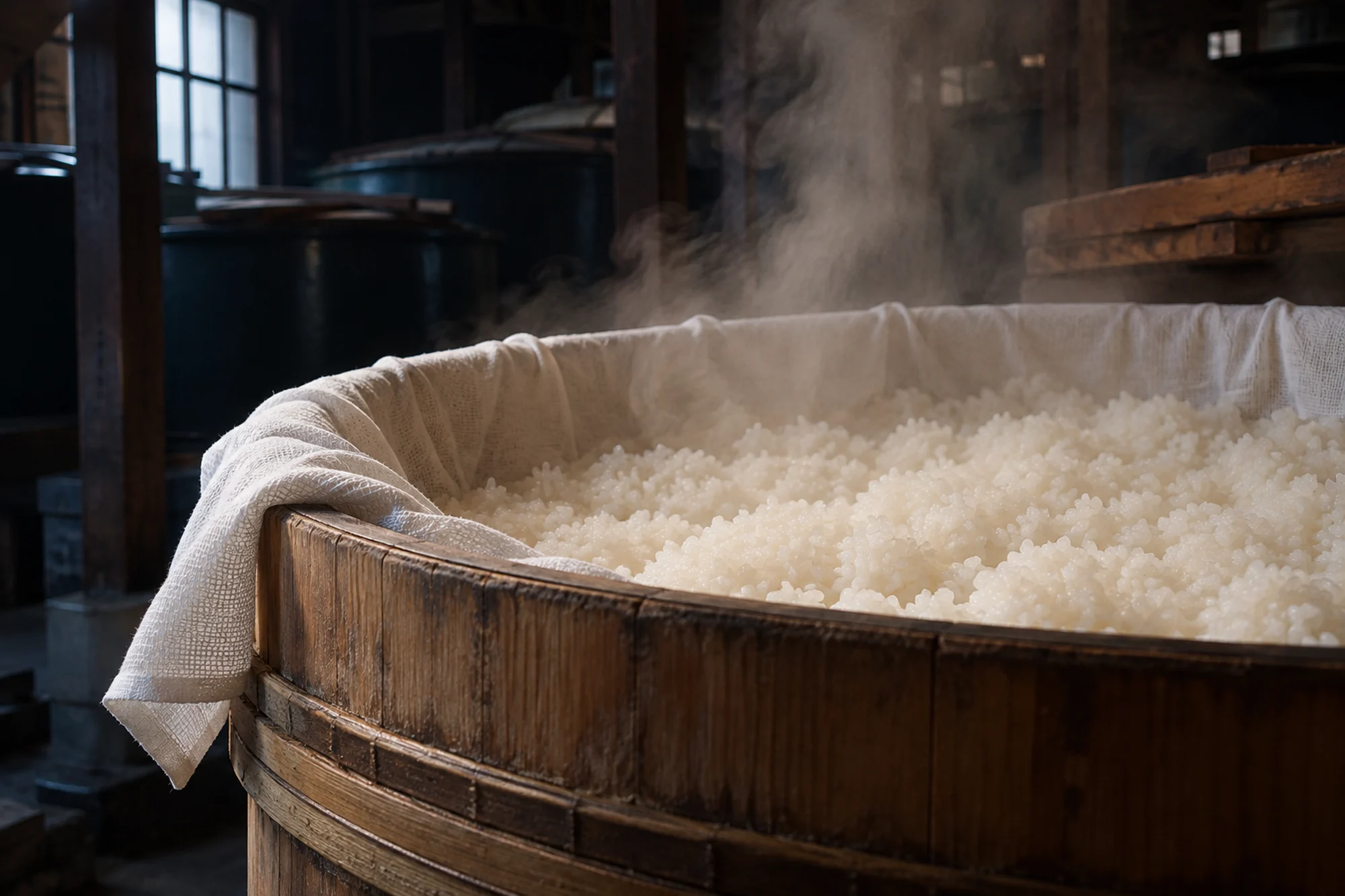
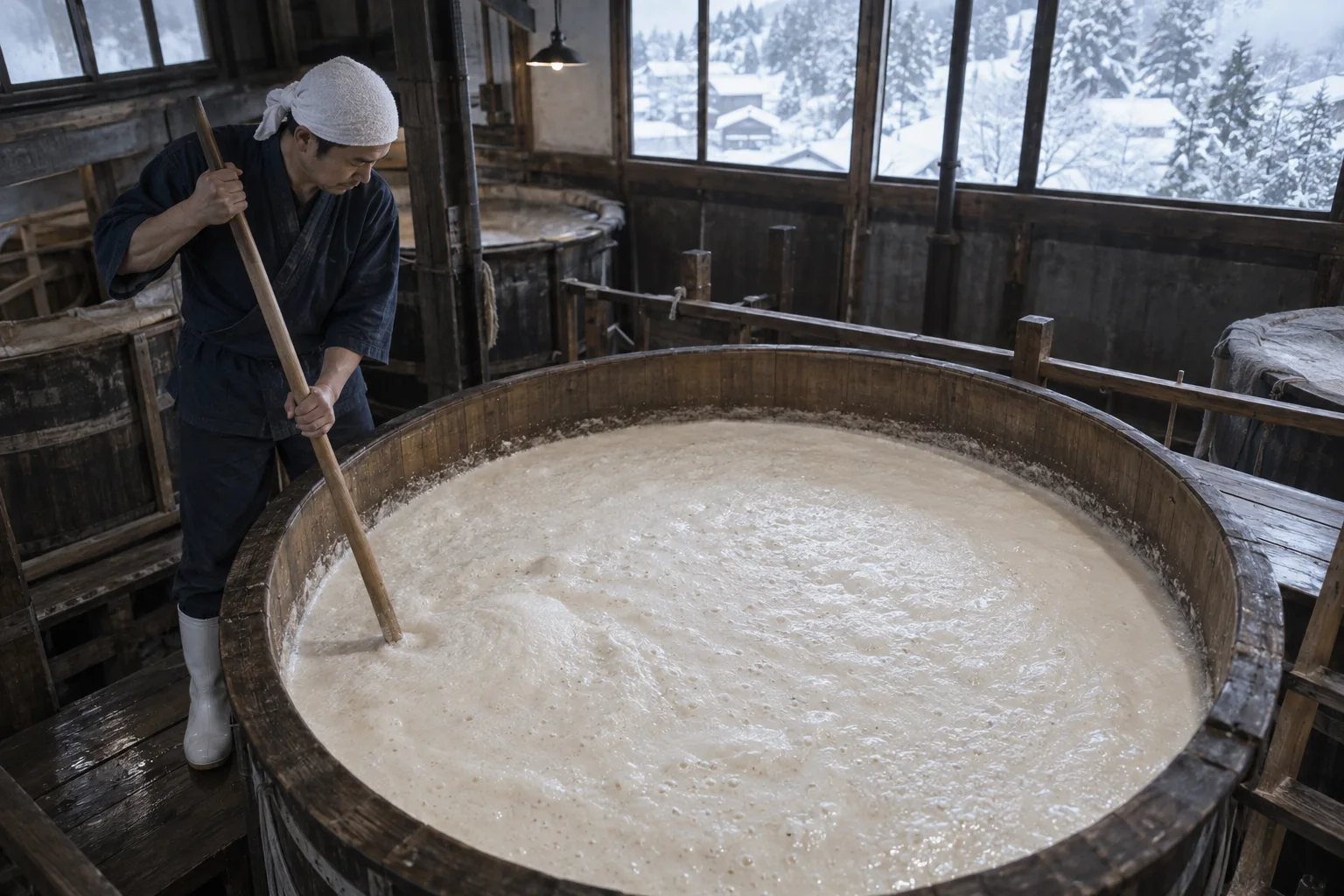
Our regular range uses sokujo, a yeast starter made with added lactic acid. Some Yukimushiro batches and sake intended for aging use yamahai, which relies on naturally occurring lactic acid bacteria instead. Yamahai takes about 30 days to prepare. Rice, koji and water are then added in three stages: hatsuzoe, nakazoe and tomezoe. From the day after the final addition we record the mash temperature daily, keeping the peak between 9°C and 13°C depending on the sake. Fermentation lasts 25 to 35 days.
Gentle pressing and drip collection
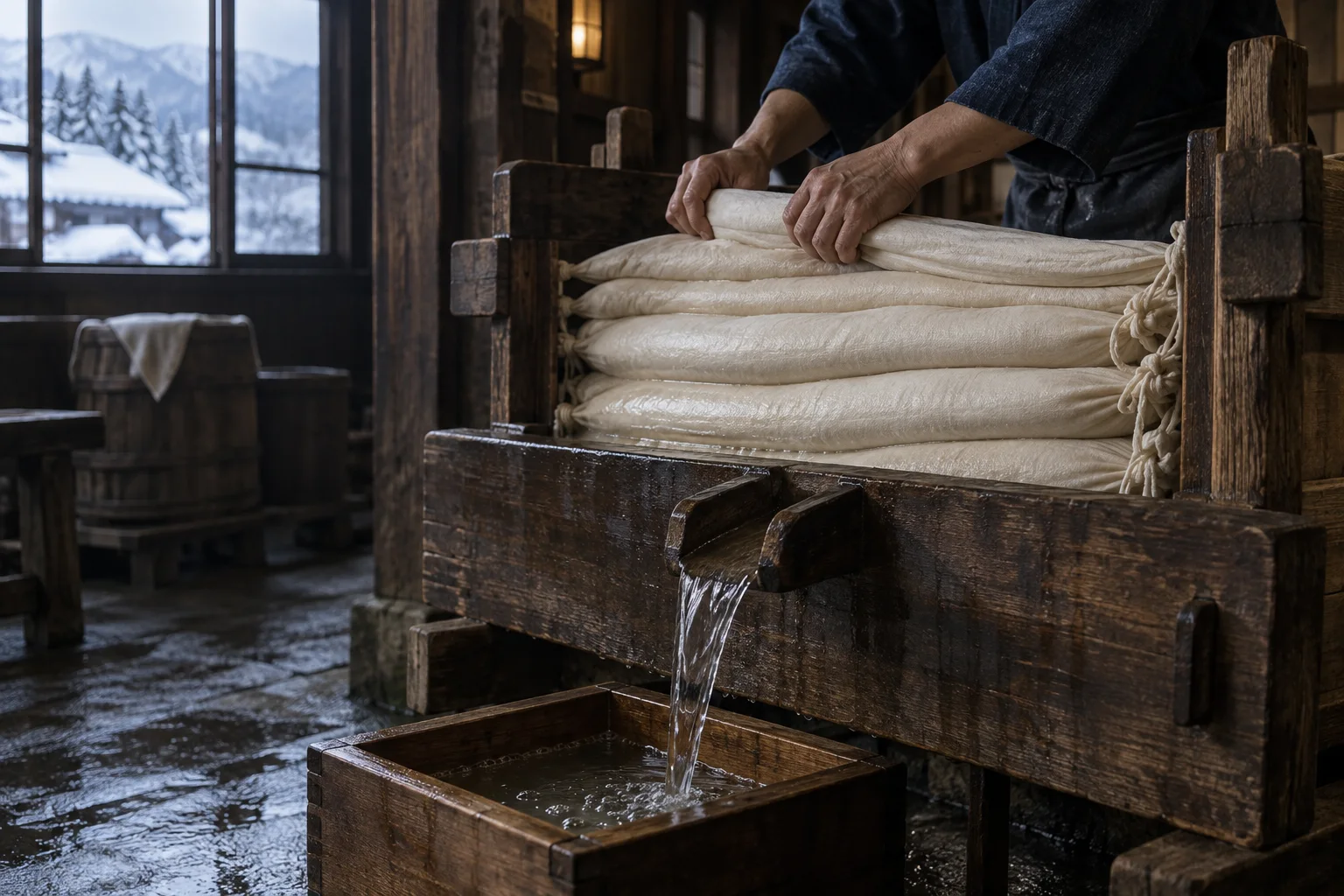
All our sake is pressed in a fune, a traditional trough-shaped press. Bags of mash are laid inside and pressed with their own weight and gentle pressure. Daily output is limited, but this helps avoid harsh flavors. We collect the first flow, middle portion and final pressing separately for different products. Competition entries and some Yukimushiro are collected by fukurozuri: hanging the bags and catching only the drops. Freshly pressed sake is sold by volume at our shop.
A cellar cooled by snow
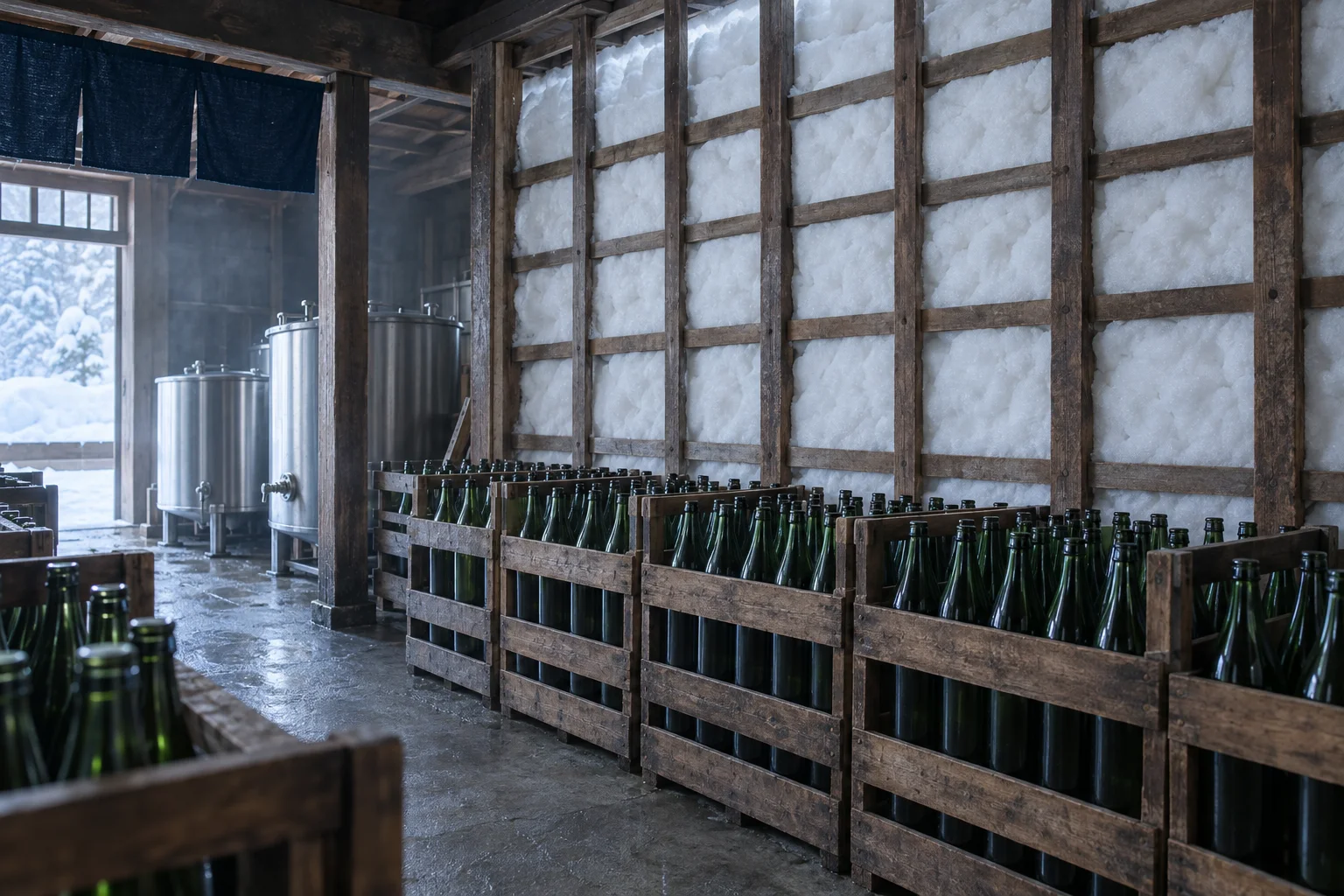
Our yukimuro (snow-cooled cellar), built in 2012, takes in about 200 tonnes of snow from the brewery grounds each winter. The snow alone keeps it near 3°C, with no air conditioning even in summer. With little temperature change and no vibration, the sake gradually softens. Our hiyaoroshi spends the summer here after being brewed the previous winter. Our three-year-aged koshu matures in the same cellar.