A word from Soichi Fujino
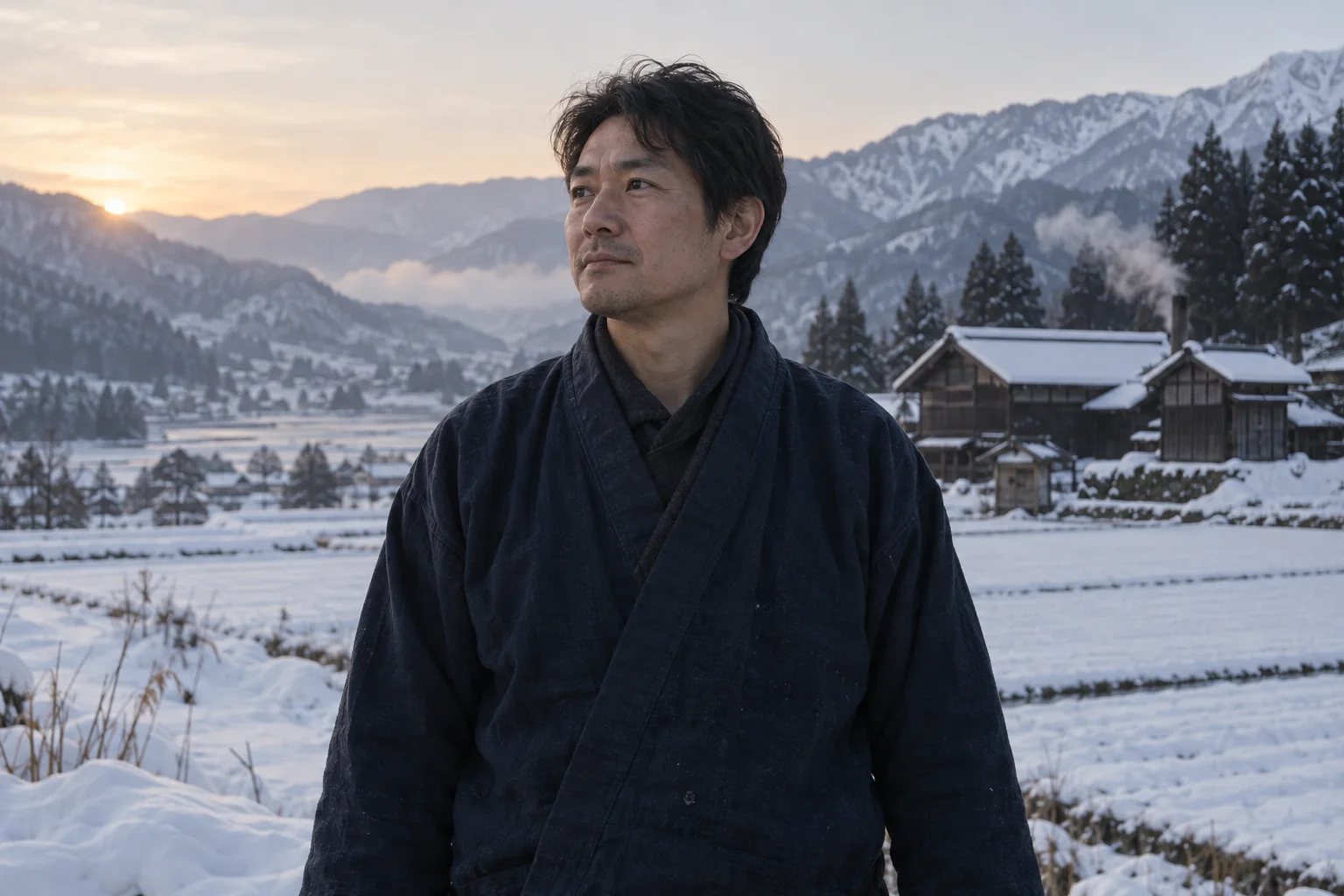
I am Soichi Fujino, the eighth generation of this brewery. I took over in 2021 at the age of 42. Before that, I worked in sake retail outside Niigata, seeing sake from the shop floor. Many bottles on the shelves were intensely aromatic: dazzling on opening, less satisfying by the third day. I understood that these were the bottles that sold well. Still, I wanted ours to be a brewery making sake you could enjoy slowly, finishing a 720 ml bottle over a week. Quiet in character, with a flavor you do not tire of. That is the nature of our sake.
Waiting is part of the work
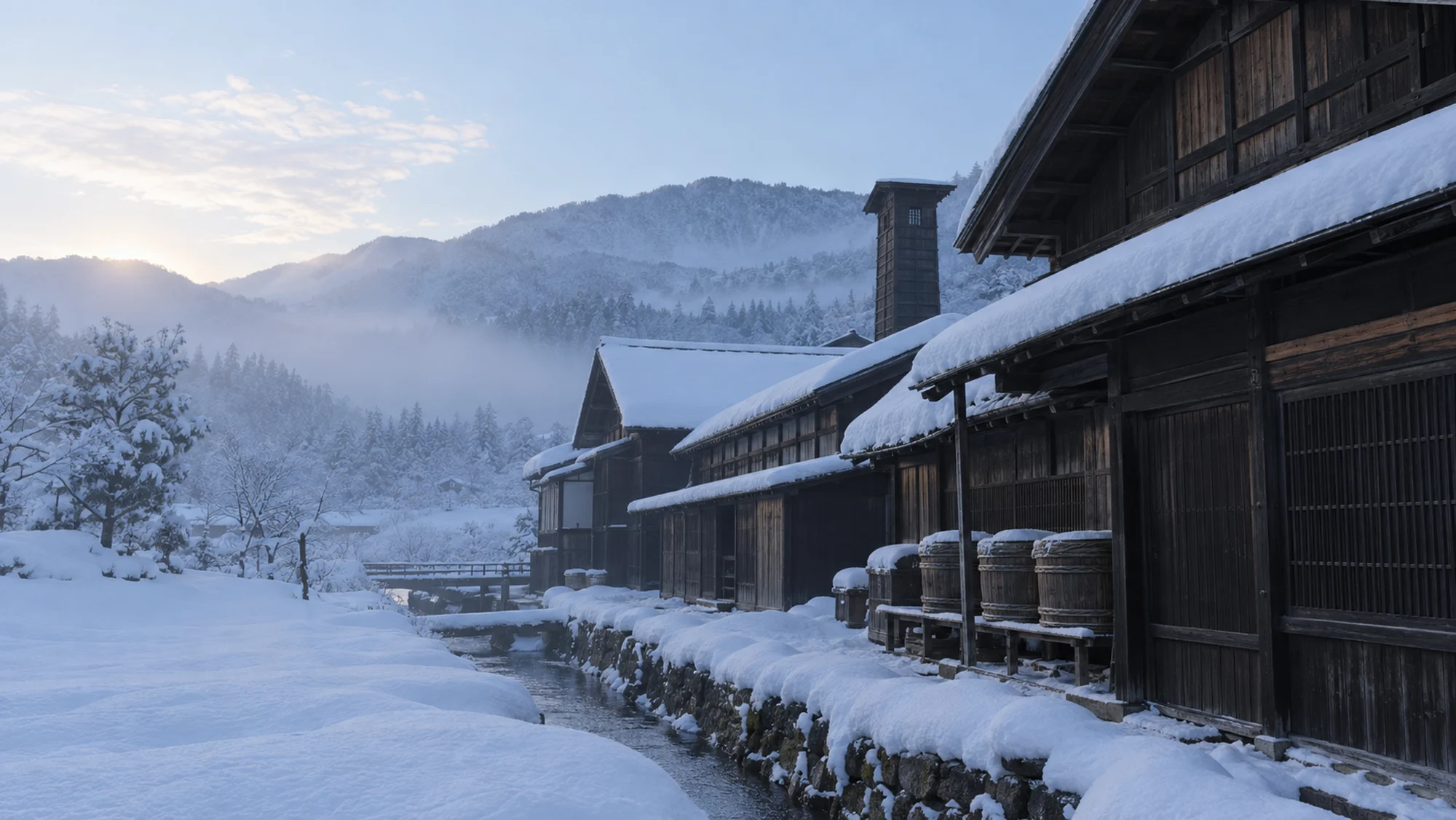
These words have been passed down through our family. Here, snowmelt is said to take decades to pass through the earth and emerge as spring water. The water we brew with today fell as snow before I was born. Seen that way, finishing a batch one day sooner means little. We wait for koji (rice cultivated with a mold that converts starch to sugar), for the moromi fermentation mash to settle, and for pasteurized sake to find its balance. Waiting is different from neglect. While we wait, our brewers keep watching.
What stays and what changes
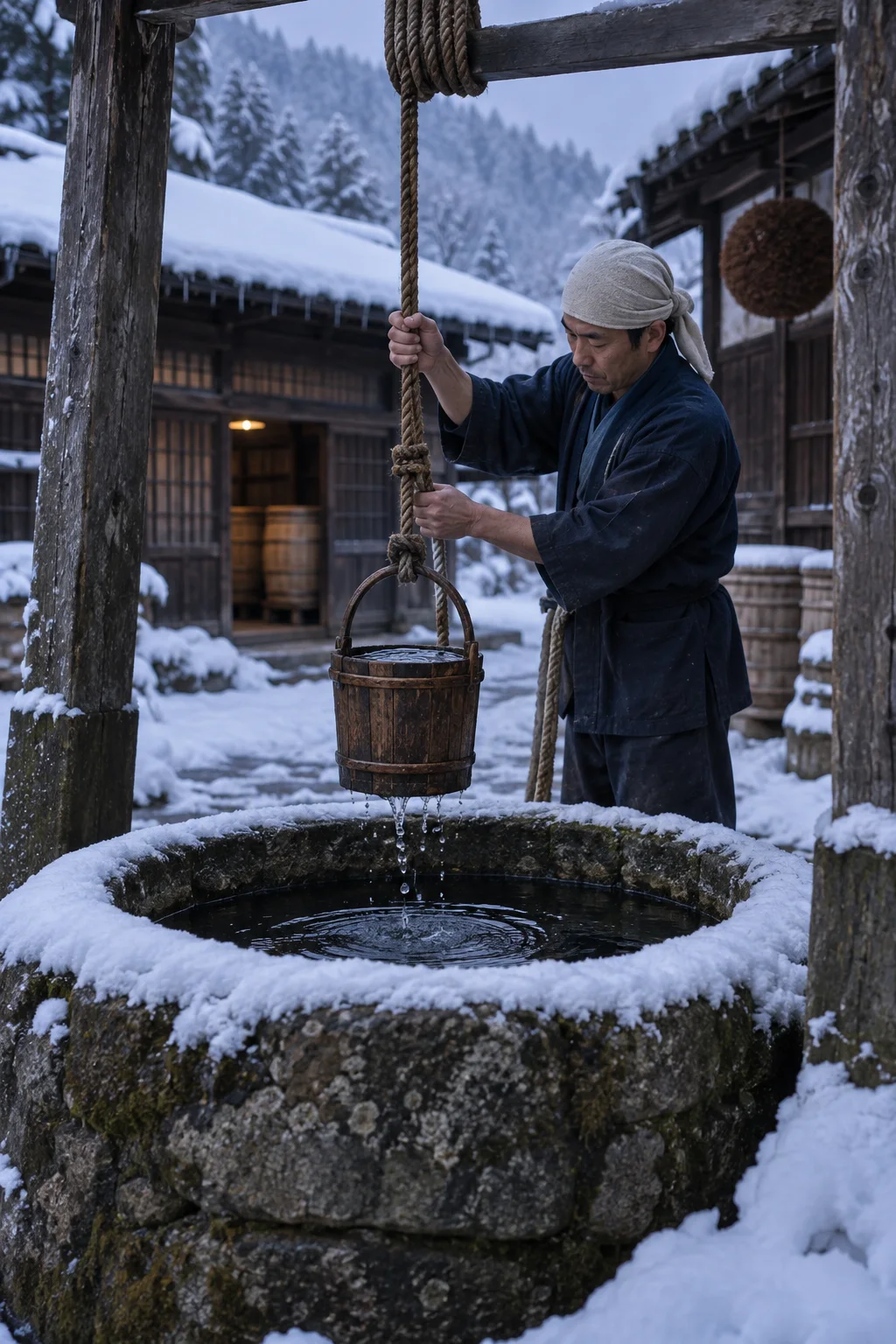
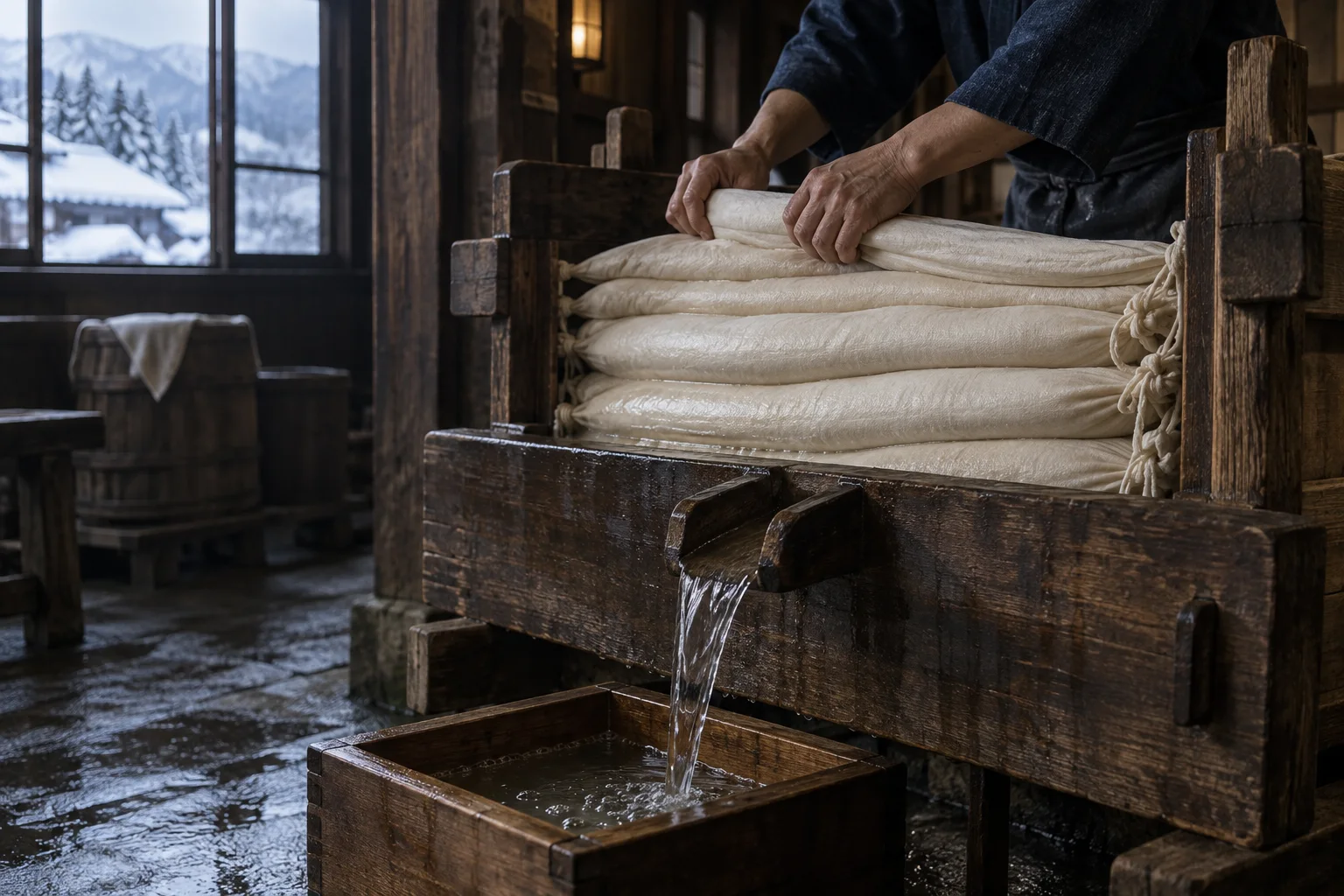
Three things remain: our shikomi-mizu (brewing water), handmade koji in wooden trays, and pressing in a traditional fune press. Without them, I believe it would no longer be our sake. Everything else may change when it needs to. We now record temperature and density digitally for every tank, and choose yeast to suit each year's rice rather than insisting on our own resident strains. The word tradition is often used as a reason to do nothing. I choose to change in order to preserve.
Fields, snow and this valley
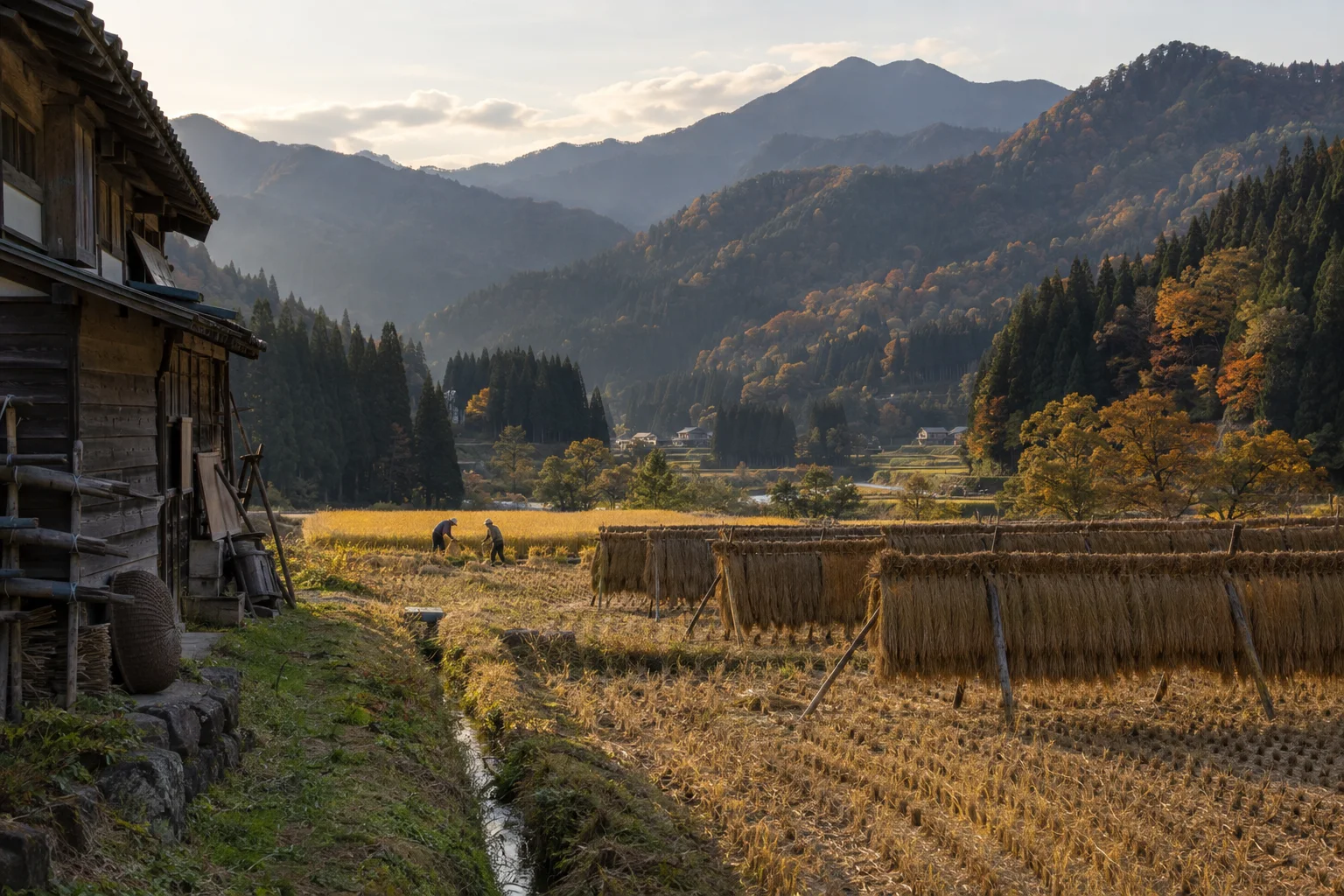
All six partner farms are within walking distance. Our brewers help with planting and harvest, and everyone weeds the fields in summer. The weather determines the rice each year. What we can do is adapt our brewing to the rice that arrives. Two meters of winter snow become spring water, and rice ripens in autumn. The valley's year is our brewery's year. Through our sake, I hope to share something of this place and its time.