
When to bring your child
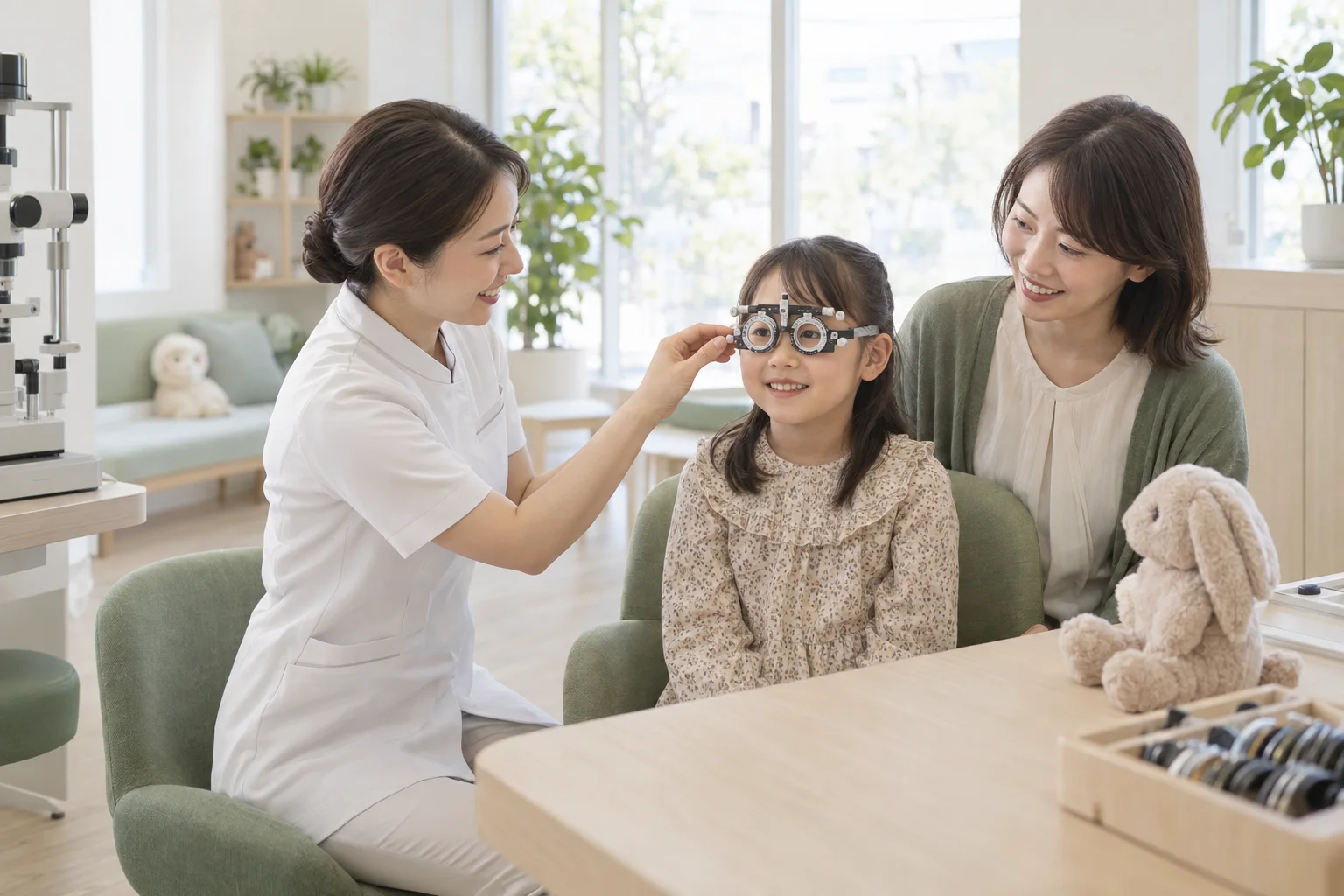
- Reduced vision or strabismus noted at school or nursery screening
- Sitting very close to books or television
- Squinting
- Disliking having one eye covered
- Tilting the head to see
- Unusual eye alignment
- Frequent falls
- Frequent eye rubbing
Children may not say they cannot see clearly. If vision has always been poor in one eye, that feels normal to them. Screening results and changes noticed by family are important reasons to seek an examination.
Amblyopia
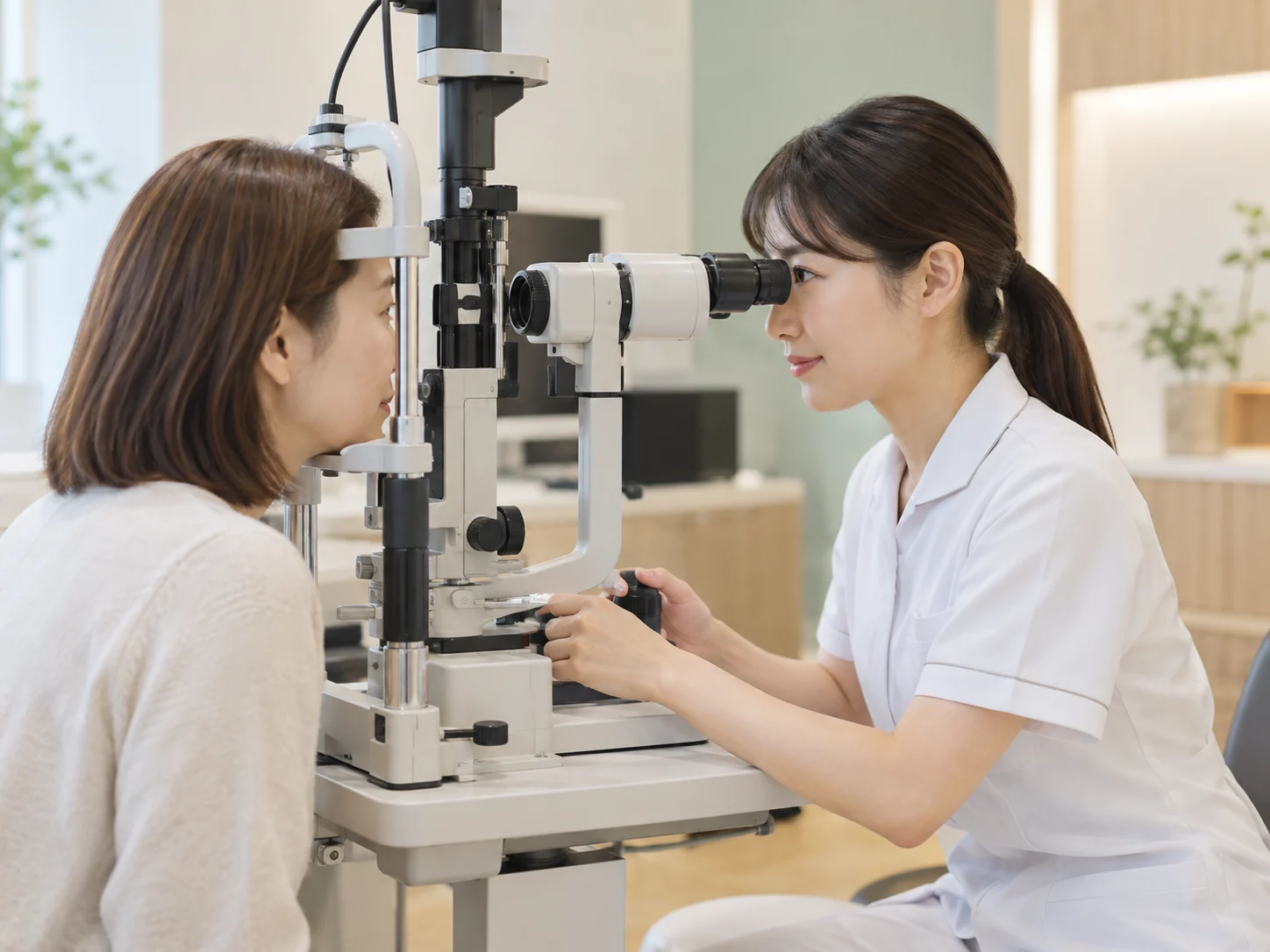
Vision develops gradually as children look at things. During this period, significant long-sightedness, astigmatism, strabismus or a drooping eyelid can prevent a clear image from reaching the retina and interrupt visual development. This is amblyopia, sometimes called a lazy eye.
Amblyopia means vision remains reduced even with glasses, and treatment becomes difficult in adulthood. Visual development is largely complete by about age 6-8, so early detection and treatment affect the outcome.
Treatment begins with correctly prescribed glasses to provide a clear image. If needed, a patch covers the stronger eye to encourage use of the weaker eye. We proceed over time with regular vision checks.
Early vision checks
The vision test at Japan's routine health check for 3-year-olds is an important opportunity for detection. Young children can be tested: our dedicated orthoptist uses picture cards and play-based methods suited to their age.
Strabismus
Strabismus means the eyes do not point in the same direction. One eye may turn inward, outward, upward or downward.
It can be constant or appear only when tired or when an eye is covered; intermittent changes may be hard to notice in photographs. In Japanese children, skin folds near the inner eye corners can also create the appearance of inward turning without actual misalignment (pseudostrabismus). Tests distinguish the two.
Strabismus can interfere with the development of depth perception and may lead to amblyopia in the misaligned eye. Treatment options include glasses, vision training and surgery, depending on the cause and degree. When surgery is needed, we refer to a hospital that treats childhood strabismus.
Slowing myopia progression
Myopia, or short-sightedness, occurs when the eye grows longer and light focuses in front of the retina. It often progresses during childhood, and an elongated eye does not return to its previous length.
High myopia is known to increase later risks of retinal detachment, glaucoma and myopic retinal changes. Care increasingly aims to slow progression during growth as well as provide clear vision with glasses.
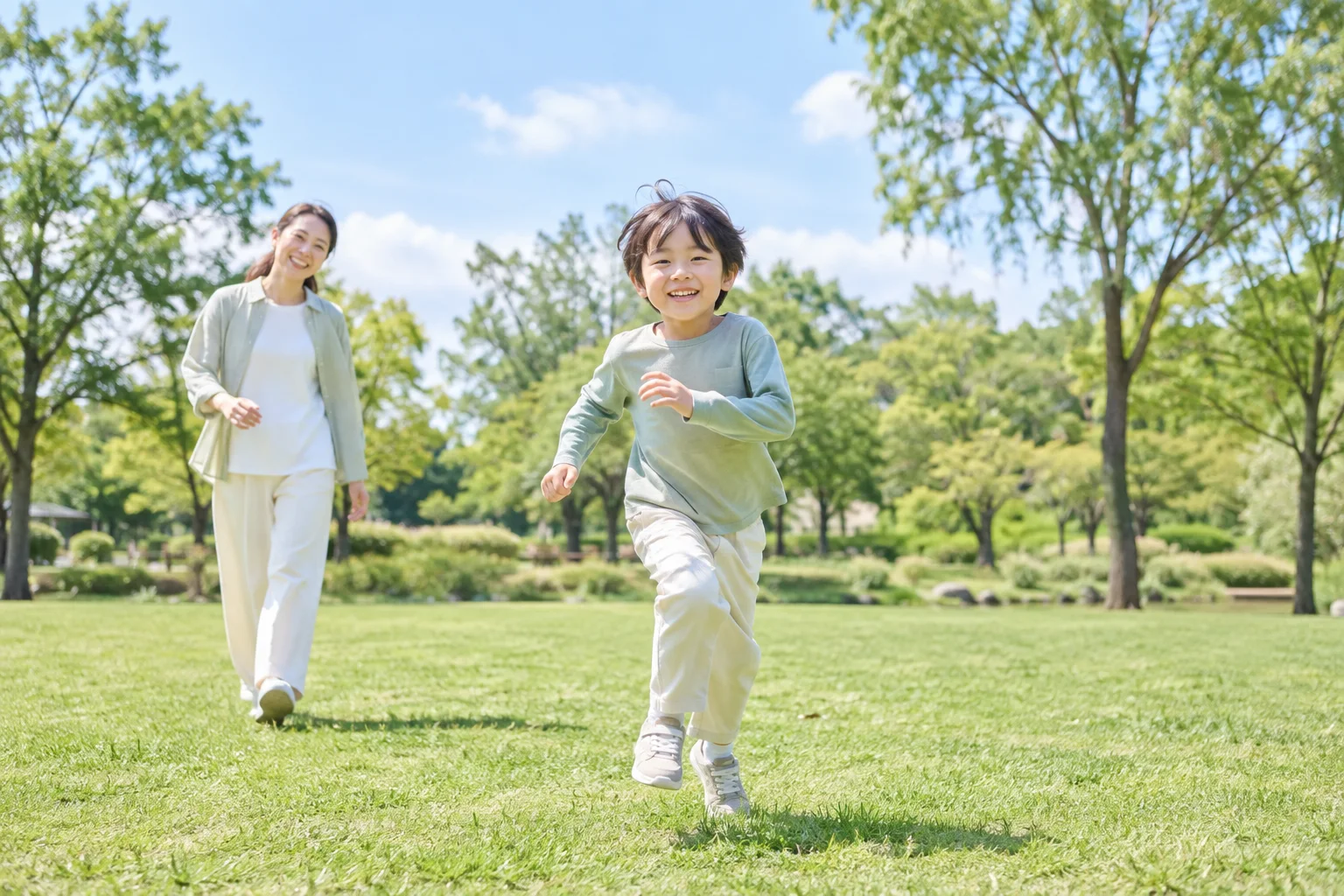
Everyday measures include spending about 2 hours outdoors each day and avoiding prolonged close work: keep a distance of at least 30 cm and look into the distance every 30 minutes.
We also discuss the following options according to prescription strength and the rate of progression.
Myopia control options and costs
All options below are self-pay treatments, with no Japanese public health insurance coverage. They aim to slow progression rather than stop it completely. Effects vary, and results are not the same for every child.
Low-dose atropine drops
Used once daily before bed. Estimated cost is about ¥4,000-¥5,000 per month. Possible side effects include glare and difficulty seeing close objects, generally reported to be mild at low concentrations. Stop use if an allergic reaction develops.
Daily myopia-control lenses
Soft contact lenses worn during the day. Estimated cost is about ¥12,000 per month for both eyes. The child must be able to manage wearing and handling the lenses. Regular checks are essential because of the risk of corneal scratches and infection.
Orthokeratology
Specially shaped rigid contact lenses are worn during sleep to temporarily reshape the cornea and improve unaided daytime vision. The first year typically costs in the ¥100,000-¥199,999 range; later years involve lens replacement and regular examination fees. Corneal infection is a risk, so reliable lens cleaning and regular checks are essential. Some eye conditions are not suitable.
For all methods, we measure eye length and prescription before starting and every 3-6 months afterward. We show you the measurements and discuss whether to continue or change the approach.

Your child's visit
Please attend with a parent or guardian. Bring any school or nursery screening results, your maternal and child health handbook (Japan's parent-held health record), and any referral letter.
We may use drops to temporarily relax focusing for an accurate prescription. Their effects can last several hours to a day, causing glare and difficulty seeing close objects. We explain this beforehand and arrange a suitable day, considering school activities.
An orthoptist carries out the tests at a pace suited to your child's age and attention span. If necessary, testing can be split across visits. The waiting room has a children's area.