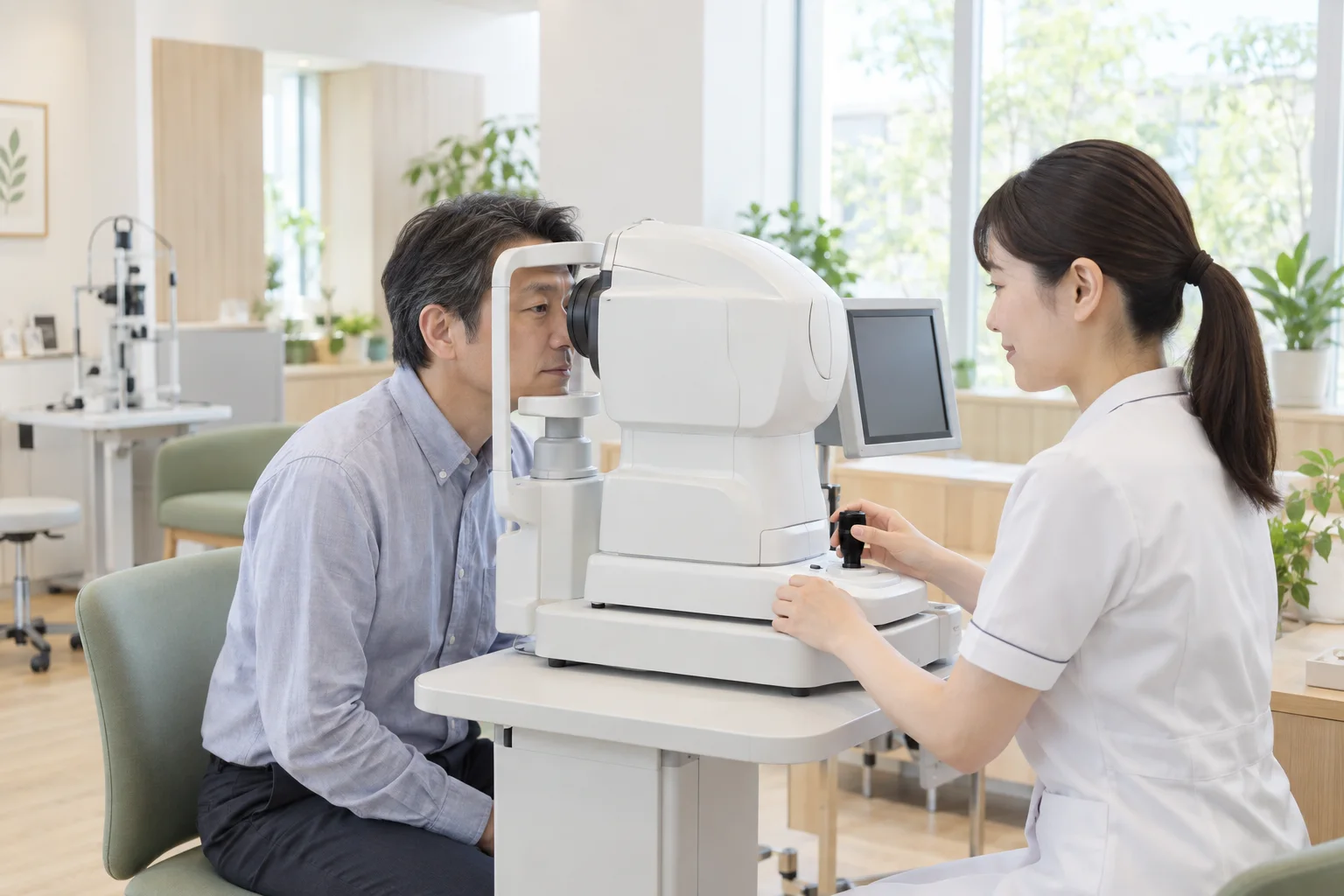

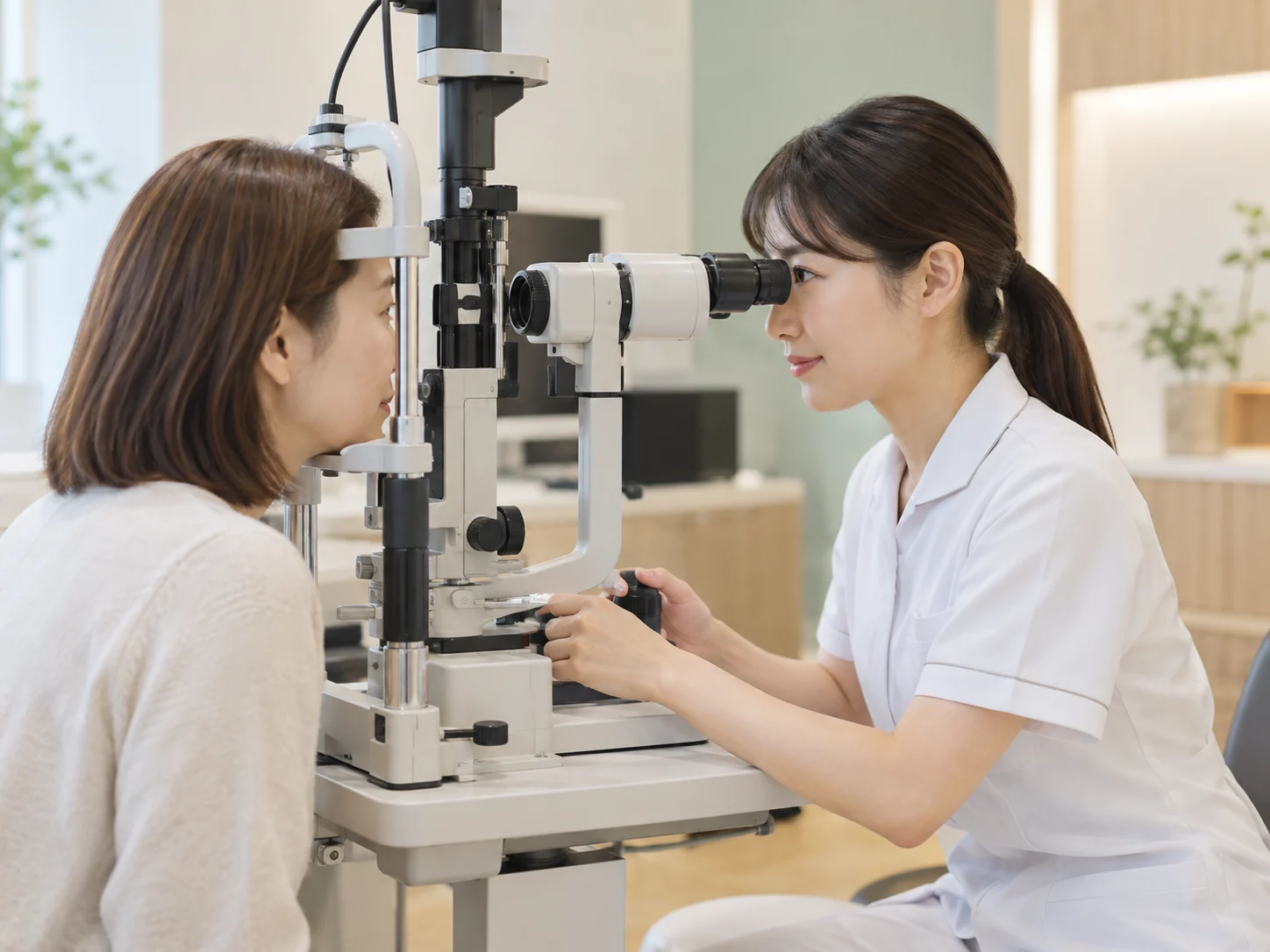
Symptoms we can help assess
- Blurred vision
- Declining vision
- Glare
- Red eyes
- Eye discharge
- Itching
- Gritty eyes
- Dryness
- Watering eyes
- Swollen eyelids
- Difficulty seeing part of your visual field
- Floating black spots or threads
- Double vision
- Eye strain and headaches
- An abnormal health check result
Even mild symptoms can accompany eye conditions that are not noticed until they progress. Please talk to us when you notice a change.
General eye care
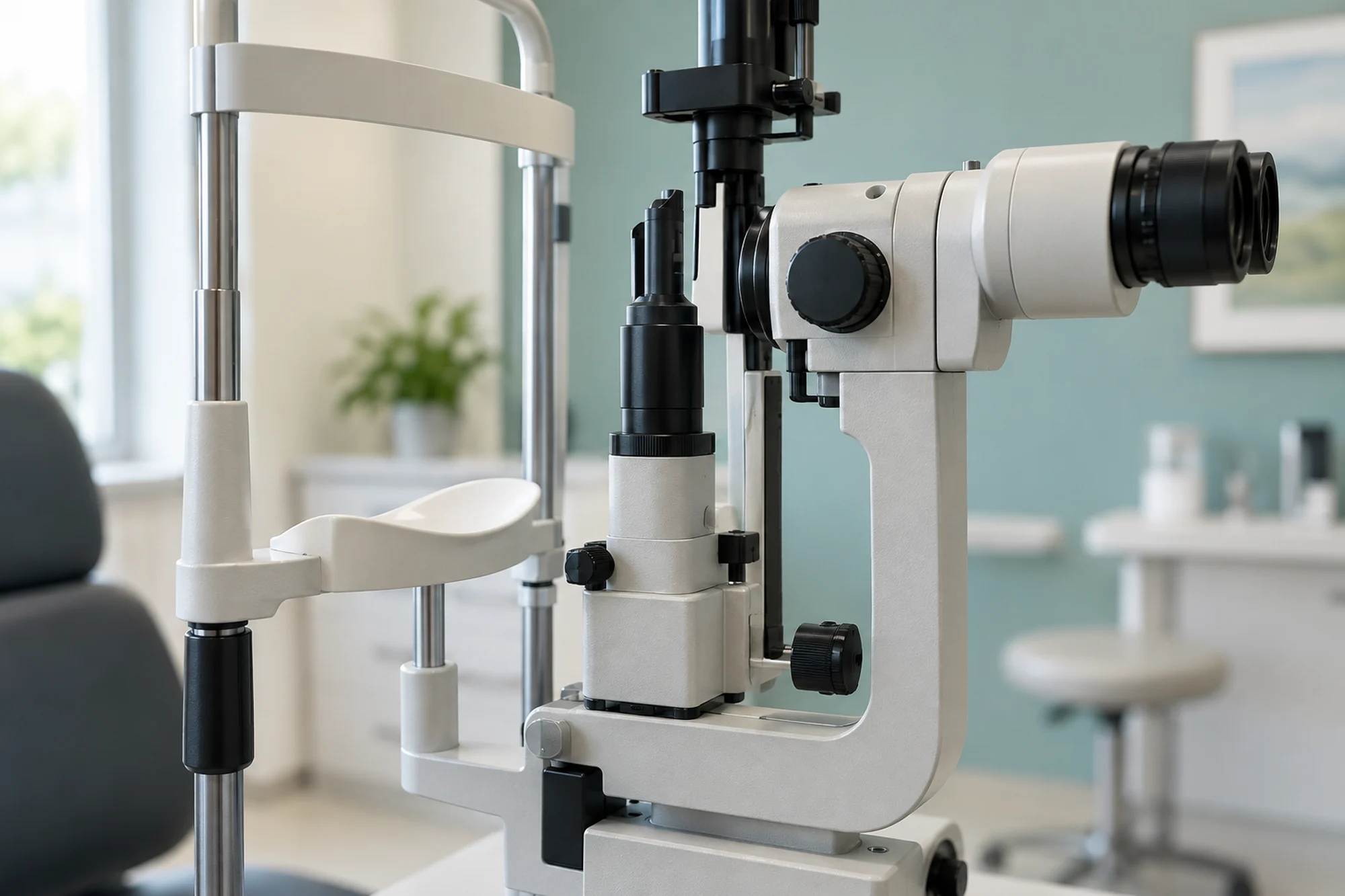
We treat everyday eye problems including bacterial, viral and allergic conjunctivitis, styes and chalazia, eye strain, floaters, corneal scratches and itchy eyes caused by hay fever.
Most improve with eye drops, but similar symptoms can have different causes and require different treatments. Viral conjunctivitis is particularly contagious; the diagnosis affects advice for family members and attendance at work or school. Please seek an examination before continuing to self-treat with over-the-counter drops.

Cataracts
A cataract is clouding of the eye's natural lens, causing blurred vision, glare and reduced sight. Aging is the most common cause, and most people in their eighties have some degree of clouding.
In the early stages, we monitor the condition while using eye drops to slow progression. Surgery becomes an option when daily life is affected. We offer day-case cataract surgery; see the Cataract surgery page for details.
Cataract surgery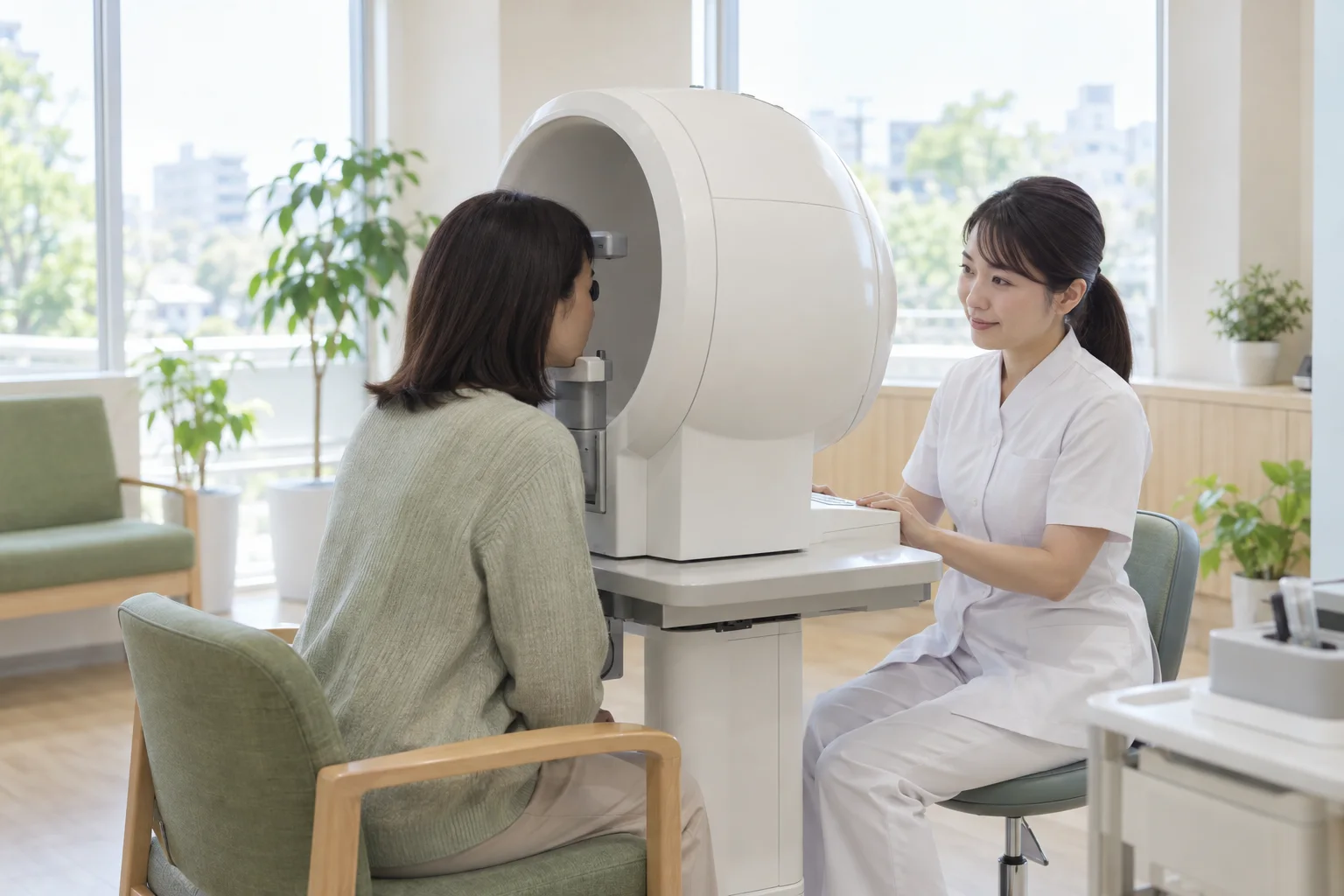
Glaucoma
Glaucoma gradually damages the optic nerve and reduces the field of vision. It is the most common cause of acquired blindness in Japan and is estimated to affect about one in twenty people aged 40 or over.
There are usually few noticeable symptoms in the early to middle stages. If one eye loses part of its field of vision, the other often compensates, making changes hard to notice.
Lost vision cannot be restored, so treatment aims to limit progression. Eye drops to lower eye pressure are the main treatment, with OCT and visual field checks every 3-6 months. If drops are insufficient, we consider laser treatment or surgery. Procedures beyond our facilities are referred to a partner general hospital's ophthalmology department.
Retinal conditions
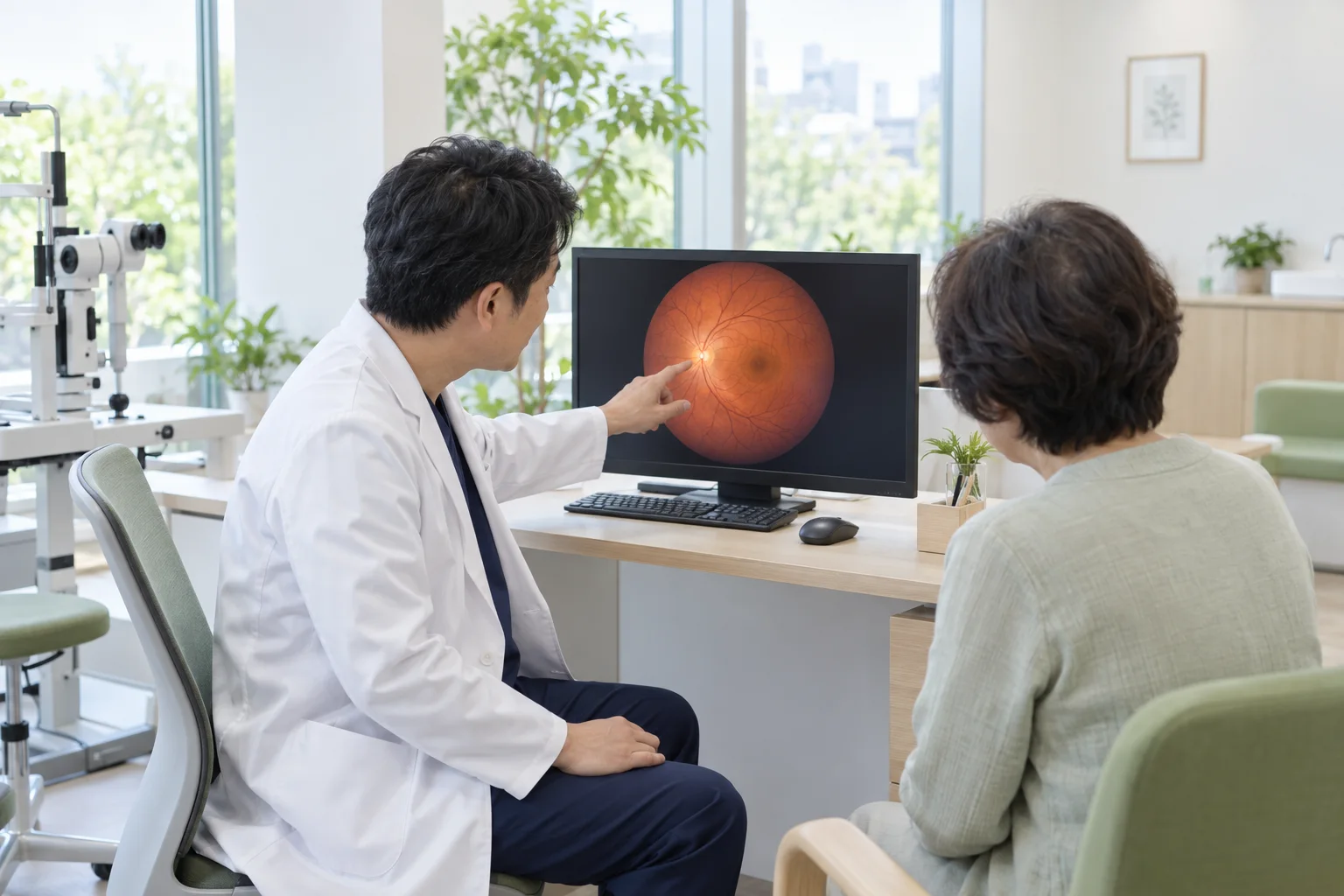
The retina is the light-sensitive tissue at the back of the eye, like film in a camera. Bleeding or swelling there directly affects vision. Conditions include diabetic retinopathy, retinal vein occlusion and age-related macular degeneration.
Diabetic retinopathy occurs when prolonged high blood sugar damages tiny retinal blood vessels. Vision can remain unchanged until it is advanced, so we recommend regular retinal examinations for people with diabetes even without symptoms.
Age-related macular degeneration affects the macula at the center of the retina, where abnormal blood vessels or swelling can make the center of your vision distorted or dark. We use OCT cross-sectional images to help diagnose it.
If injections into the eye or laser photocoagulation are needed, we explain which treatment we can provide and which requires a hospital with inpatient or surgical facilities.

Dry eye and eyelid gland problems
Dry eye occurs when tear quantity or quality is insufficient to protect the eye's surface. Symptoms include dryness, a gritty feeling, tired eyes or even excessive watering.
Common factors include reduced blinking when using computers or phones, air conditioning and contact lenses. Blockages in the oil-producing meibomian glands along the eyelid edge can also allow tears to evaporate more easily.
After checking tear quantity and quality, we explain suitable eye drops, warm eyelid compresses and cleaning methods. We also discuss practical changes you can make in daily life.

Children's eye care
We assess reduced vision or strabismus found during school screening, concerns about eye alignment, and habits such as sitting close to the television. A dedicated orthoptist carries out tests and vision training. See the Children's eyes & myopia page for amblyopia, strabismus and myopia control.
Children's eyes & myopia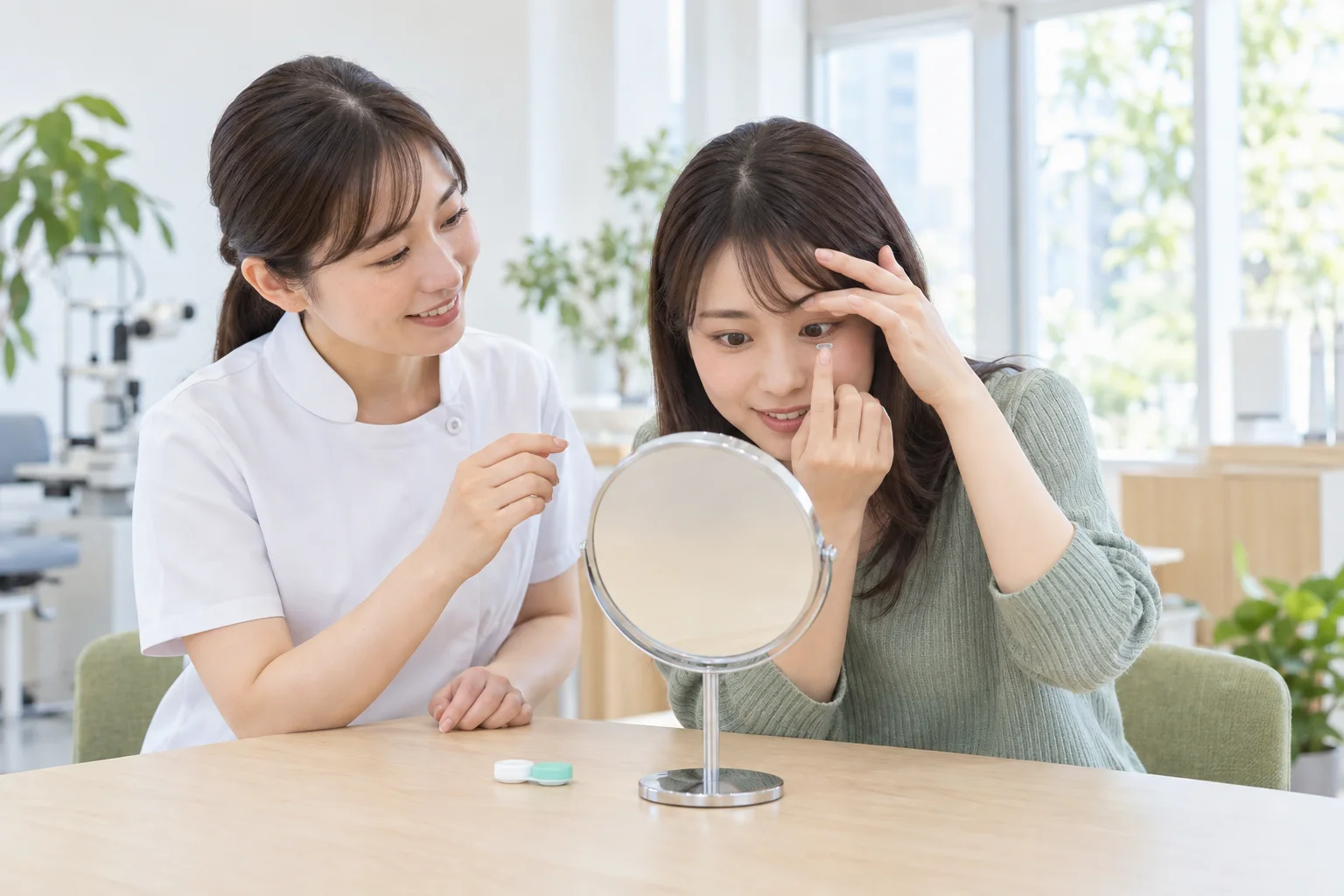
Contact lenses and glasses
Contact lens prescriptions require more than a vision test: we check the cornea, conjunctiva and tear quantity. First-time wearers also have time to practice putting lenses in and taking them out.
For glasses, we consider how you will use them, such as driving, computer work or reading, as well as lens power. For children, we may use drops to temporarily relax focusing so we can measure an accurate prescription.
Regular examinations check for lens-related corneal scratches and loss of corneal endothelial cells. We recommend a check every 3-6 months, even without symptoms.