Working with us
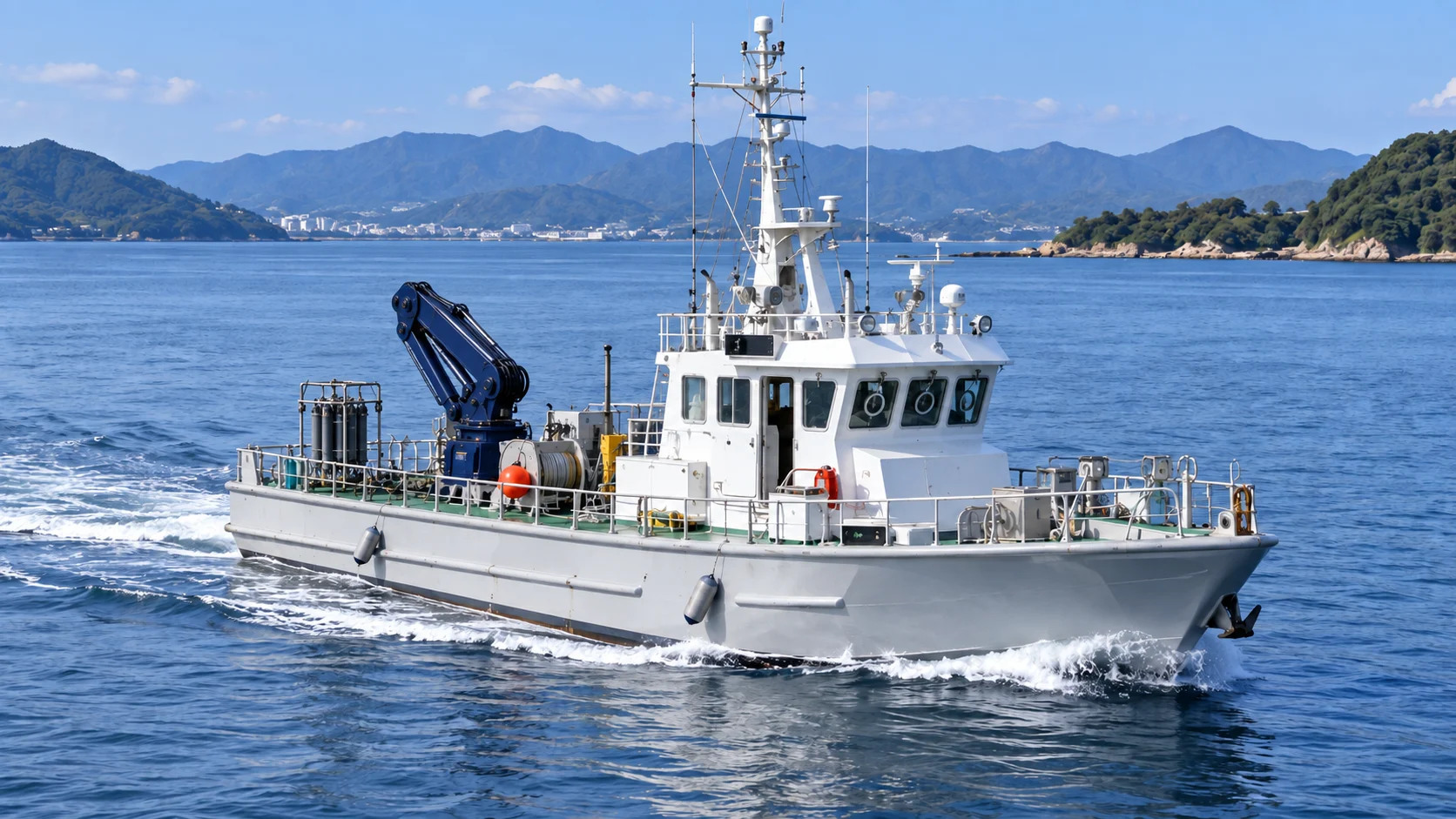
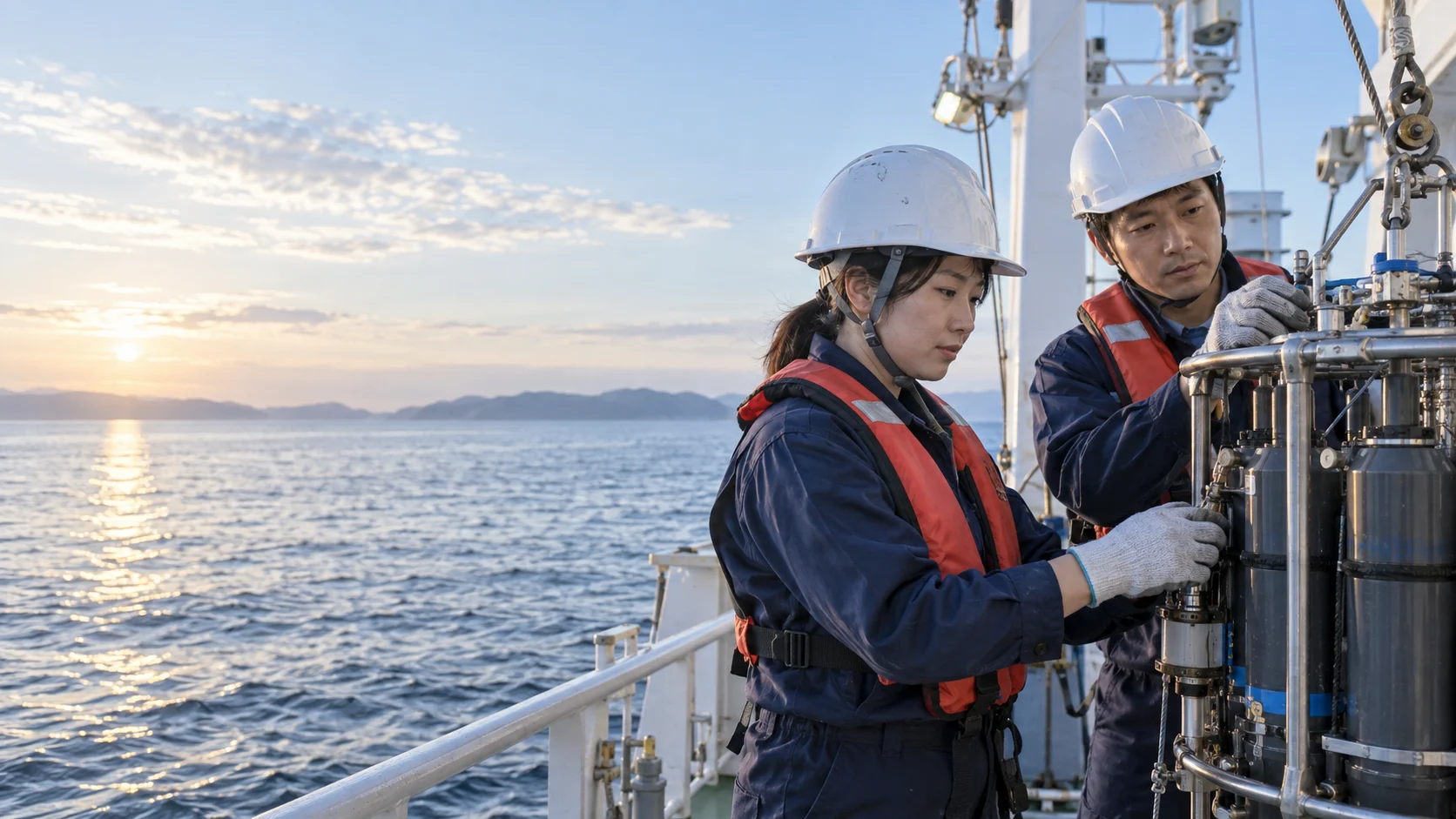
A love of the sea alone is not enough for this work. It involves early departures, recording data aboard moving vessels, long hours identifying organisms under a microscope, and reports with deadlines. It also means seeing measurements you made influence real project decisions. We welcome people who find meaning in the steady, careful procedures behind those results.
Field survey roles
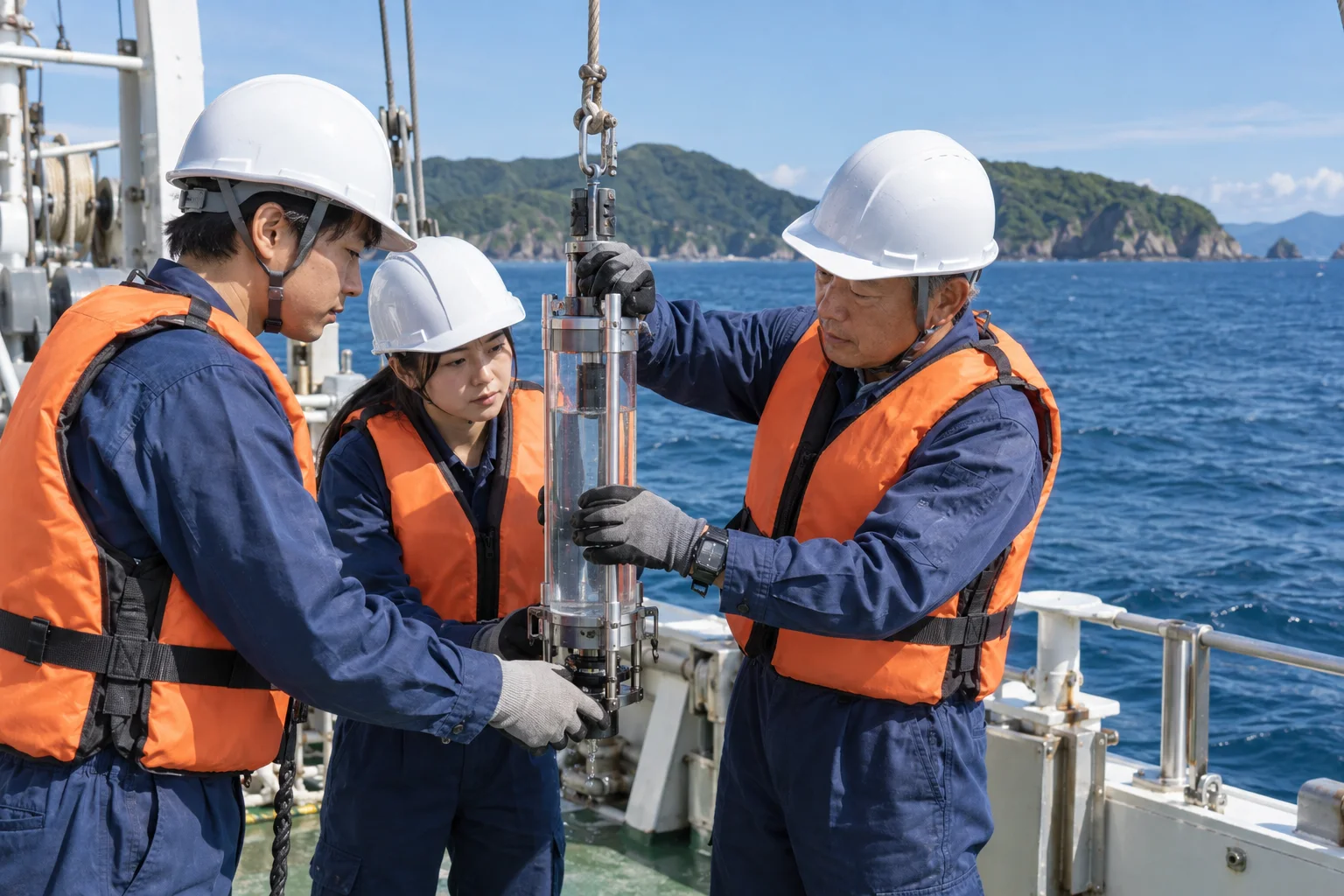
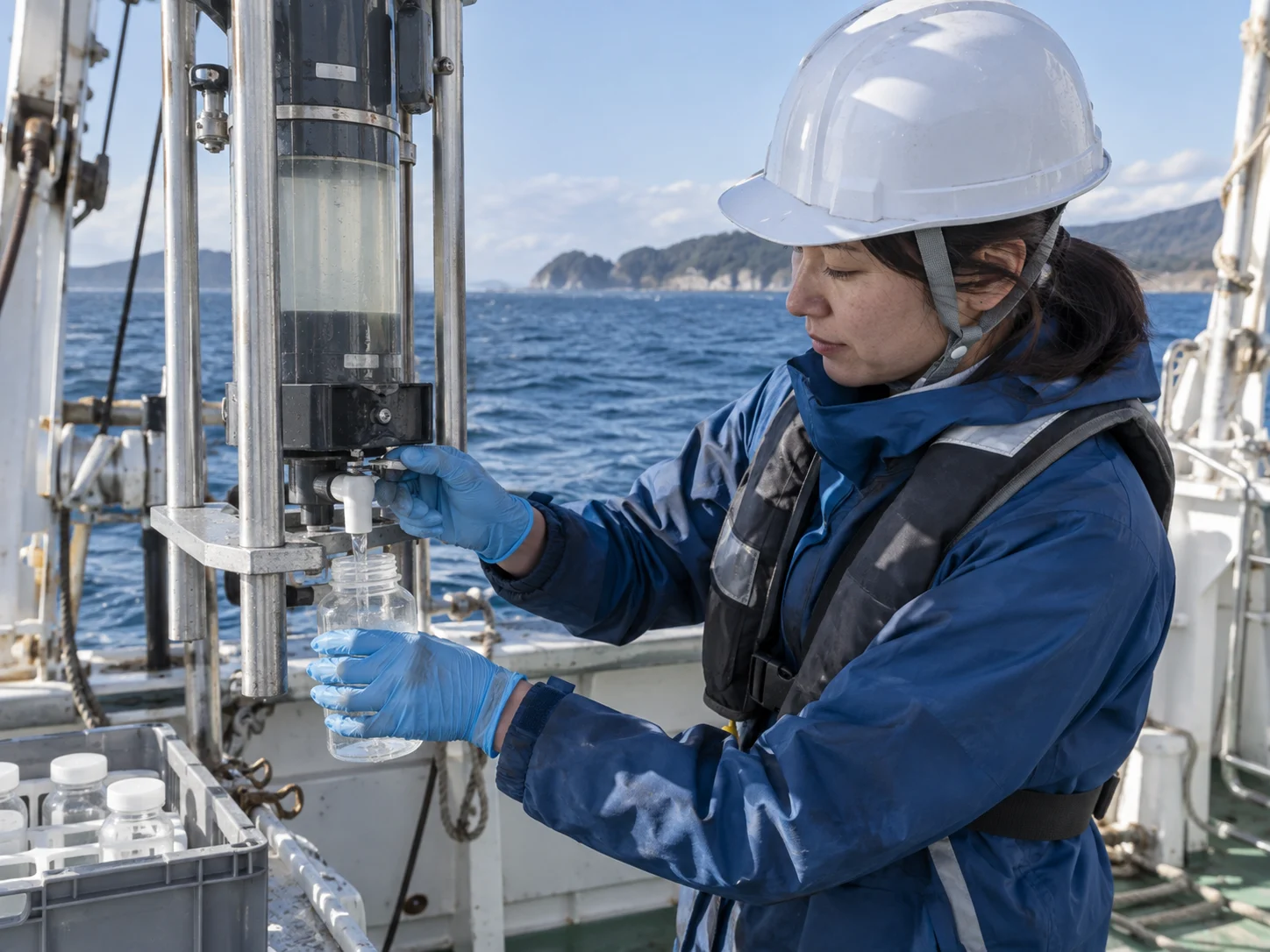
You will plan and carry out field surveys: water and sediment sampling, deployment and recovery of moored instruments, biological sampling, diving surveys and surveying. Fieldwork accounts for about 40% of the year; the remainder is spent organizing data and preparing reports. Applicants without experience are welcome, but we ask new staff to obtain a Japanese commercial diving or small-vessel operator license after joining, at the company's expense. Many colleagues have backgrounds in biology or civil engineering.
- Annual fieldwork
- approx.40%
Laboratory roles
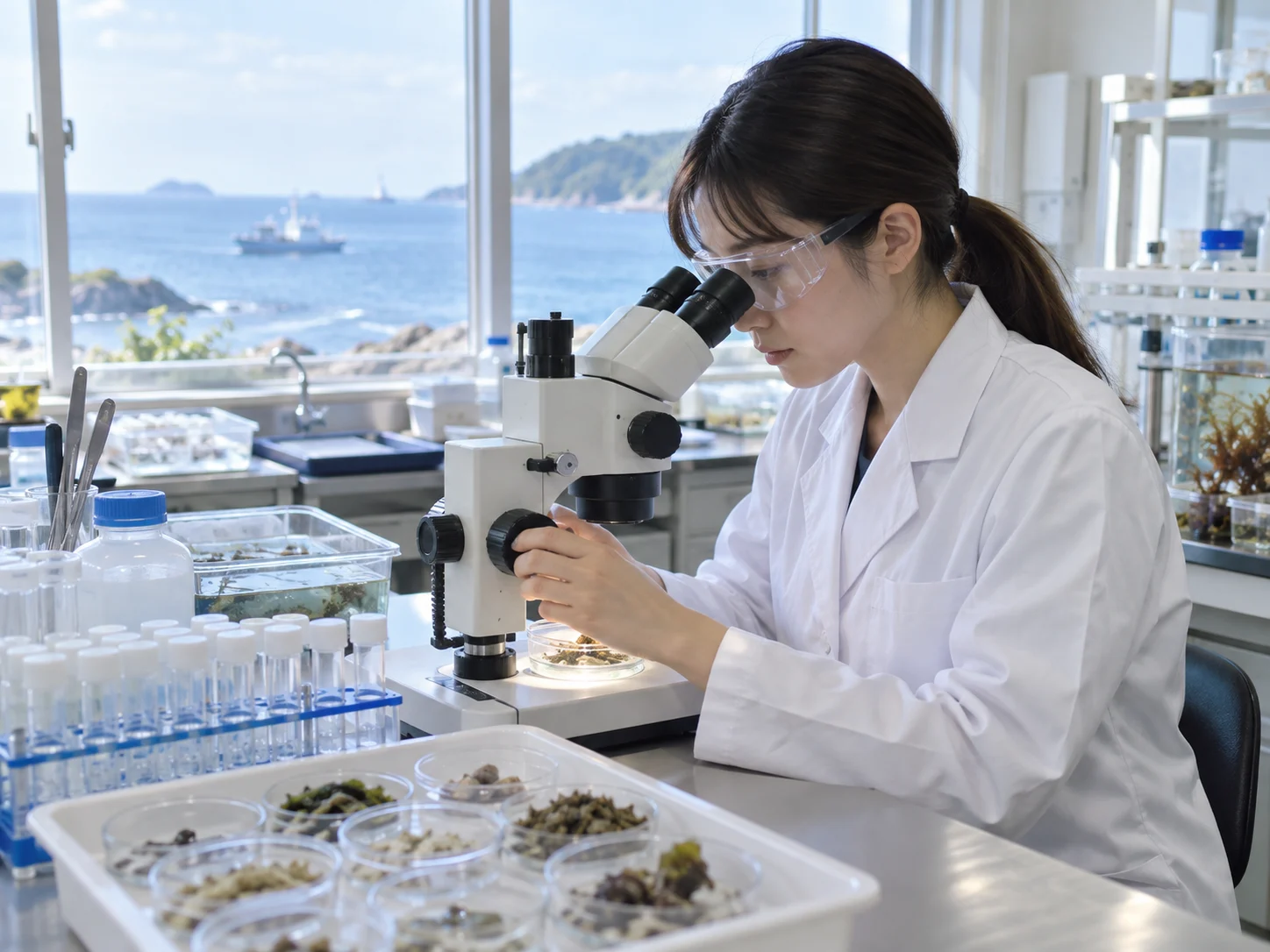
You will identify and count plankton, benthos, and fish eggs and larvae; conduct chemical analysis of water and sediment; and perform environmental DNA analysis. We encourage the Biological Classification Skills Test, a Japanese certification in organism identification, and pay examination and training fees. Identification depends on experience, so you will begin by examining the same samples as a senior colleague and comparing results. For chemical analysis, we welcome applicants working toward the Environmental Measurement Analyst qualification, a Japanese national credential.
Data analysis and consulting roles
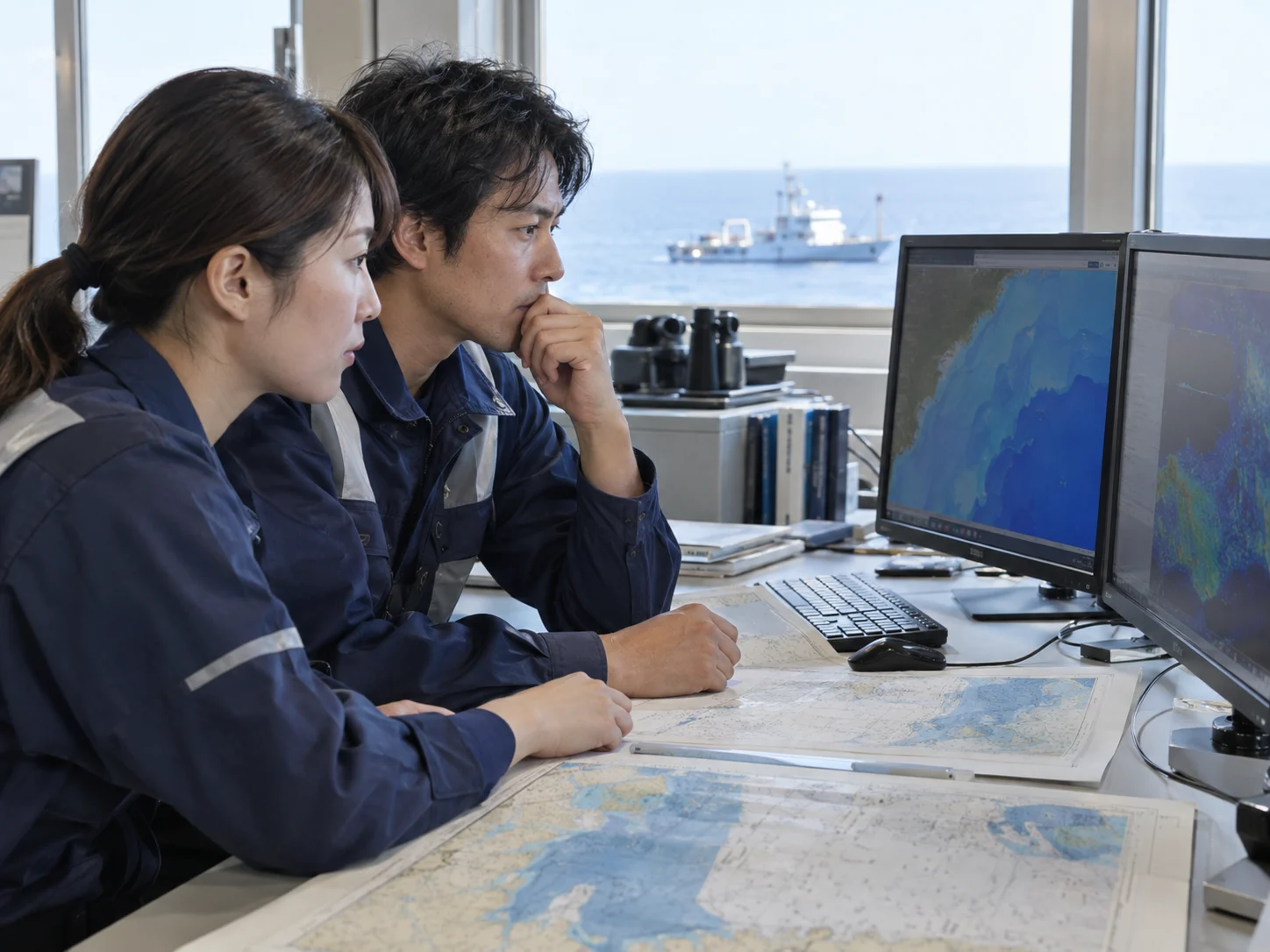
You will conduct statistical analysis and dispersion modeling, write environmental impact assessment documents and prepare materials for regulatory review. Experience in numerical analysis or data processing with R or Python is welcome. We support staff in working toward the Professional Engineer, Japan qualification in civil or environmental engineering, with in-house study sessions for the examinations.
Working arrangements
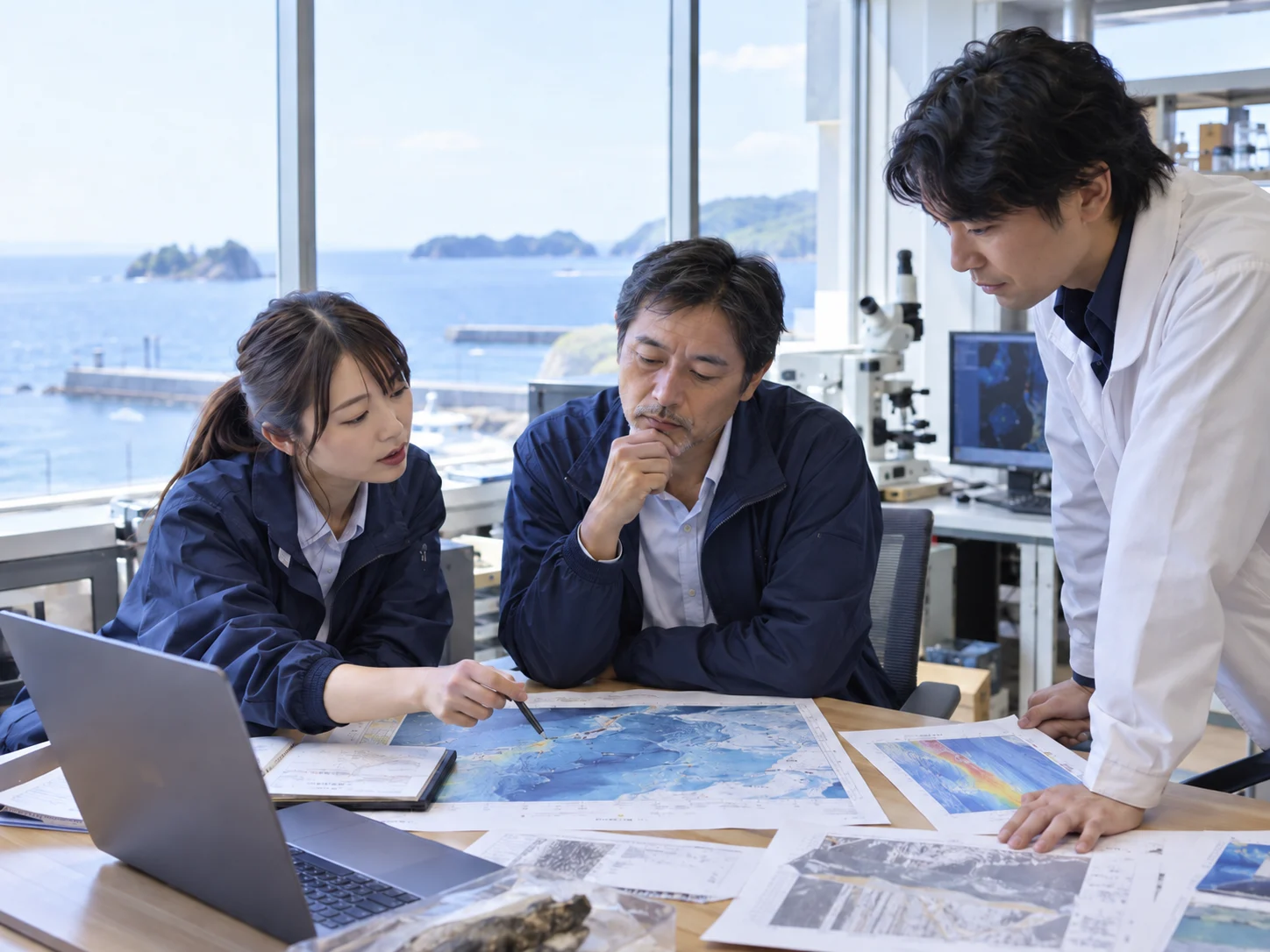
Hours may be irregular during field surveys, but compensatory days off are taken afterward. We offer 121 days off per year, and the latest paid-leave utilization rate is 78%. Work is busiest at the end of the Japanese fiscal year, with summer comparatively quieter. Business travel ranges from a few days per month to around a week away on longer assignments. Laboratory and data analysis staff may work from home up to two days a week.
- Annual days off
- 121days
- Paid-leave utilization
- 78%
- Remote work (laboratory and data analysis)
- per week2days maximum
Selection process
Application review, two interviews, then an offer. Where possible, applicants visit the laboratories and vessels before the second interview so that they can judge the working environment for themselves. We accept experienced applicants throughout the year and open graduate recruitment each March. Please select Careers in the contact form to apply.
- Application review
- Two interviews
- Offer