

Admissions: spring 2026
These are the results of students who worked on English and math toward their chosen schools. Alongside university and high school admissions, we share changes in learning and experiences from graduates and parents. Selective schools are schools with highly competitive entrance exams.
University admissions
Spring 2026 results. Each admission is counted separately, including multiple offers to one student. The sum of the categories is not a count of individual admitted students.
High school admissions
Spring 2026 results. Each admission is counted separately, including multiple offers to one student. These results are shown separately from university admissions.
First choices and counting criteria
There were 72 enrolled students in entrance-exam years. Of these, 72% gained admission to their first-choice school.
We include only students enrolled for at least six months. Students taking only holiday courses or mock exams are excluded. We do not add results from affiliated schools or partners. Admissions totals count each offer, so they differ from the number of enrolled students.
One year of progress in English and math
Figures cover 52 students who remained enrolled for a full year from joining during the 2025 academic year. Hensachi is a standardized mock-exam score centered on 50.
- Students whose English or math hensachi rose by at least 5 points
- 68%
- Students whose English or math hensachi rose by at least 10 points
- 31%
Students gaining at least 10 points are also included in the group gaining at least 5. The percentages should not be added together.

Rebuilding foundations takes time
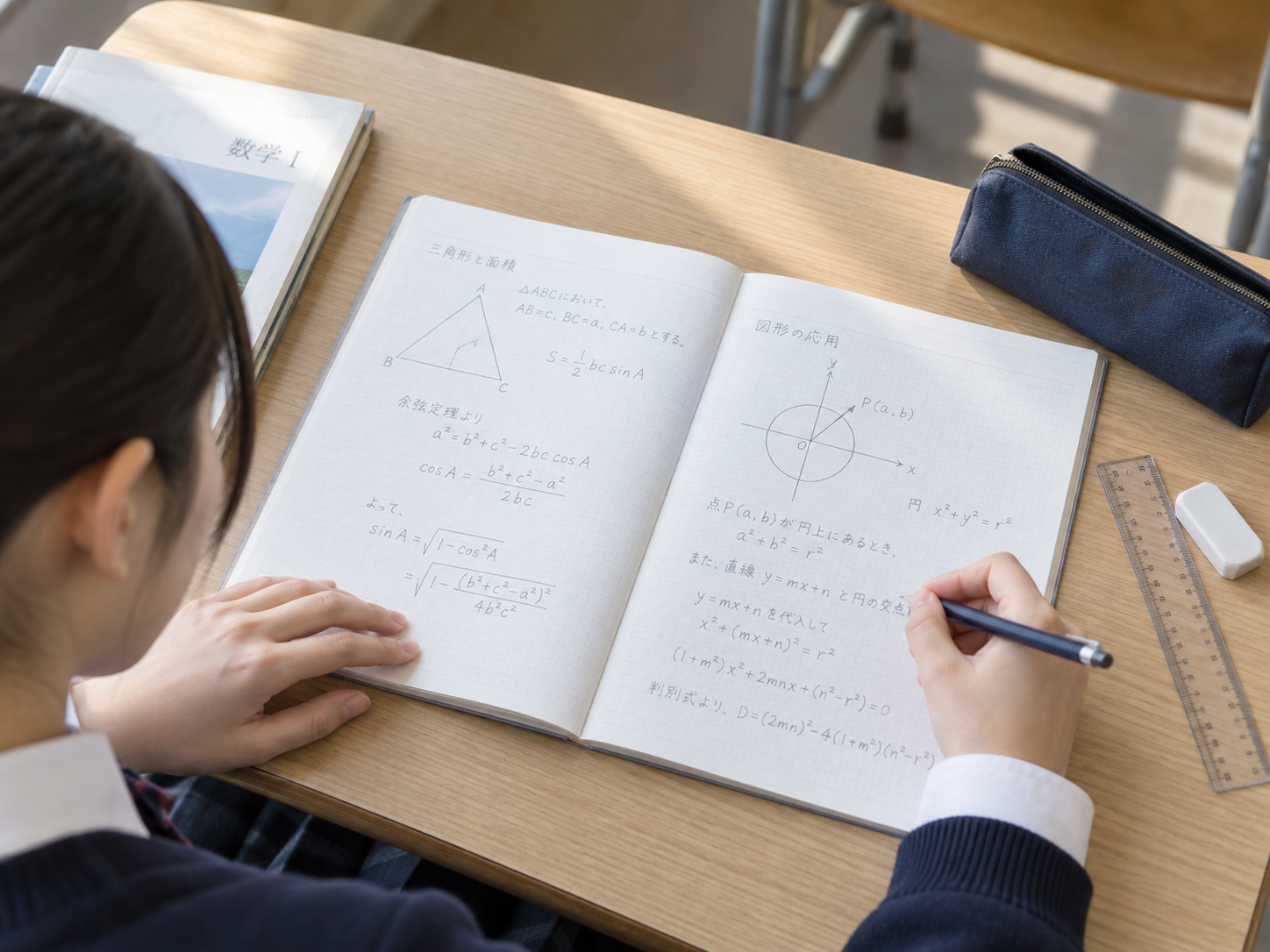
Among students whose hensachi was below 50 on entry, 79% gained at least 5 points. Students who needed to revisit topics from Junior high year 2 or earlier took an average of seven months before their scores began to change.
When earlier understanding is missing, we check material from previous school years. Rather than rushing ahead, we expand what each student can solve independently.
Graduate experiences
High school year 3; admitted to a selective national or public university
Graduate experience | Rebuilding math foundations
“In math, I spent the first three months doing equations from Junior high year 1. Honestly, it was hard to do that in the autumn of High school year 2, but then I suddenly found I could understand the questions.” (High school year 3; admitted to a selective national or public university)
This student returned to Junior high year 1 equations in the autumn of High school year 2, spending three months checking the basics. The account describes the process before understanding the questions began to feel different.
High school year 3; admitted to a selective private university
Graduate experience | Grammar before longer texts
“I had been avoiding grammar. My teacher stopped me at the same points every time, so I couldn’t avoid it anymore. I could read longer texts by about June of High school year 3.” (High school year 3; admitted to a selective private university)
The student checked grammar difficulties in every lesson and felt able to read longer passages around June of High school year 3.
Junior high year 3; admitted to a public high school designated for university preparation
Graduate experience | Noticed before asking
“With only six of us, the teacher quickly noticed when I looked confused. It was a relief not to have to raise my hand.” (Junior high year 3; admitted to a public high school designated for university preparation)
Some students find it difficult to raise a hand and ask. In a class of six, we pay attention to each student’s expression and work.
Parent experiences
Parent experience | The same teacher
“At the previous school, the teacher changed every year and we had to explain everything again. Here, we had the same teacher for three years. It helped that they understood what had happened last year when we met.” (Parent of a Junior high year 3 student)
Parent experience | Less prompting at home
“The biggest change is no longer having to say ‘Go and study.’ Homework is finished at the academy, so I don’t need to say anything at home.” (Parent of a High school year 1 student)
Parent experience | Planning the annual cost
“Receiving the annual total at the start helped us plan our household budget. About the only extra cost later was mock exams.” (Parent of a Junior high year 2 student)
Three ways we support learning
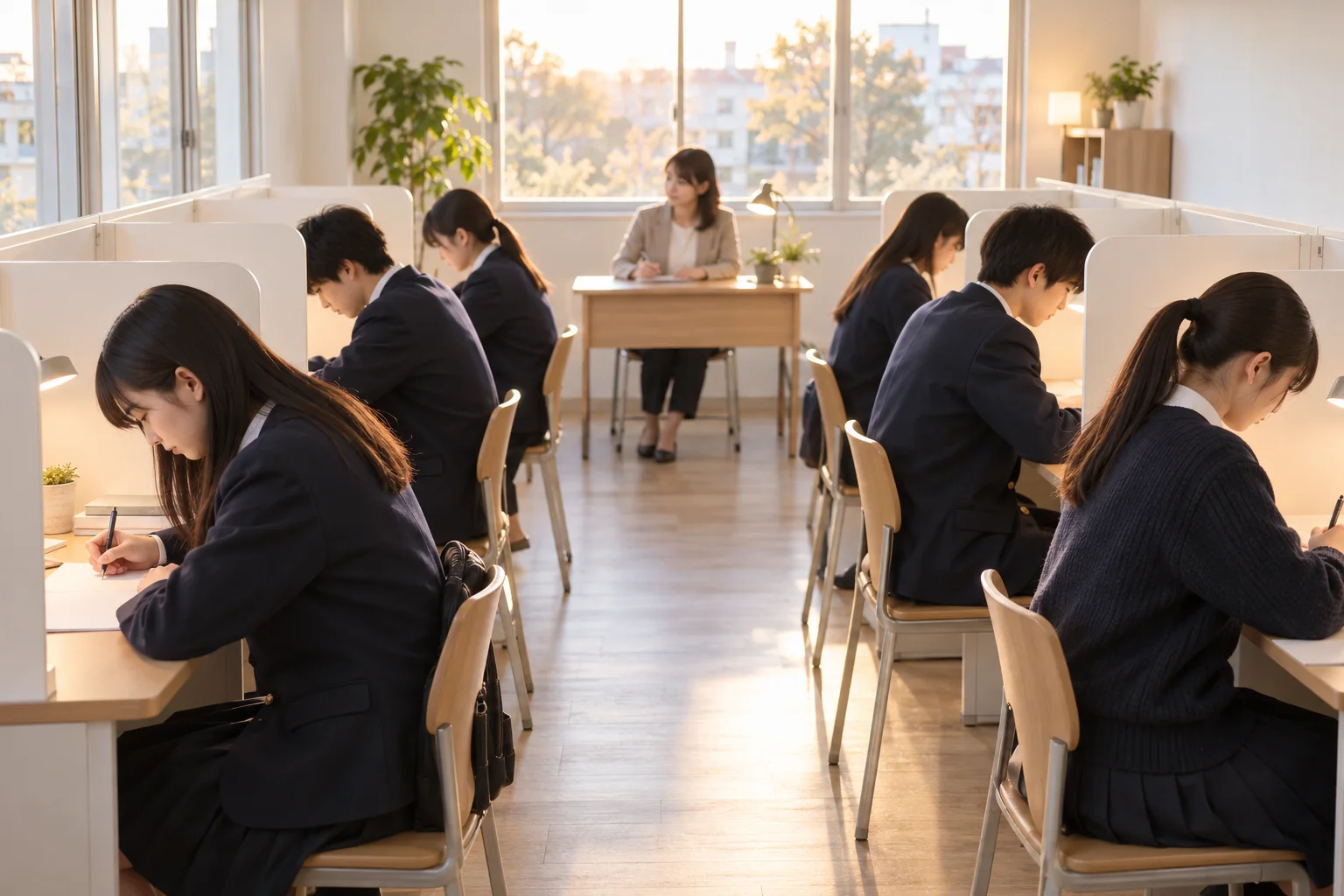
Find the gaps
Diagnostic tests and lesson observations tell us when to revisit earlier years’ topics.
Keep the same teacher
Your teacher normally stays with you throughout enrollment, building on knowledge of earlier difficulties.
Practice and revisit mistakes
Use the study room on days without lessons too, taking time to check that you can solve problems independently.
Check your understanding in a trial lesson
We offer a lesson in a regular class with a diagnostic test beforehand. We check your understanding of English and math and explore a course that fits your school year and goals together. See Trial lessons for the diagnostic test and the steps before your visit.
Trial lessons