Choosing to focus
We teach only English and math. This is not because science, social studies or Japanese matter less, but because these two subjects take the longest to rebuild within limited lesson time. Knowledge-based subjects can improve relatively quickly. But a student who struggled with linear equations in Junior high year 1 or infinitives in Junior high year 2 is unlikely to fill those gaps alone in High school year 2. We concentrate on the subjects that take more time.
Why six students?
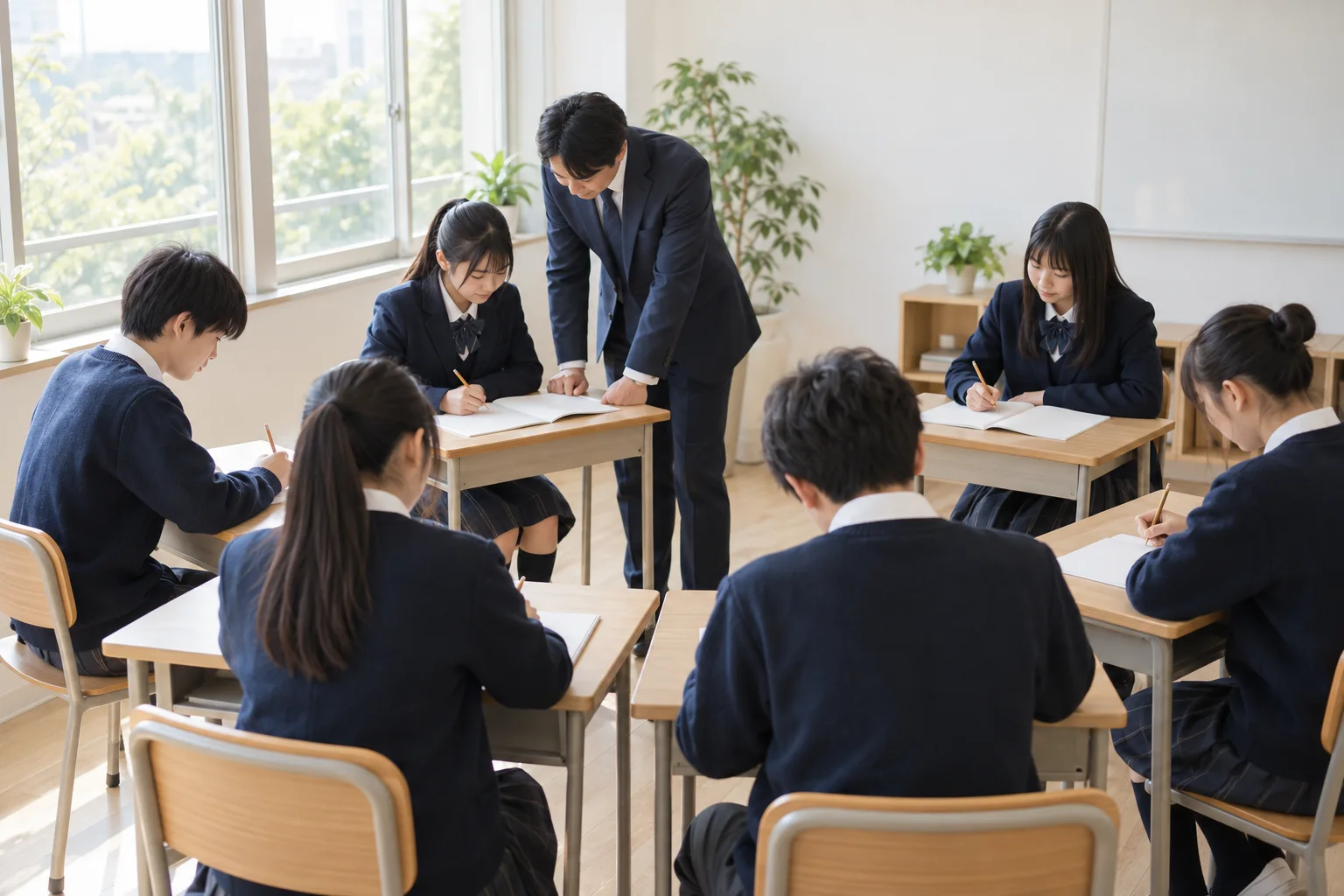
Six students is the most a teacher can observe while they work, visiting every desk at least three times in a 90-minute lesson. We look beyond correct answers to the steps in a calculation or the point where a student pauses while reading English. These clues reveal gaps in understanding. A class of over 20 makes this difficult; one-to-one tuition removes opportunities to see how other students solve problems. Six is our balance.
The same teacher for three years
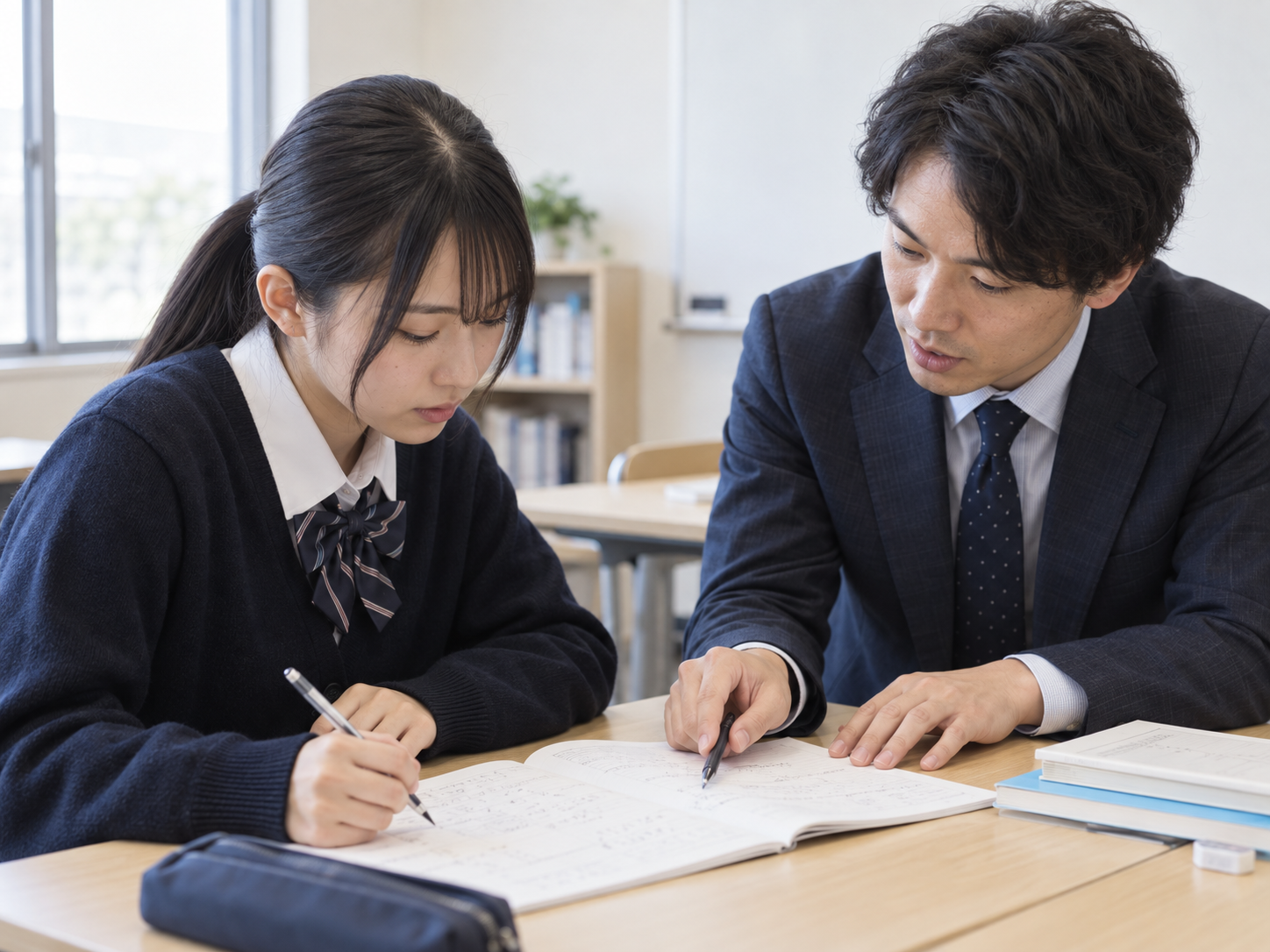
Your teacher normally stays with you from enrollment to graduation. Habits such as solving a function problem without a graph, or writing English in Japanese word order, cannot all be captured in a handover document. The same teacher can spot a repeated mistake from last year the moment it happens. If a teacher transfers or leaves, we notify parents at least two months in advance and both teachers attend during the handover.
Planning backward from the exam
When you enroll, we work backward from your chosen school’s exam date to put topic deadlines on one annual plan. We include your public school’s pace, the textbook sequence of a private combined secondary school (six-year junior and senior high education), club commitments and school test dates. At three meetings a year with the student, parent and teacher, we compare the plan with progress and adjust it immediately, for example by adding study-room days.
Junior high: enter by 8 p.m.
High school: enter by 9:30 p.m.
A study room with a teacher on hand
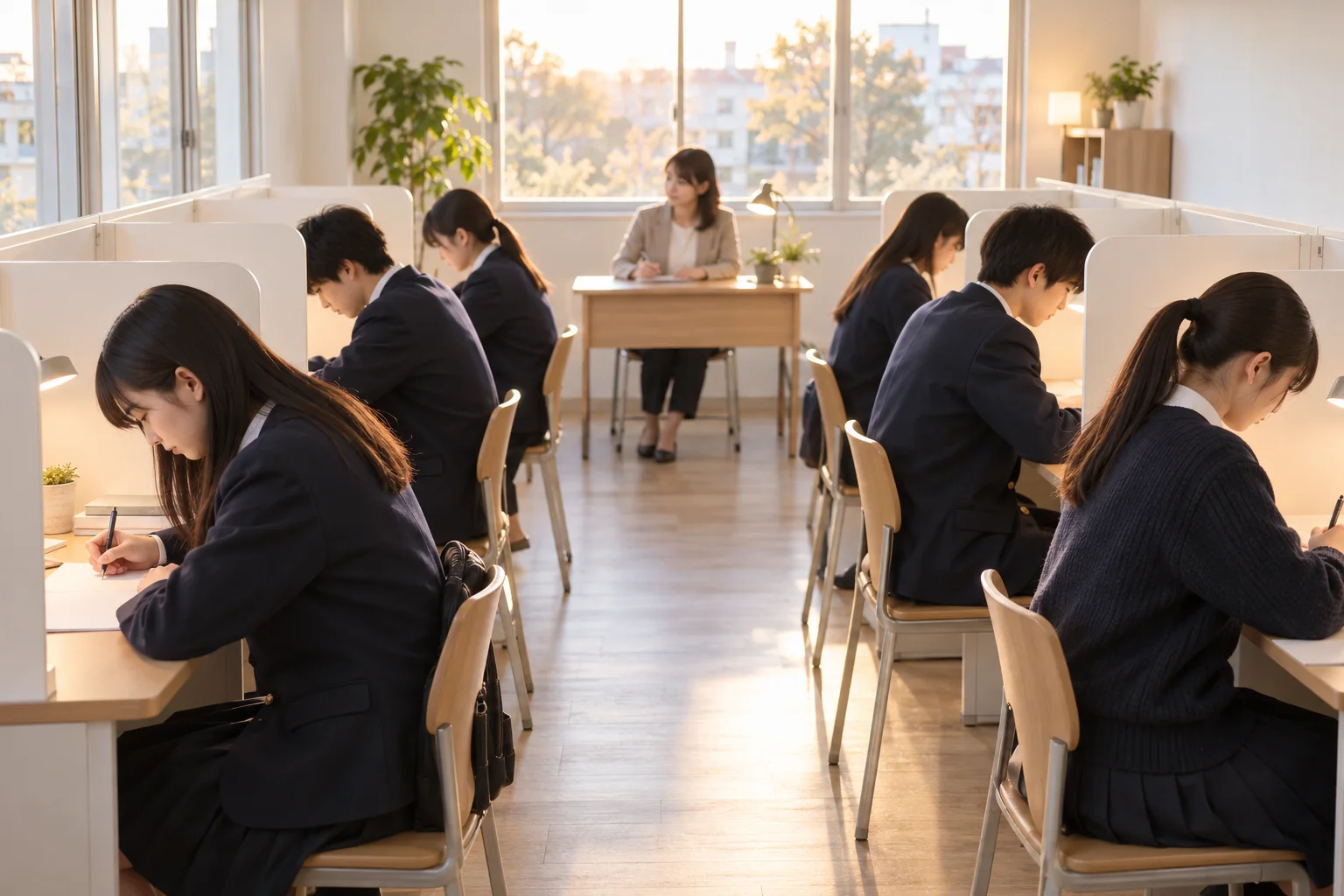
Use the study room during opening hours even on days without lessons. There is no extra charge. A teacher is always available for questions. Students normally finish their homework here, reducing the need for parents to tell them to study at home and making it easier to keep going. The latest entry is 8:00 p.m. for junior high students and 9:30 p.m. for high school students.
Keeping pace with combined secondary schools
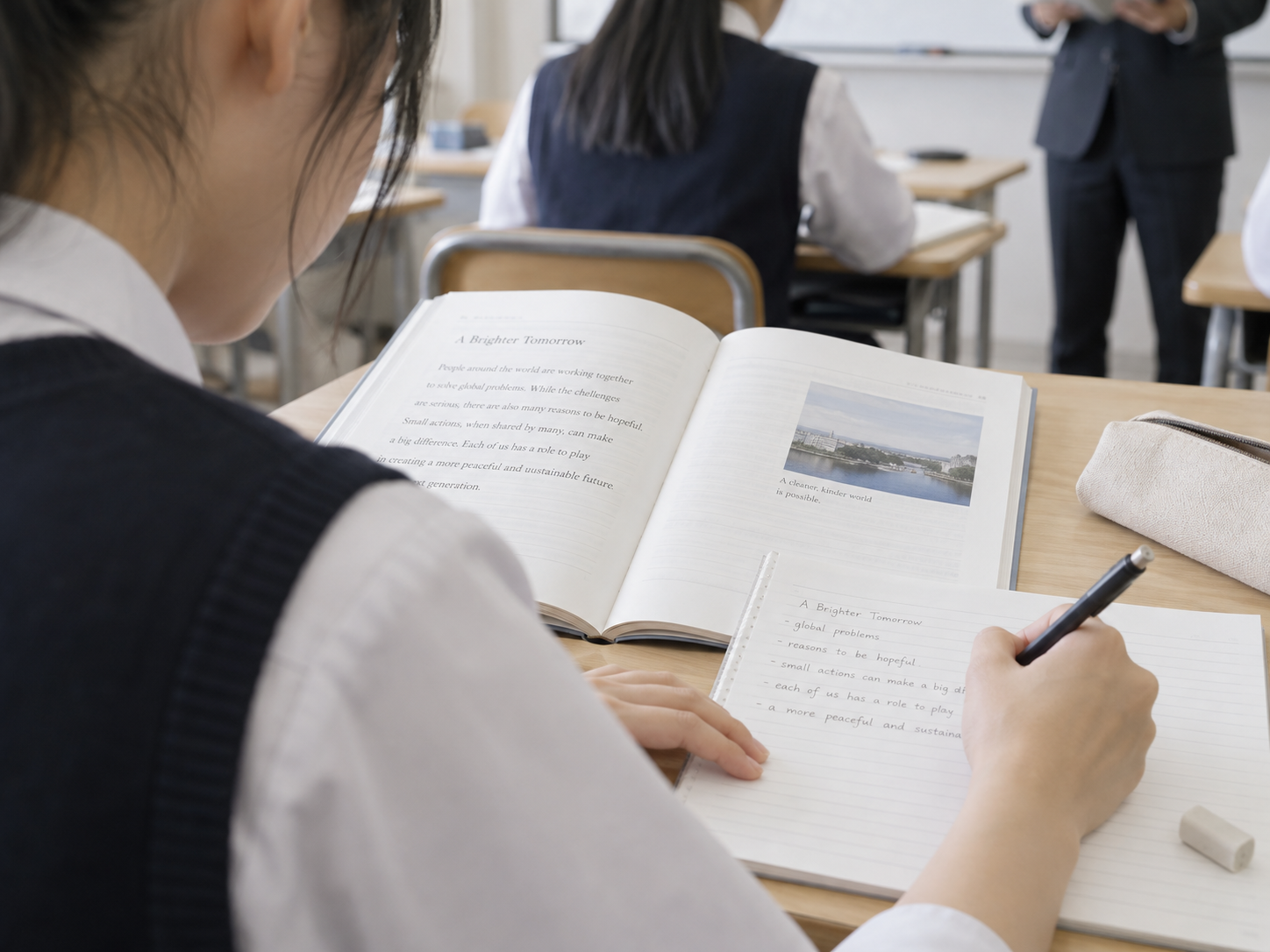
Many private combined secondary schools, which offer six continuous years of junior and senior high education, use textbooks outside Japan’s national approval system and move one to two years ahead of public junior high schools. Once students fall behind, ordinary study guides may not cover the right material. We check each school’s textbook sequence and annual schedule, then plan for both school topics and entrance-exam requirements. Two weeks before school exams, we switch to preparation using the school’s own materials.
Recordings when you miss a lesson
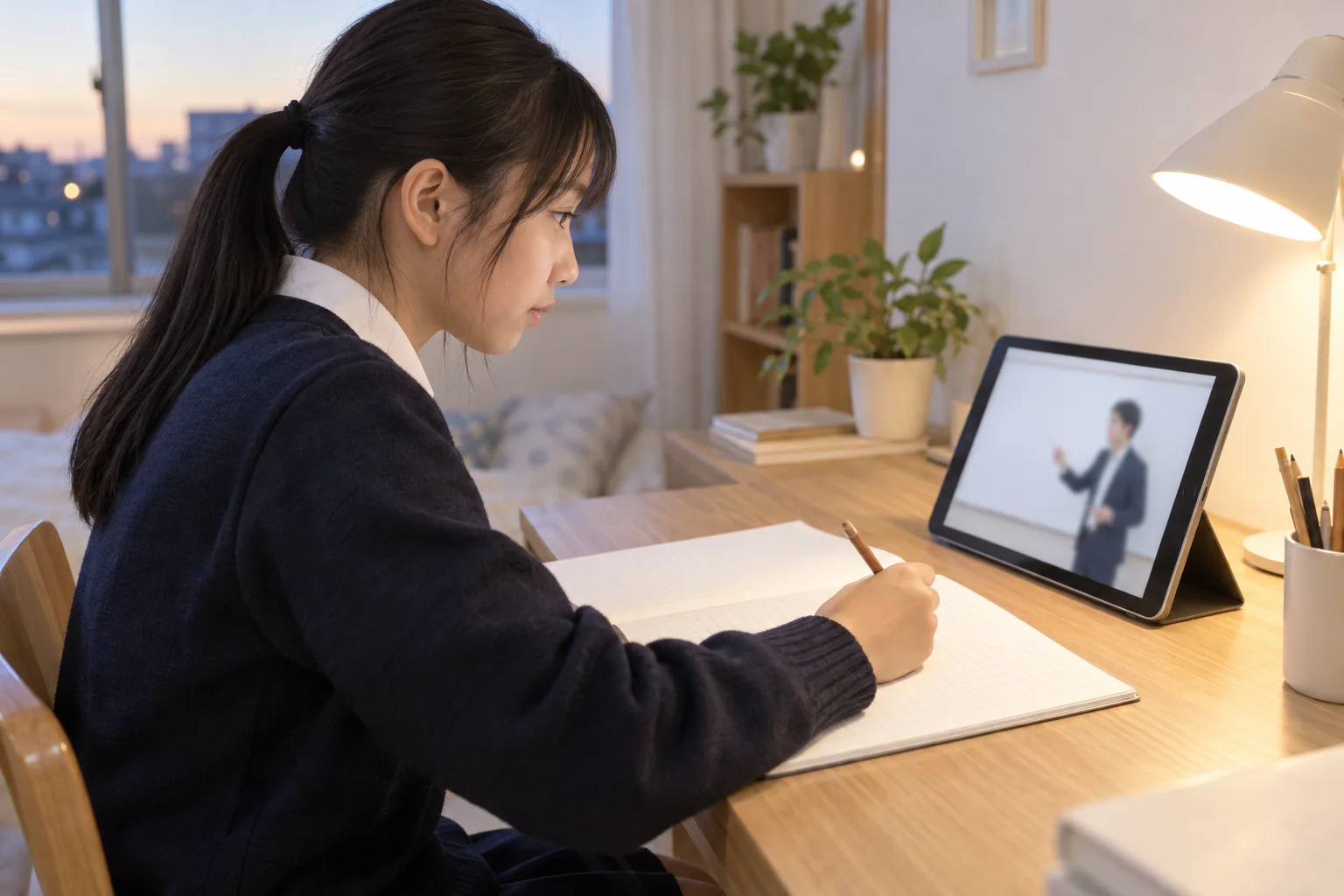
If you miss a lesson through illness or a club match, its recording is available for seven days. We hand you board notes and worksheets before the following week’s lesson, and a teacher checks the work you complete in the study room. We have used this approach since 2022 to avoid the burden of arranging make-up lessons.