
POLICY
Our safety policy
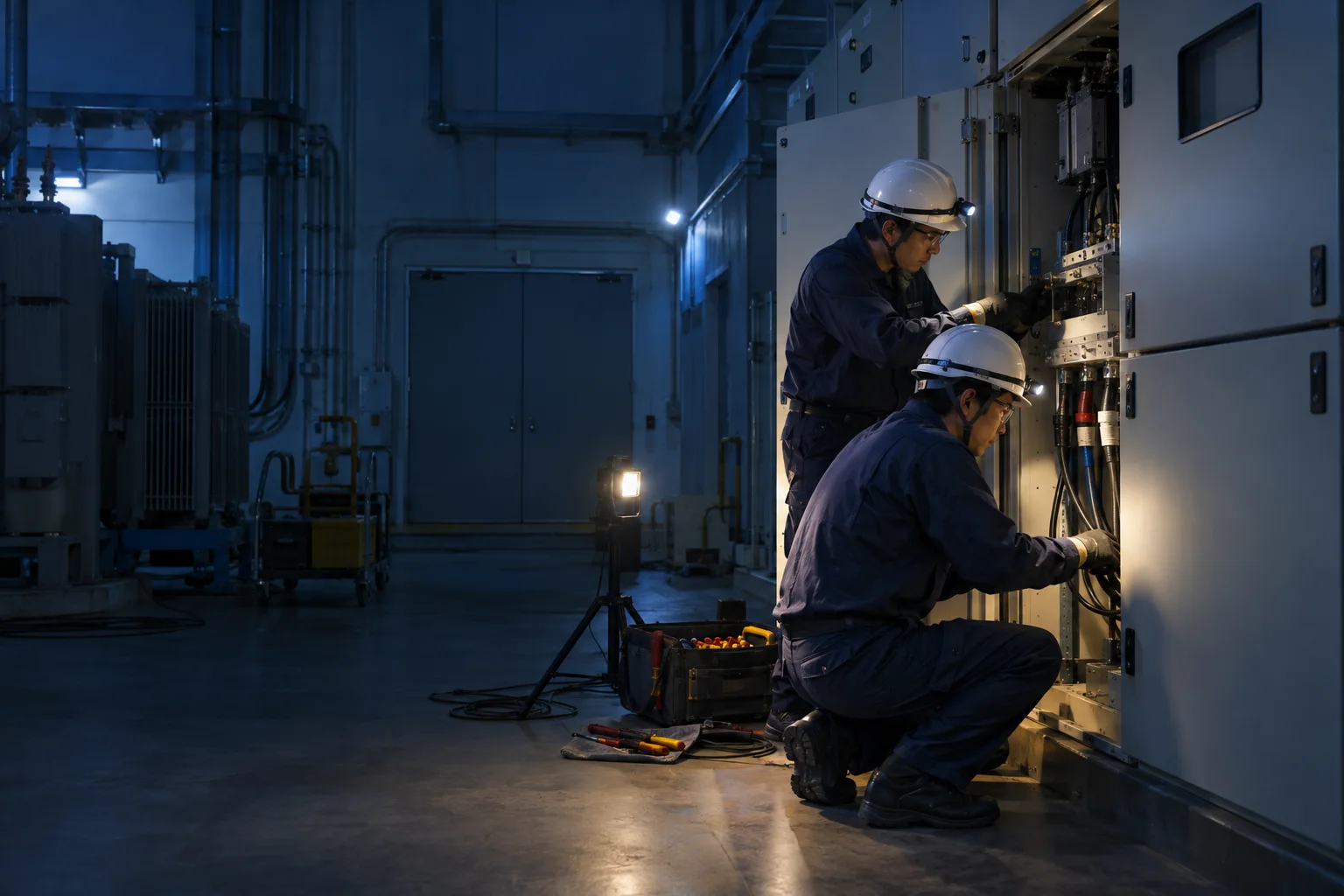
Electrical accidents can have serious consequences: electric shock, falls and fire. They often begin with a decision to hurry or make an exception just once.
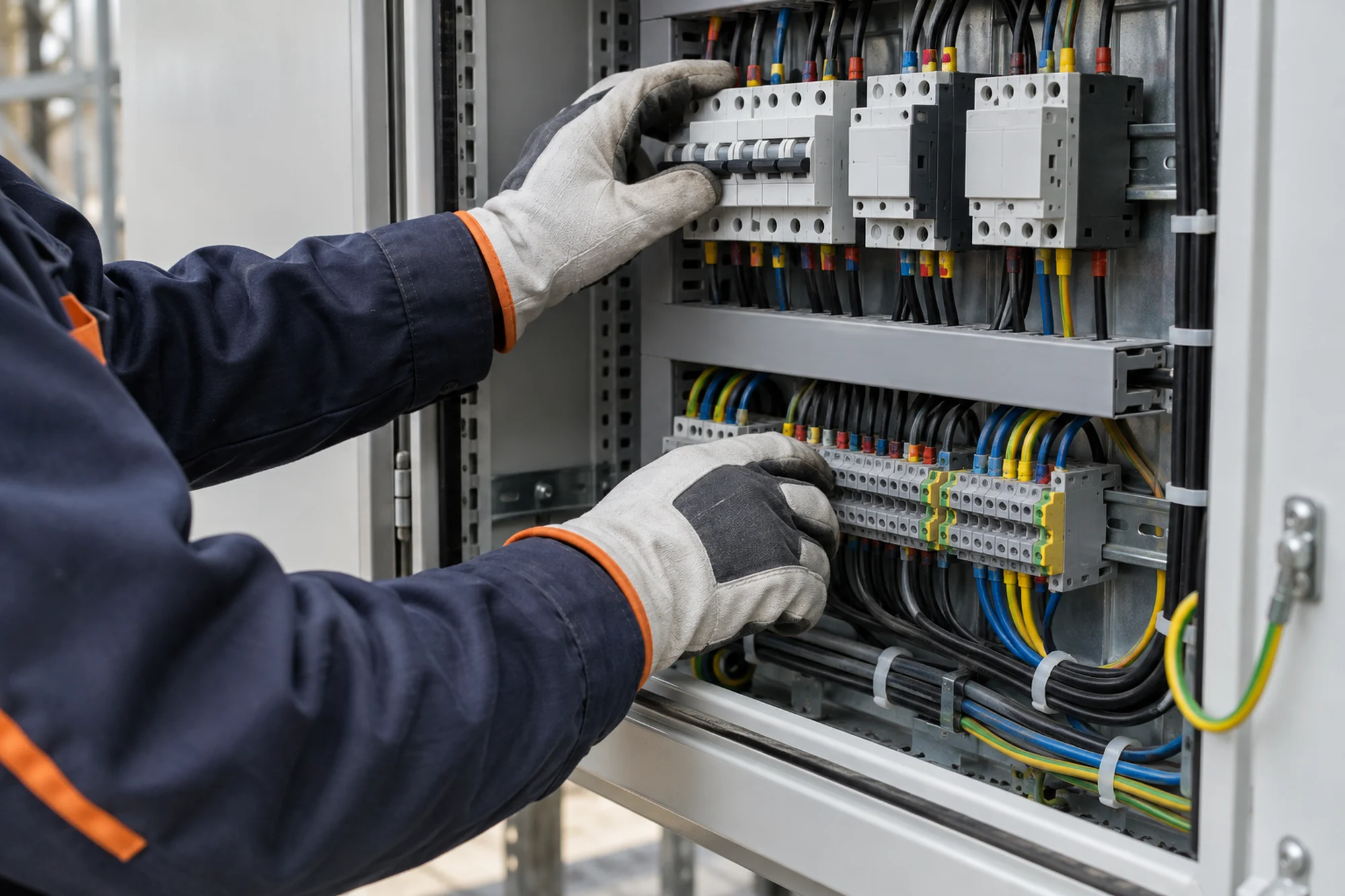
Our written policy puts safety before deadlines. No employee is penalized for stopping work on site. We review the reasons afterward and revise the schedule when needed. This is supported by monthly reporting of work stoppages; a month without any stoppage prompts scrutiny rather than celebration.
DAILY
Everyday safety
Briefings and hazard prediction
Before work begins, we identify that day's tasks and hazards and agree on precautions. Our KY activities (the Japanese practice of anticipating workplace hazards) must address risks specific to that day's site, rather than simply repeat a set phrase.

Sharing near misses
Employees report events that could have caused accidents. We do not blame the reporter, and share findings across the company each month. We receive approximately 90 reports a year.
90reports
Near-miss reports per year, approximately
Tools and protective equipment
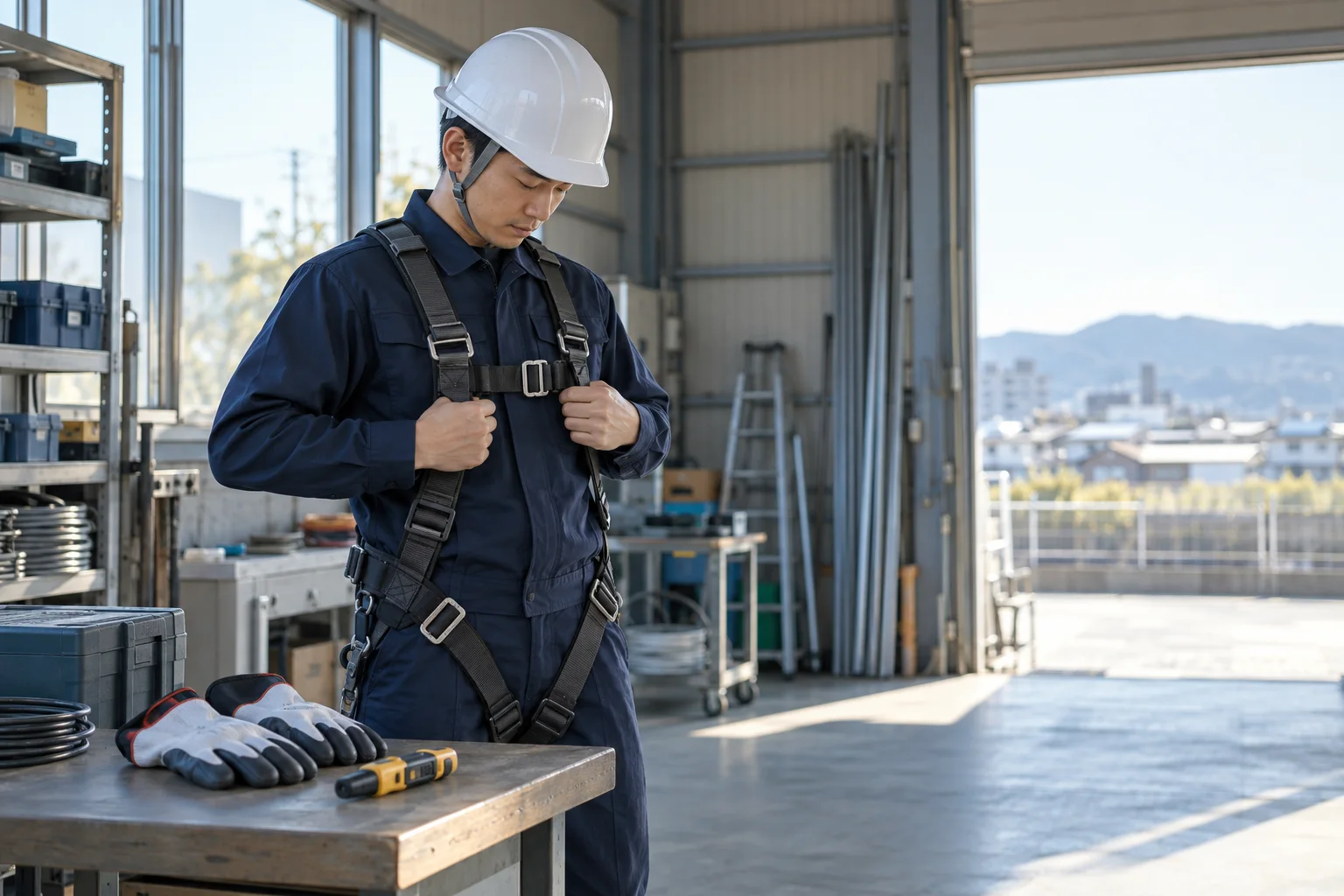
Insulated tools, gloves, voltage detectors and safety harnesses receive pre-use and regular inspections, with records retained. We discard equipment if its insulating performance is in doubt.
Twice-yearly safety meetings
All employees review the past six months' near misses and accidents at other companies and consider preventive measures.
Outage procedures
Testing for absence of voltage, short-circuiting and earthing, and lockout and labeling. Everyone follows these three steps, regardless of experience.
QUALITY
How we assure quality
Before installation
We prepare working drawings and check them against site measurements. Refurbishment routinely reveals differences between drawings and the actual building, so measurement is part of the schedule.
During installation
We photograph concealed wiring before ceilings and walls are closed. Records demonstrate the quality of work that will no longer be visible.
Completion inspection
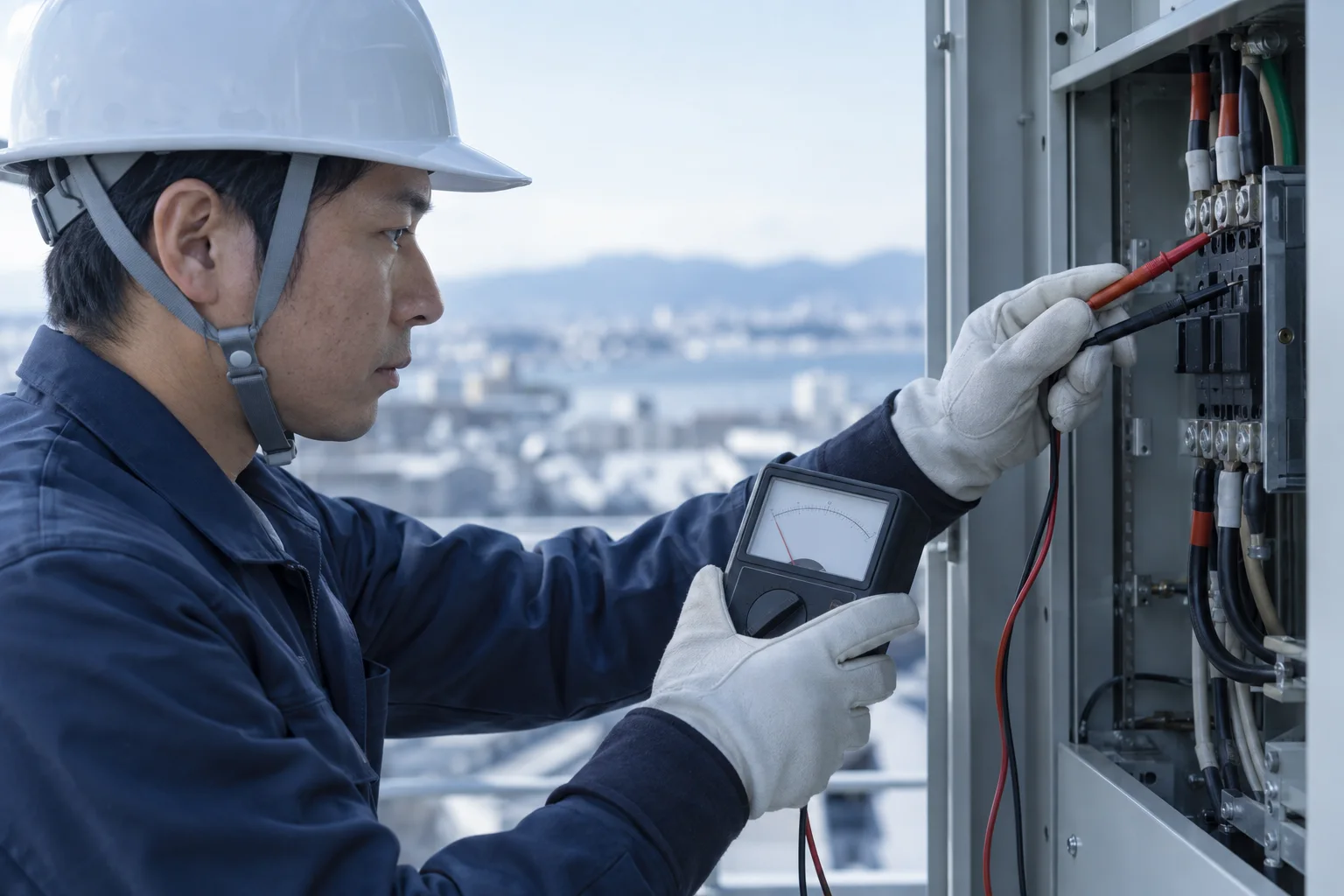
We test insulation resistance, earth resistance, continuity, polarity and protective-device operation. Results are handed over with as-built drawings, equipment manuals and warranties.
After handover
We show your designated staff how to operate major equipment in person. Our work does not end with handing over documents.
Electrical safety management
For customers with private electrical installations (a Japanese regulatory category that includes high-voltage installations), we carry out ongoing inspections under their safety rules. Monthly checks cover appearance, sounds, smells, discoloration, readings and insulation while power remains on. Annual inspections require an outage for insulation and earth-resistance measurements and protection-relay tests.
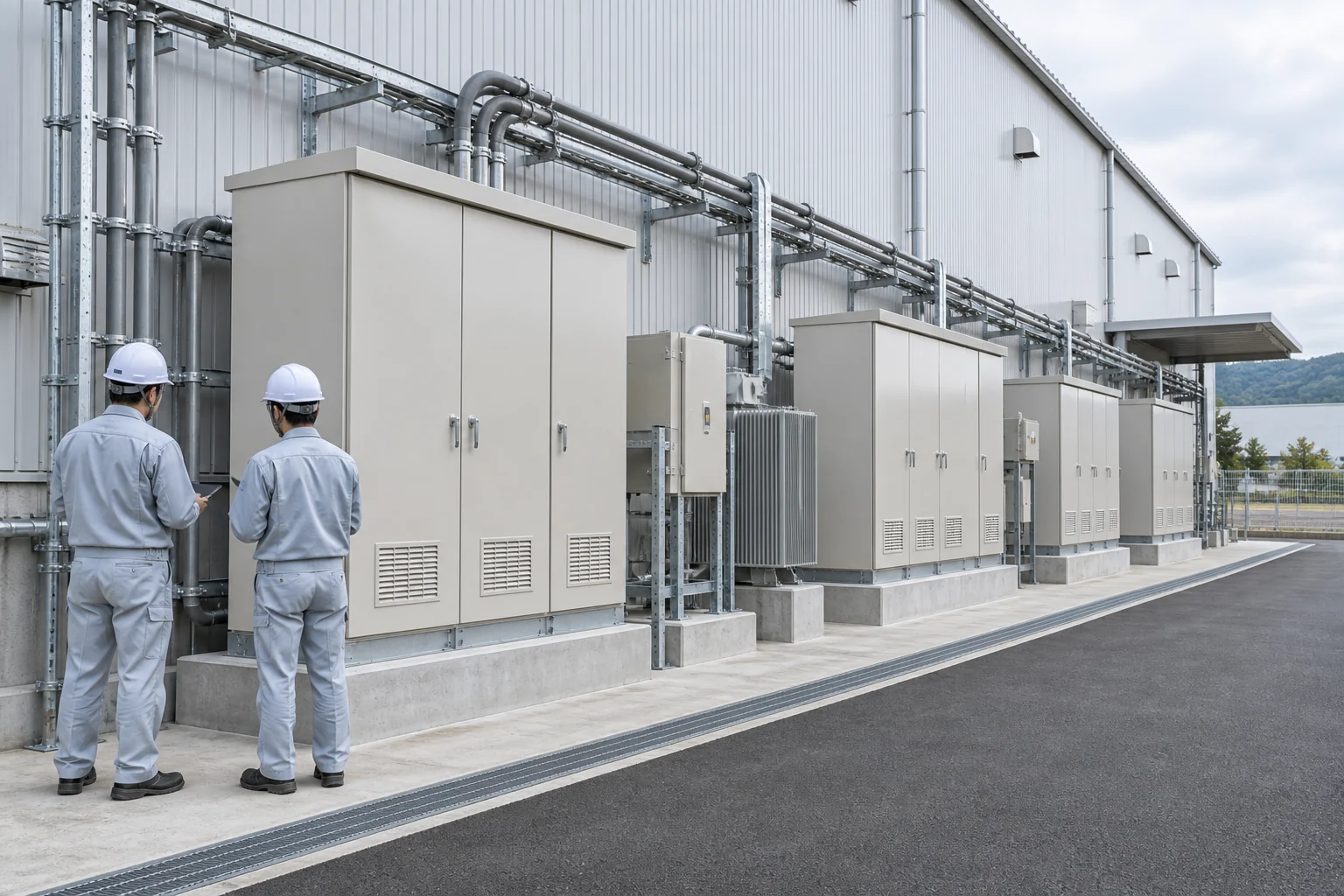
Reports identify deteriorating equipment and suggest when replacement should be planned. Preparing budgets several years ahead helps avoid unexpected failures and shutdowns.
Inspection-contract customers receive a 24-hour emergency number. A technician who already knows the equipment can identify the cause more quickly on site.
24-hour support is available to inspection-contract customers.
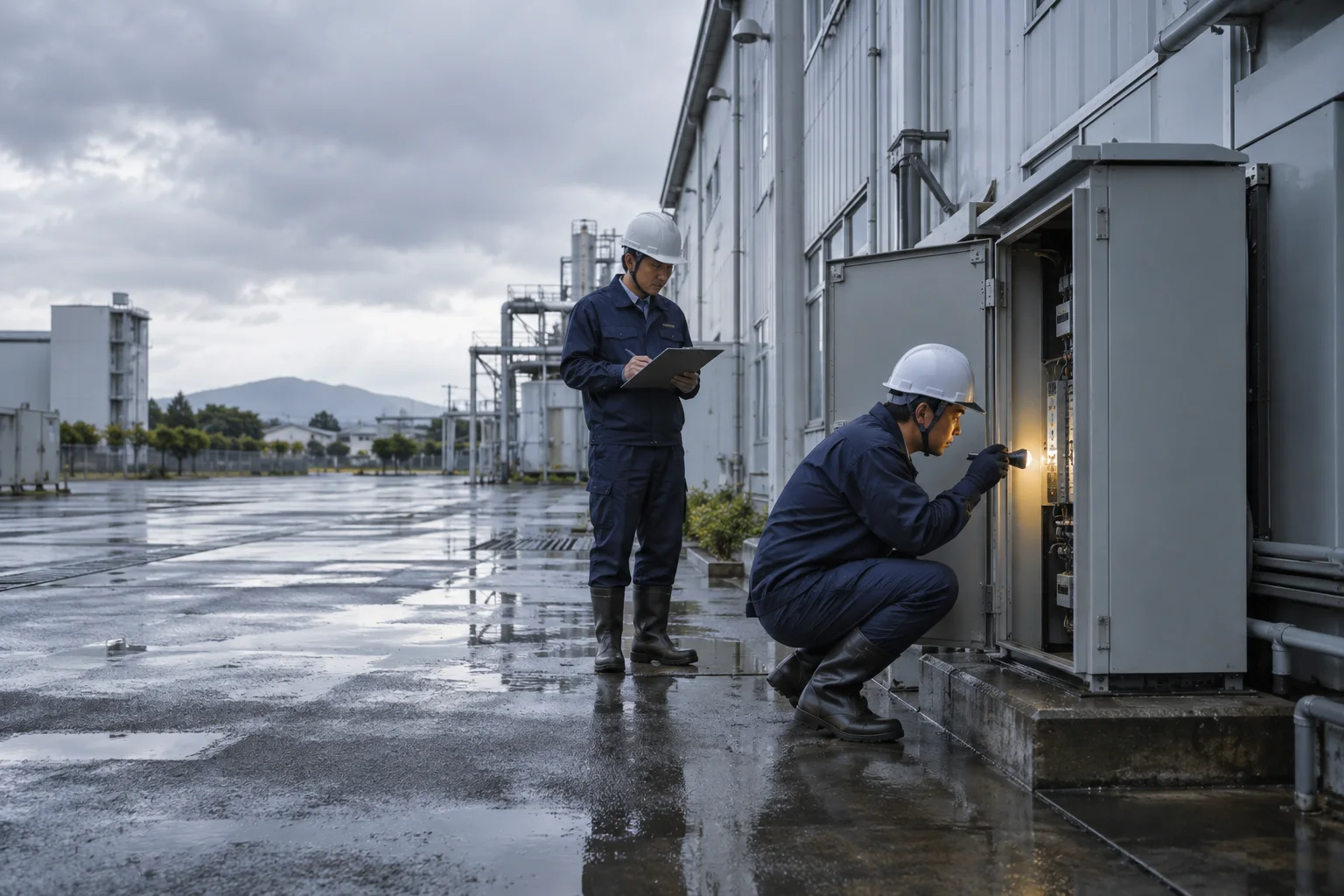
After a disaster
After earthquakes or typhoons, we contact inspection-contract customers in turn regardless of reported damage and arrange emergency inspections where needed. Our agreed order of priority is medical and care facilities, designated evacuation shelters, then production equipment.
Energizing flooded equipment risks electric shock and fire. Distribution boards and sockets may have damaged insulation even when they appear dry. Leave flooded equipment de-energized and contact us.