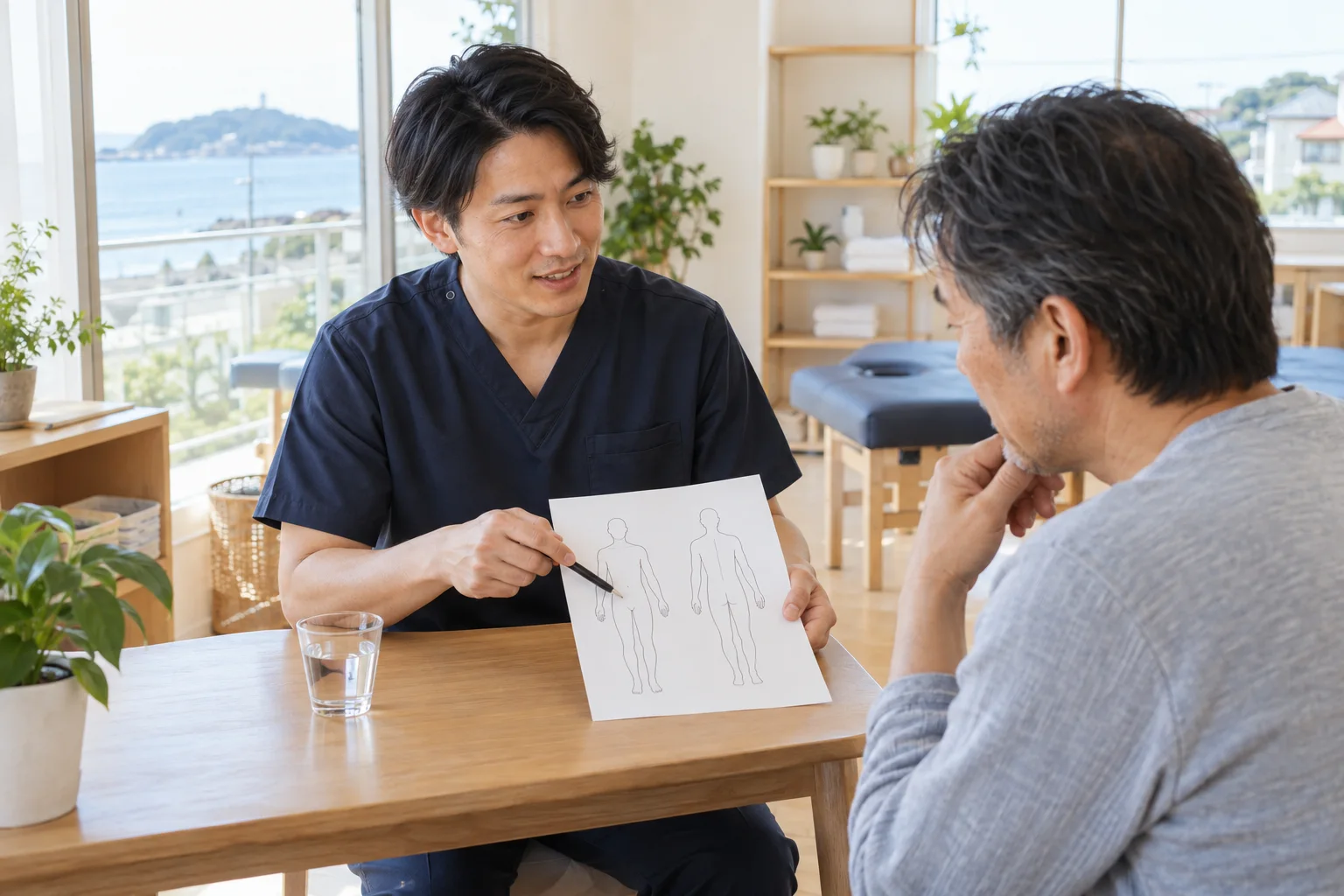
Knee pain
We look beyond where it hurts to how you move and use your body each day.
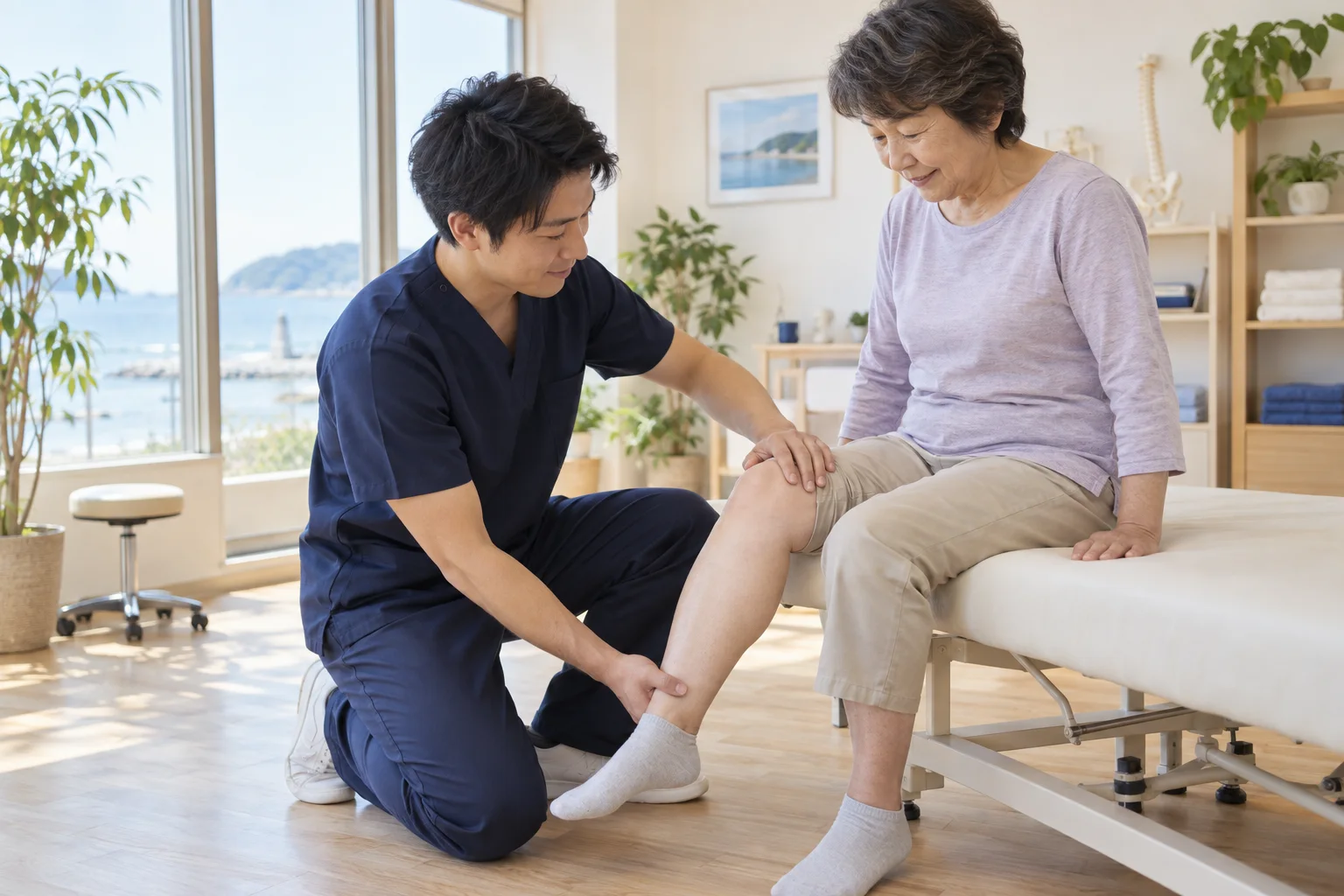
Do these knee symptoms sound familiar?
- Pain inside the knee only when going downstairs
- Pain on longer walks that makes you go out less
- Difficulty kneeling with your legs folded underneath you
- A creaking sensation when standing up
- Swelling below the knee after sports practice
- Fluid in the knee even though you do not remember twisting it
Care depends on the cause
Knee pain broadly falls into two groups: an acute injury with a clear cause, such as a twist or impact, and degenerative changes built up over years of use.
Eligible acute injuries, such as sprains and strains, are covered by Japanese public health insurance. Degenerative conditions are not covered at our clinic and are treated on a self-pay basis. We first assess which applies to you.
Many people with knee pain also have limited hip and ankle movement. The knee between them takes on the extra strain. This is why treating only the knee may not resolve the problem.
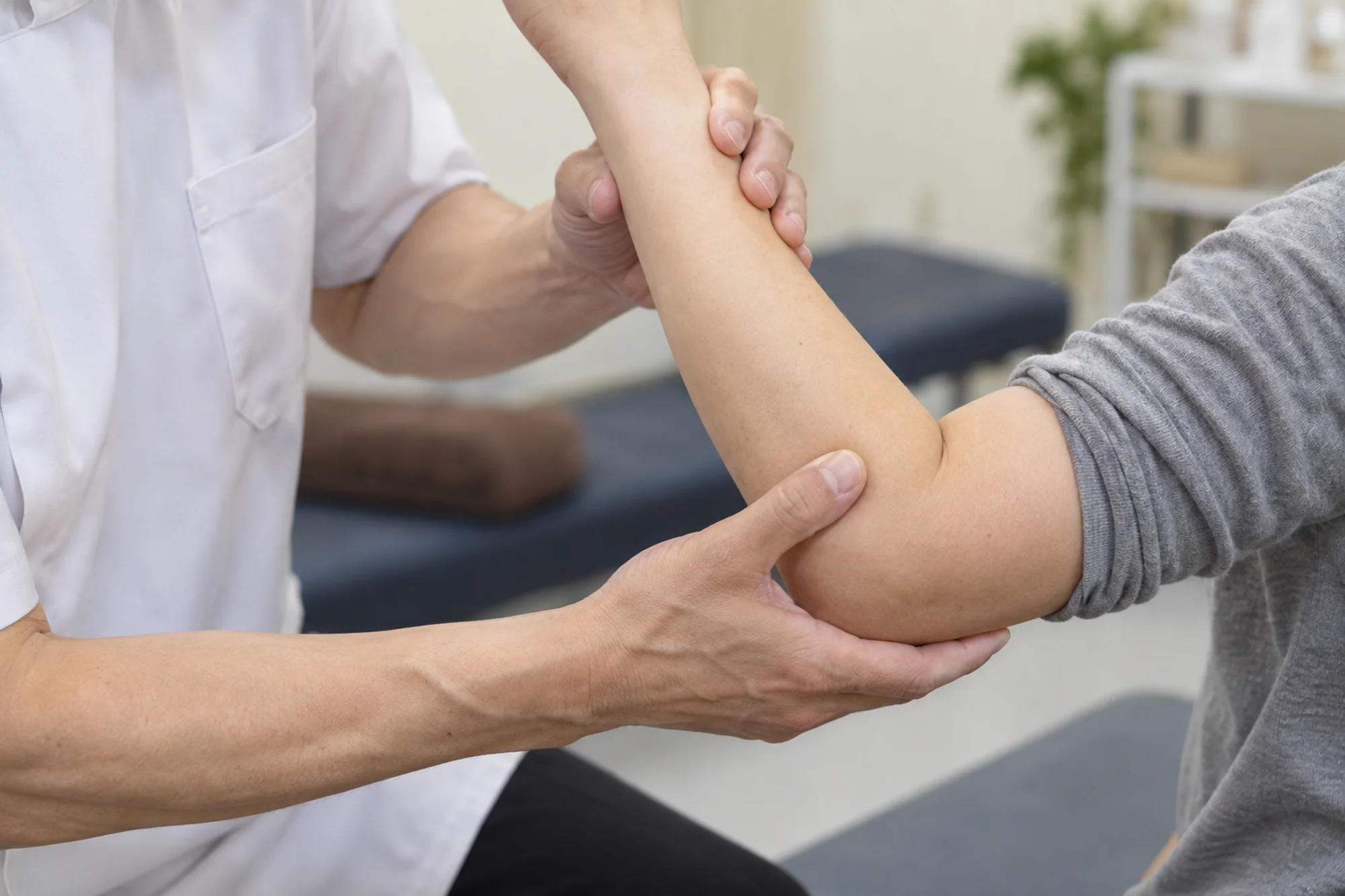
Knee pain in middle and later life
Pain can make you walk less. Less walking weakens the muscles supporting the knee, increasing the load on it further. This cycle can gradually reduce how far you feel able to go.
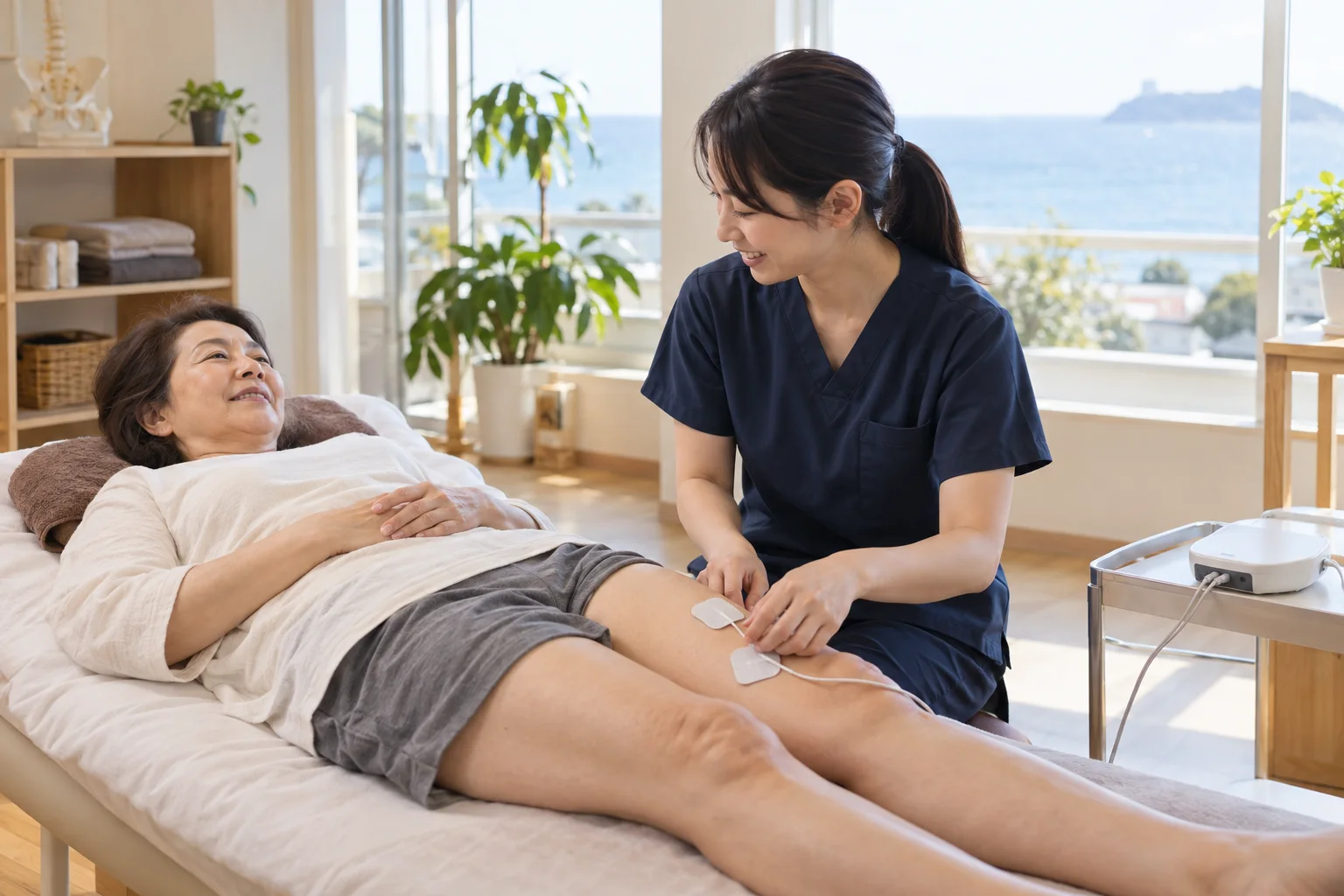
Alongside care to ease pain, we train the muscles at the front of the thigh without overloading the knee. As adjusting intensity yourself can be difficult, we often suggest EMS (electrical muscle stimulation), which activates muscles while you lie down.
If degenerative changes are advanced or fluid repeatedly builds up in your knee, we ask you to have imaging at an orthopedic clinic first.
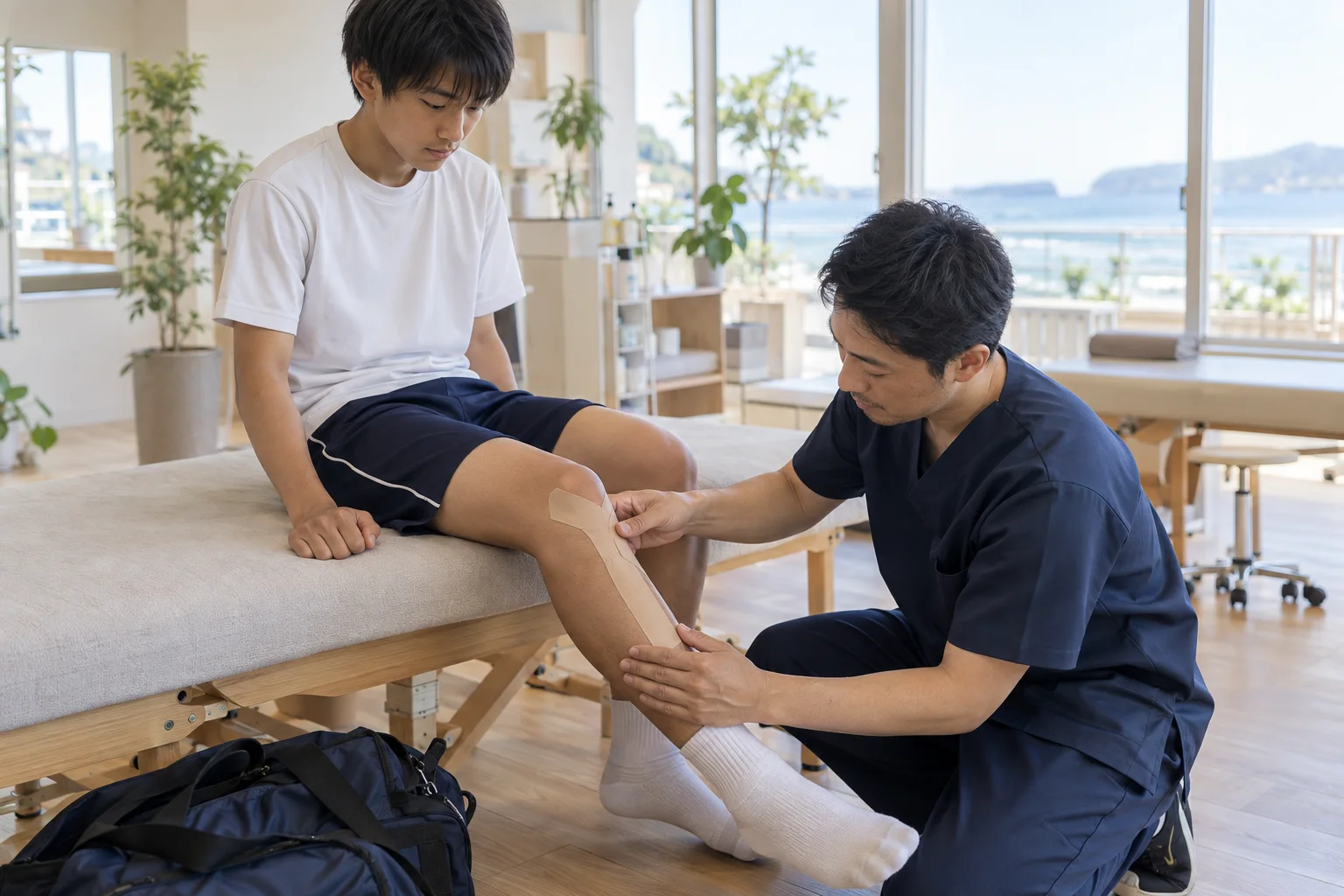
Knee pain in young athletes
During growth, a painful bump below the knee or pain on the outside of the knee when running can occur when muscle flexibility does not keep pace with bone growth.
We have seen many young athletes lose a season to a cycle of resting until the pain settles, returning to sport and hurting again. Alongside rest, we work with parents to identify training that stays within a comfortable range and explain the steps toward returning. Please tell us about your child's training and playing position.
Price guide
For an eligible acute injury covered by Japanese public health insurance, patients with a 30% copayment typically pay around ¥1,000-¥1,500 at the first visit and a few hundred yen thereafter.
For self-pay care, including degenerative knee pain, posture and pelvis care (30 minutes) costs ¥4,400, with EMS available for an additional ¥1,650. Whole-body care (45 minutes, ¥6,600) is available for those also working on walking.