
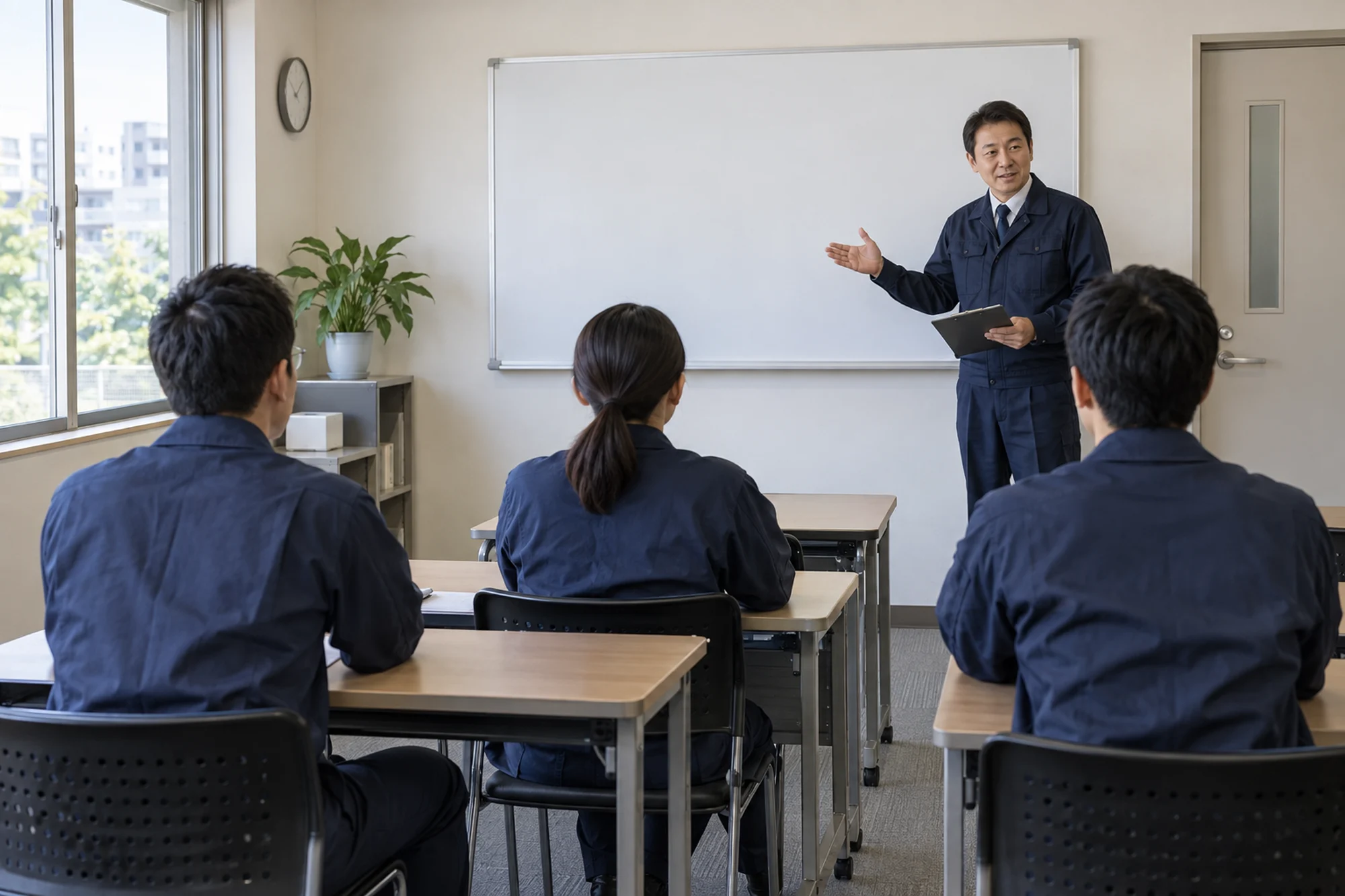
All statutory training is in-house
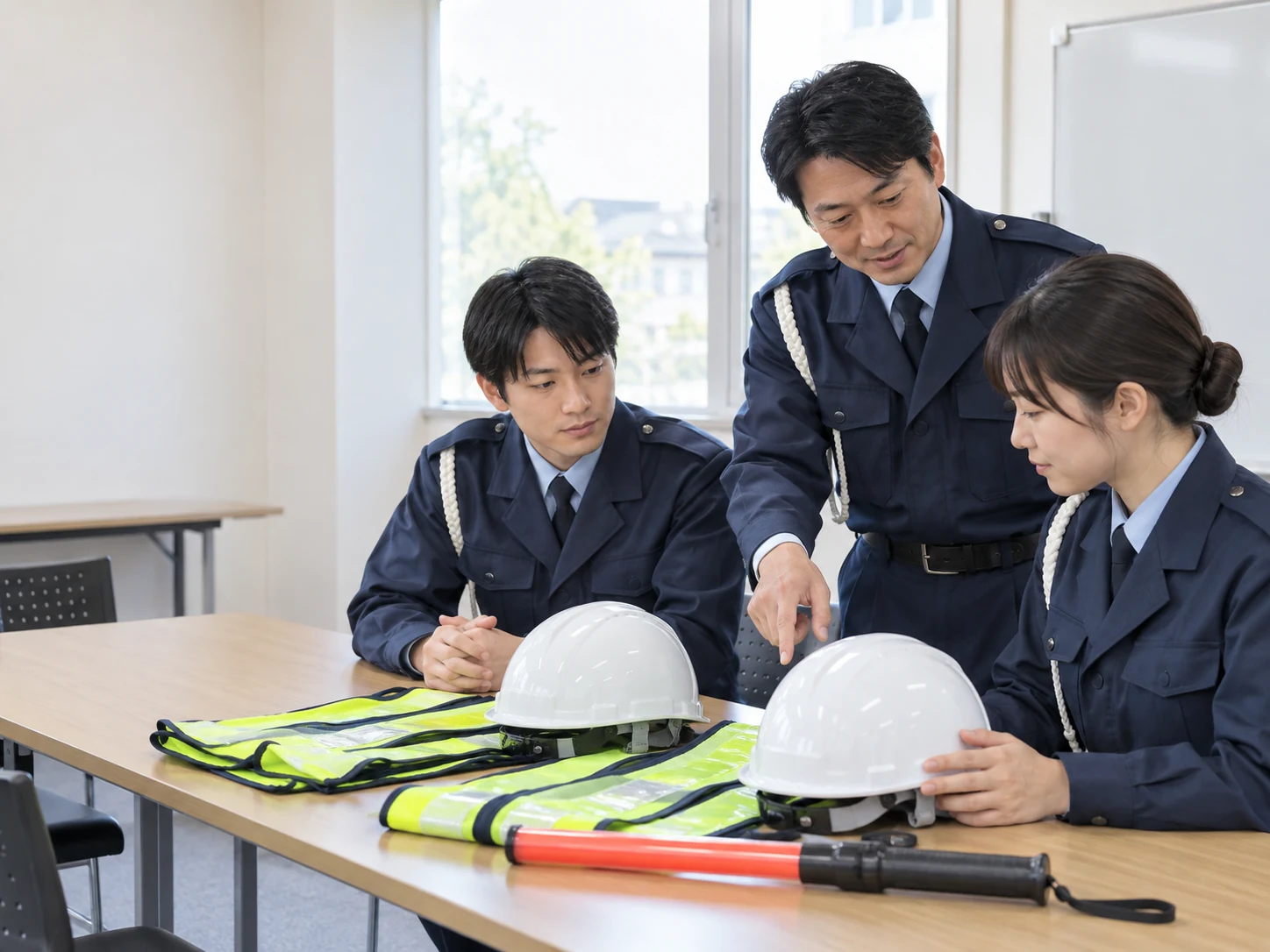
Japan's Security Services Act, the law governing private security businesses, requires companies to train their guards. New guards receive at least 20 hours of initial training, and serving guards receive at least 10 hours of refresher training each fiscal year.
We opened a training center on the second floor of our head office in 2019 and conduct all this training ourselves. Keeping it in-house lets us adapt the content to our own sites. Classroom case studies draw on near misses that have occurred in our work.
Who teaches our guards?
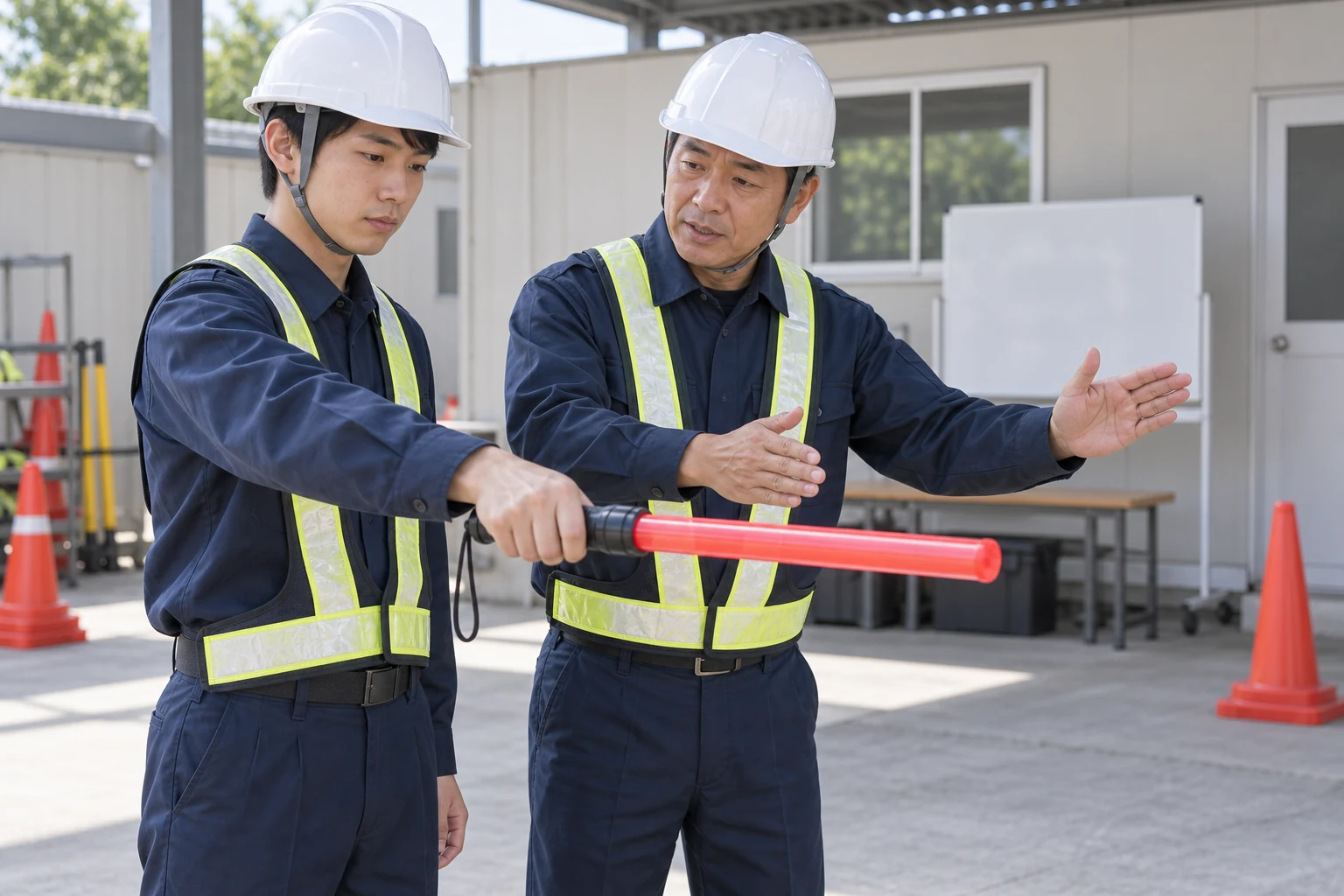
Training is led by holders of Japan's national Security Guard Instruction and Education Supervisor qualification. Certificates are issued by service category, and each office must appoint supervisors qualified in the categories it handles.
Our head office, Tokorozawa office and Saitama office each have supervisors for Category 1 (facility security) and Category 2 (traffic control and crowd management). There are seven in total: three for Category 1 and four for Category 2.
Qualifications held as of April 2026
- Instruction and education supervisors, Category 1
- 3
- Instruction and education supervisors, Category 2
- 4
- Traffic control security, Level 1
- 2
- Traffic control security, Level 2
- 31
- Facility security, Level 1
- 1
- Facility security, Level 2
- 18
- Crowd management security, Level 2
- 6
- Advanced lifesaving course graduates
- 24
Of our 128 guards, including 42 permanent employees, 58 have passed security examinations: Japanese occupational competency qualifications for particular types of security work.
Support for gaining qualifications
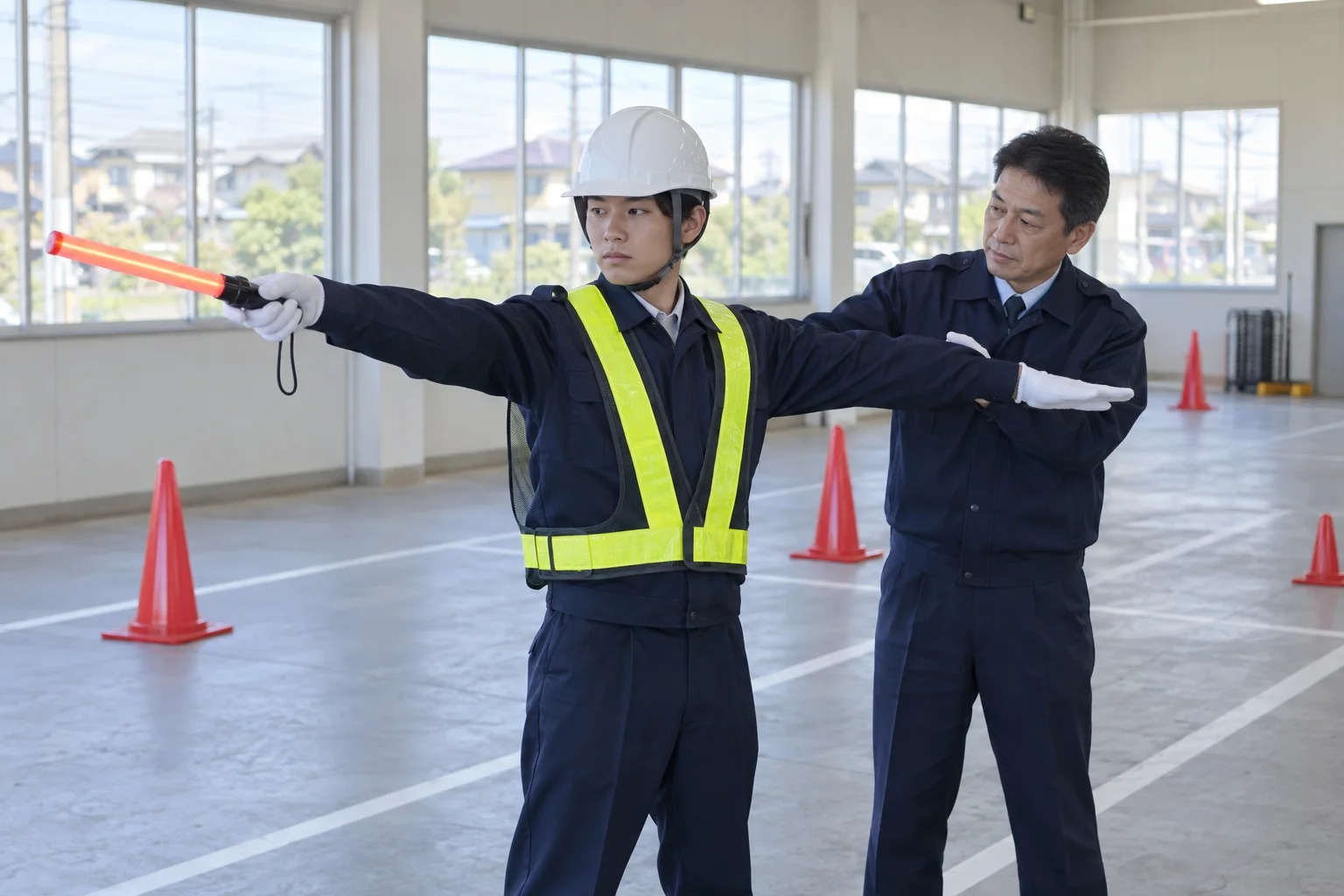
We pay examination fees, preparatory course fees and daily pay during courses. Successful candidates receive a qualification allowance and become eligible for a wider range of assignments.
Level 2 candidates must be at least 18 and have completed initial training. Level 1 requires at least one year of practical experience after obtaining Level 2. We arrange examinations for interested staff from their second year with us onward, with around ten new successful candidates each year.
Equipment and appearance
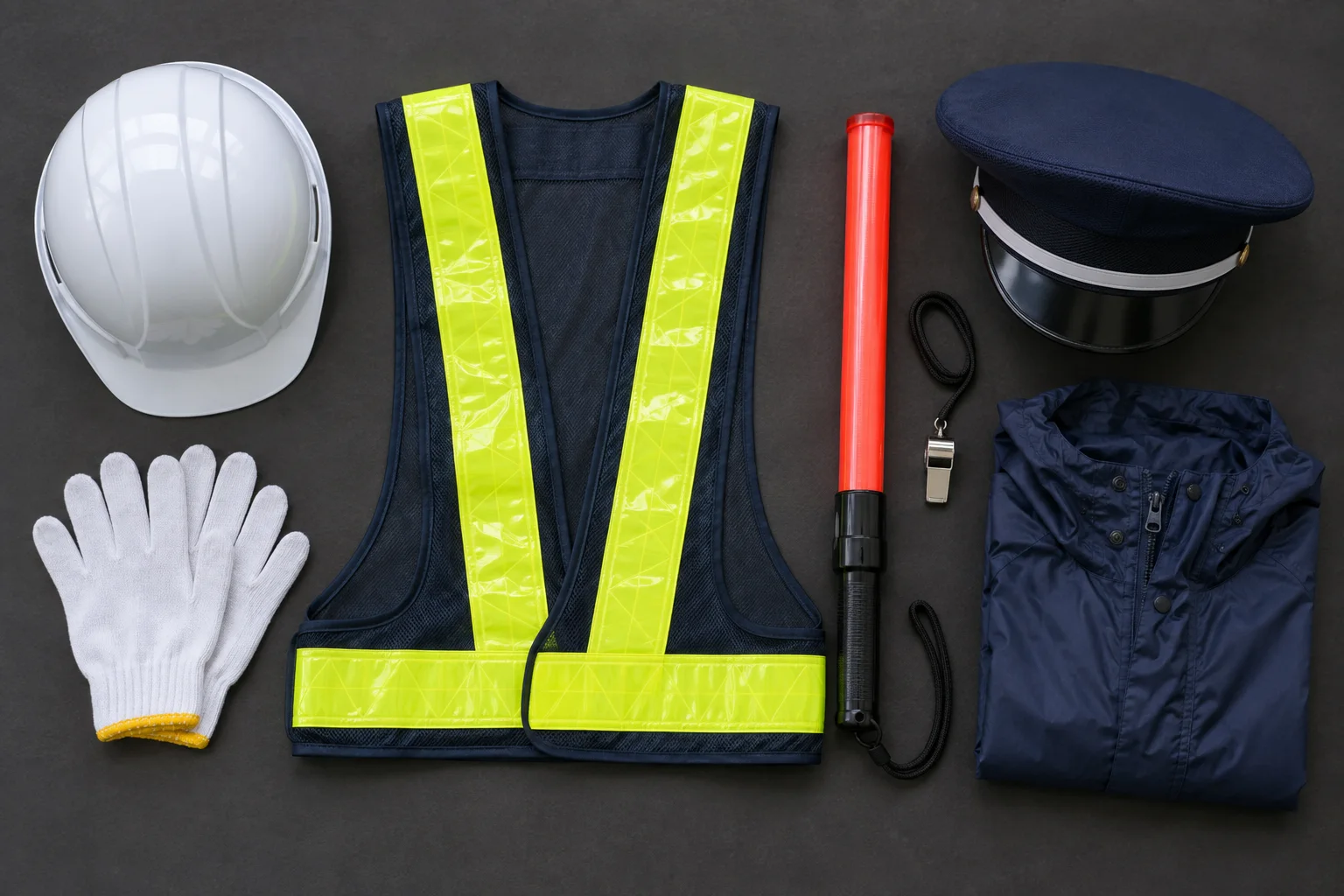
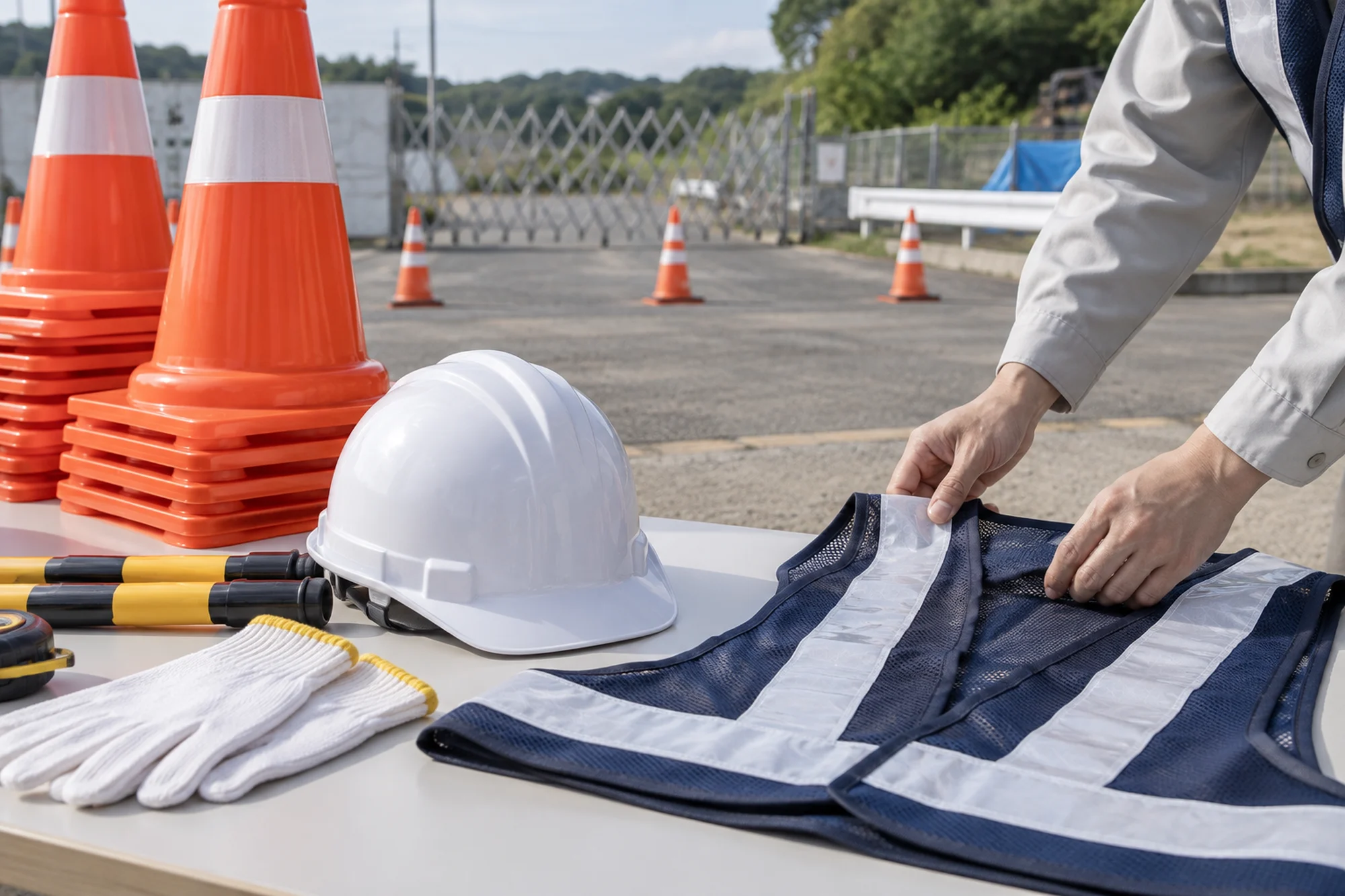
We provide uniforms, whistles, traffic batons, reflective vests, rainwear and cold-weather equipment. We lend fan-cooled jackets in summer and thermal layers in winter.
A traffic guard's visibility directly affects safety. Equipment with deteriorated reflective material is taken out of use and replaced regularly.