
Flour — five flours, blended for each bread
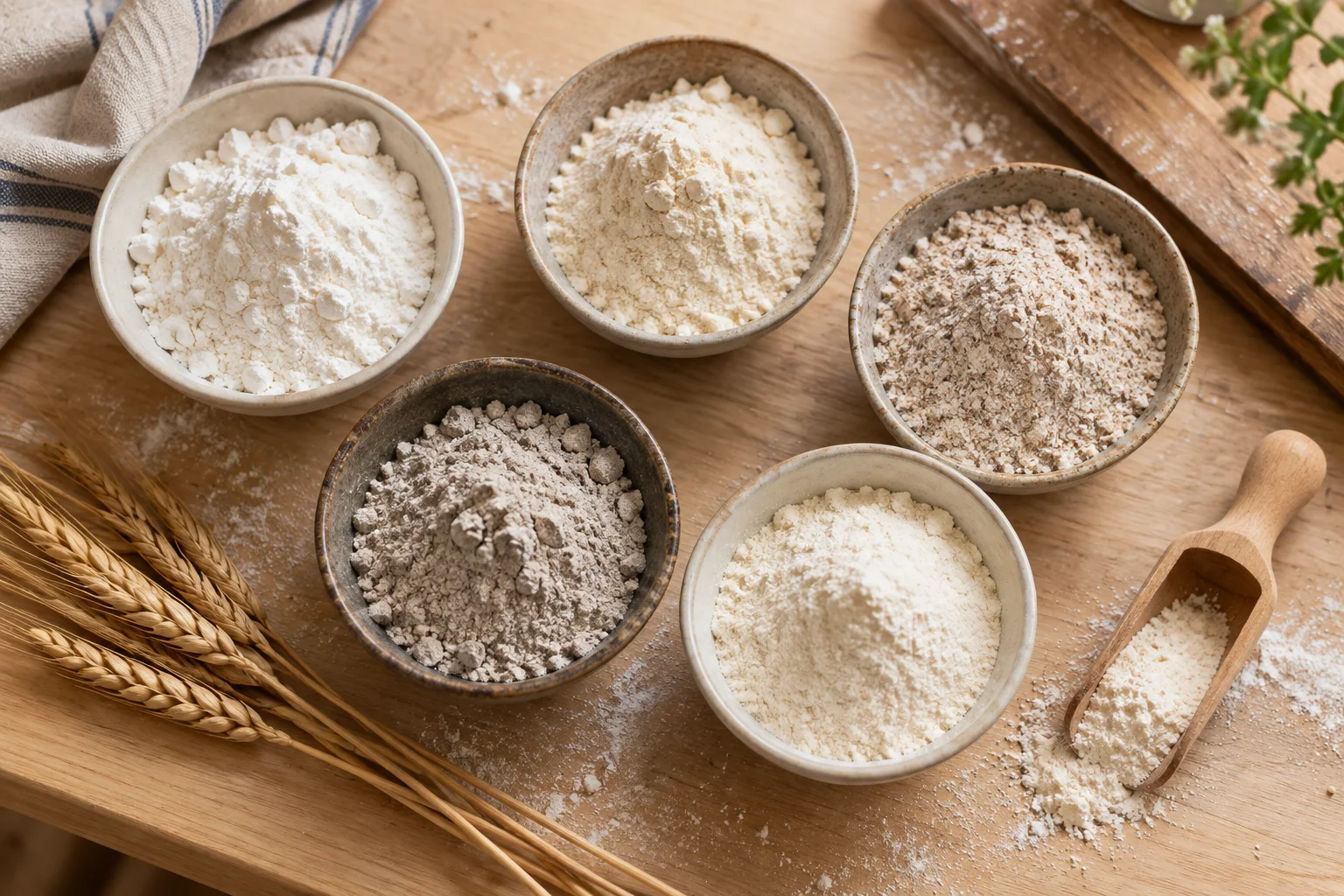
We keep five flours on hand: strong bread flour from Hokkaido, medium-strength flour from Kyushu, stone-ground wholemeal flour, rye flour, and French bread flour. We change the blend for each product. Our gradual move toward Japanese wheat began in 2011, and it now accounts for just over 80% of the flour we use. Some crusty breads need the protein levels found in imported flour. Knowing when not to substitute is part of our quality control.
Starter — our levain, nurtured since 1996
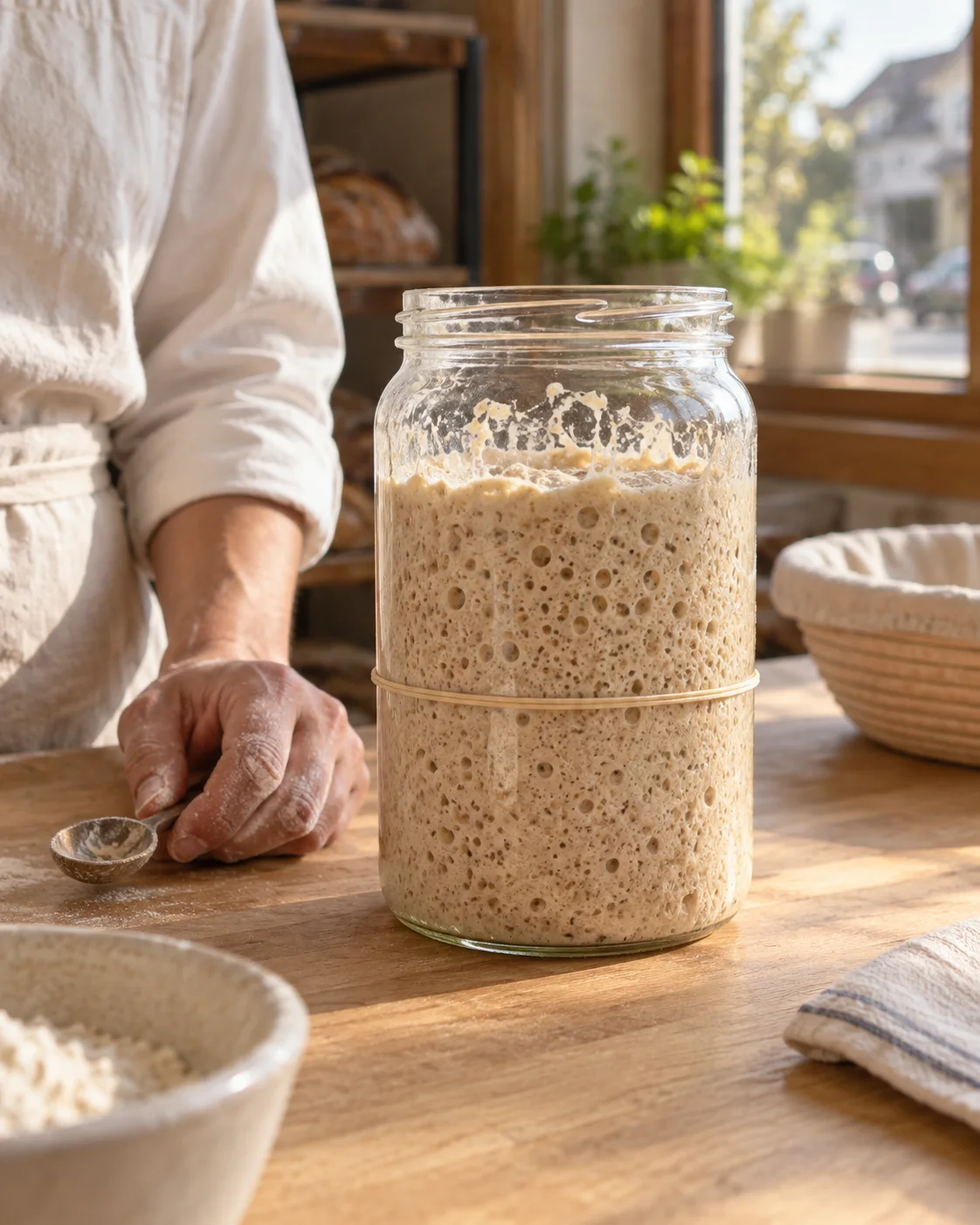
We began our levain (sourdough starter) with nothing but wholemeal flour and water, and have fed it every day since 1996. It takes longer to get going than baker's yeast, but brings out the wheat's natural sweetness and a gentle tang, while helping the crumb stay soft the next day. We also combine it with baker's yeast in some breads, choosing the method to suit the texture we want.
Method — scalded flour and a slow, cold rise
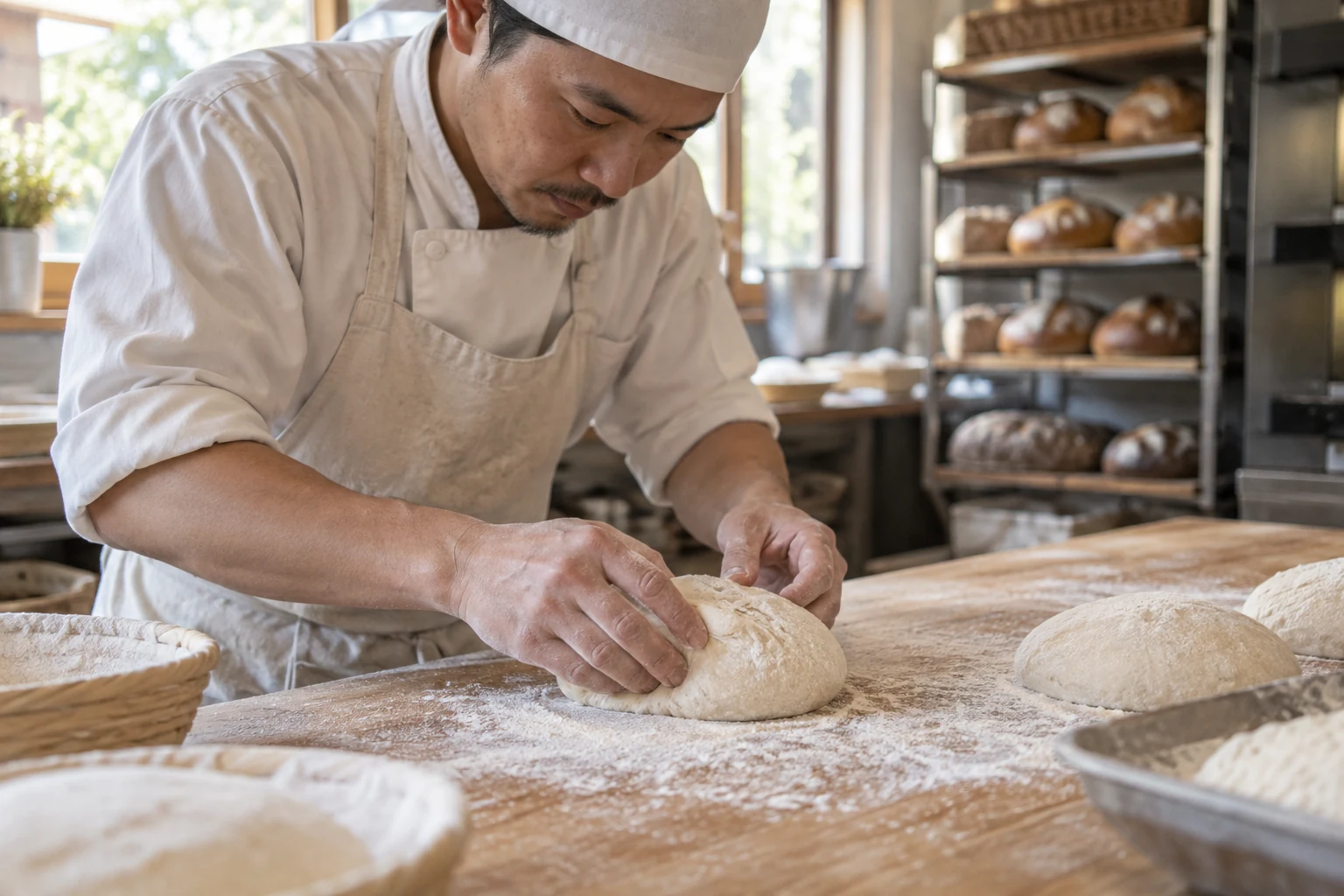
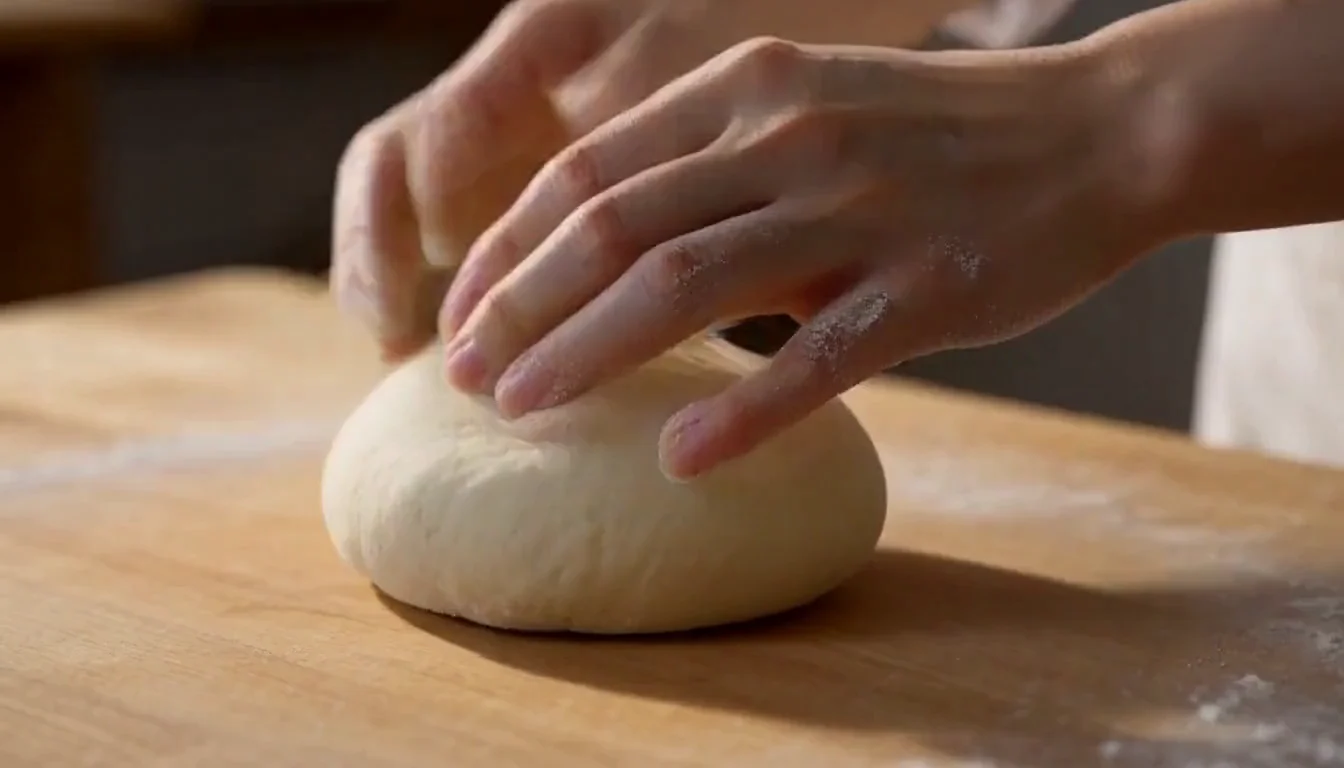
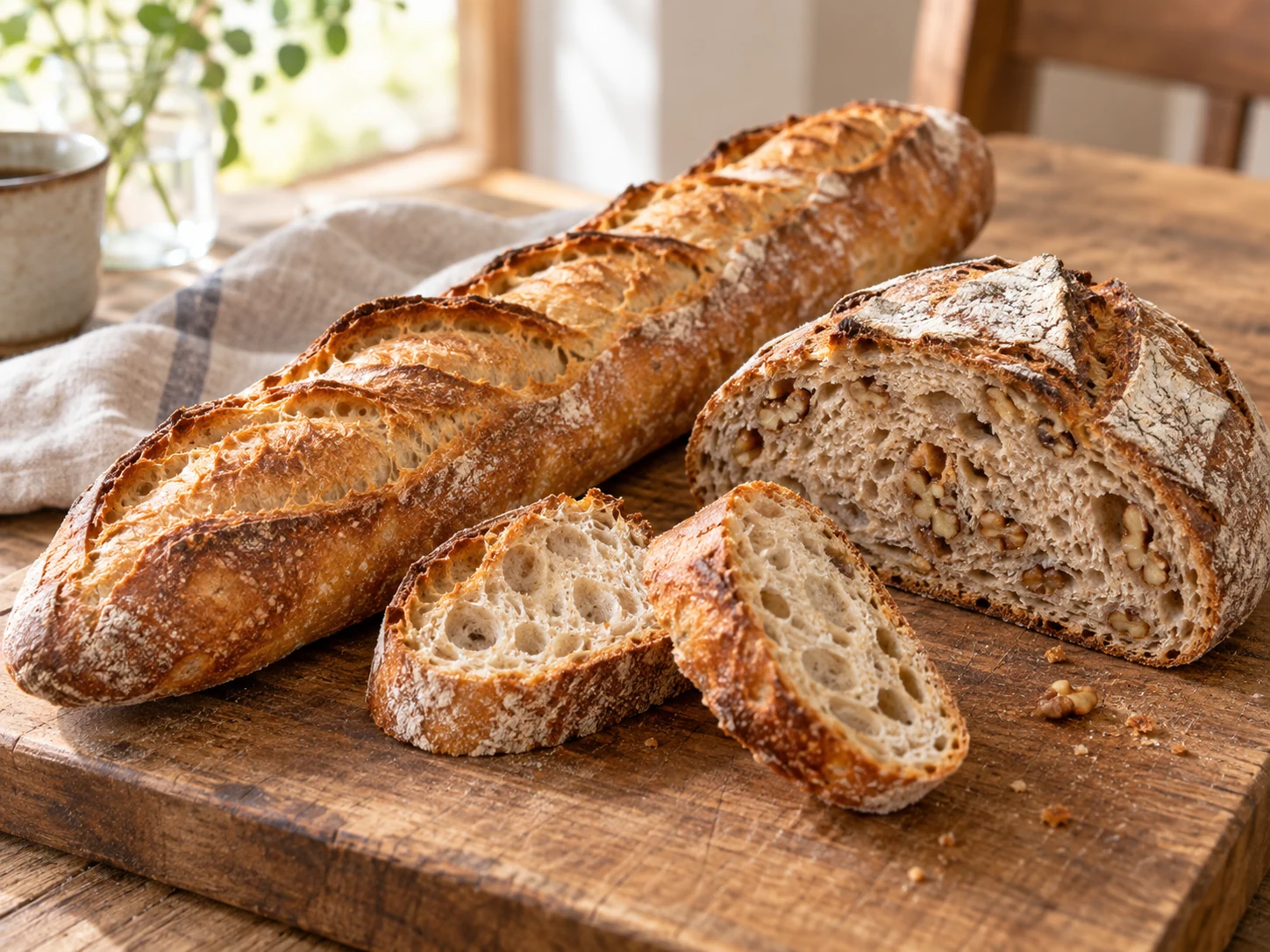
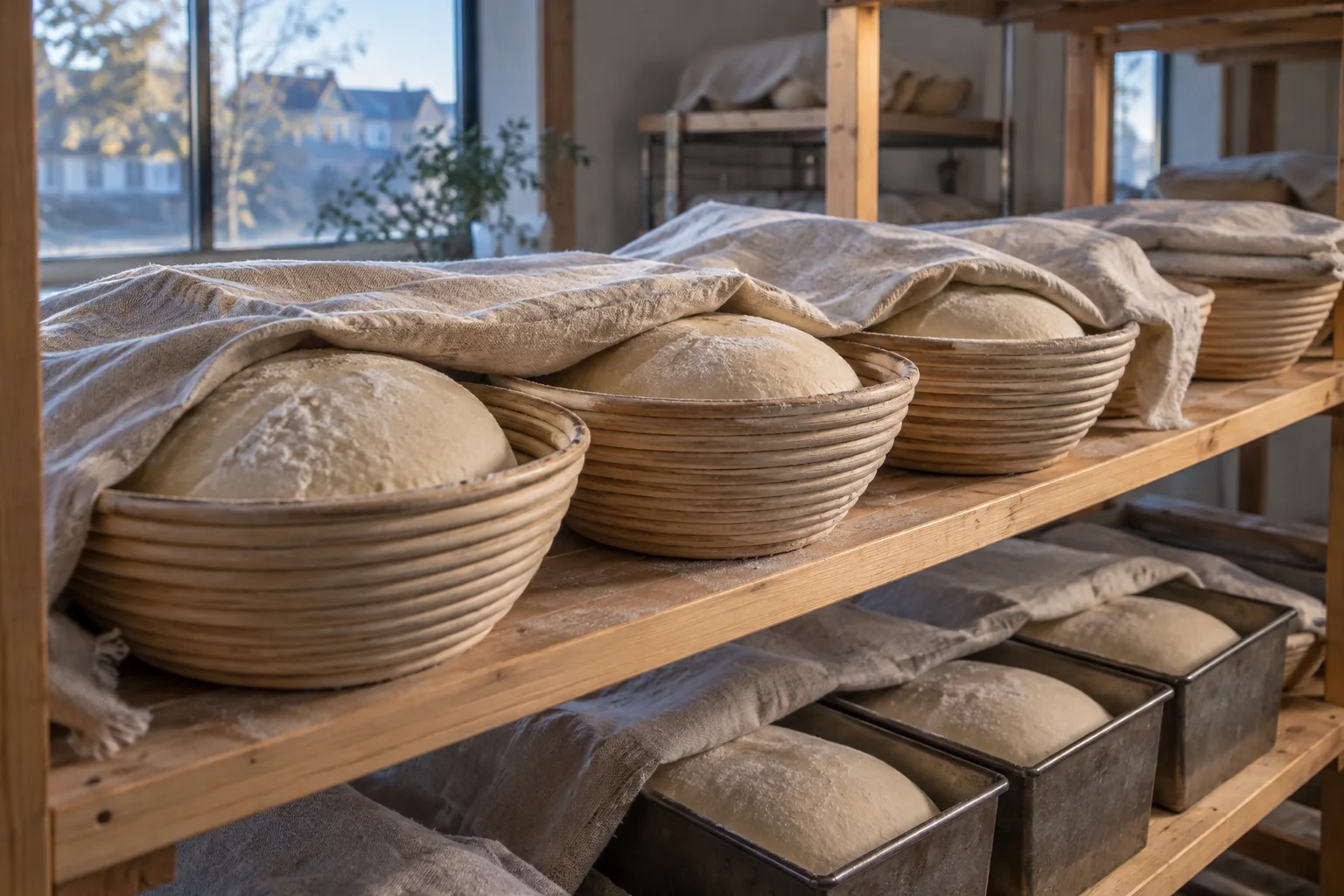
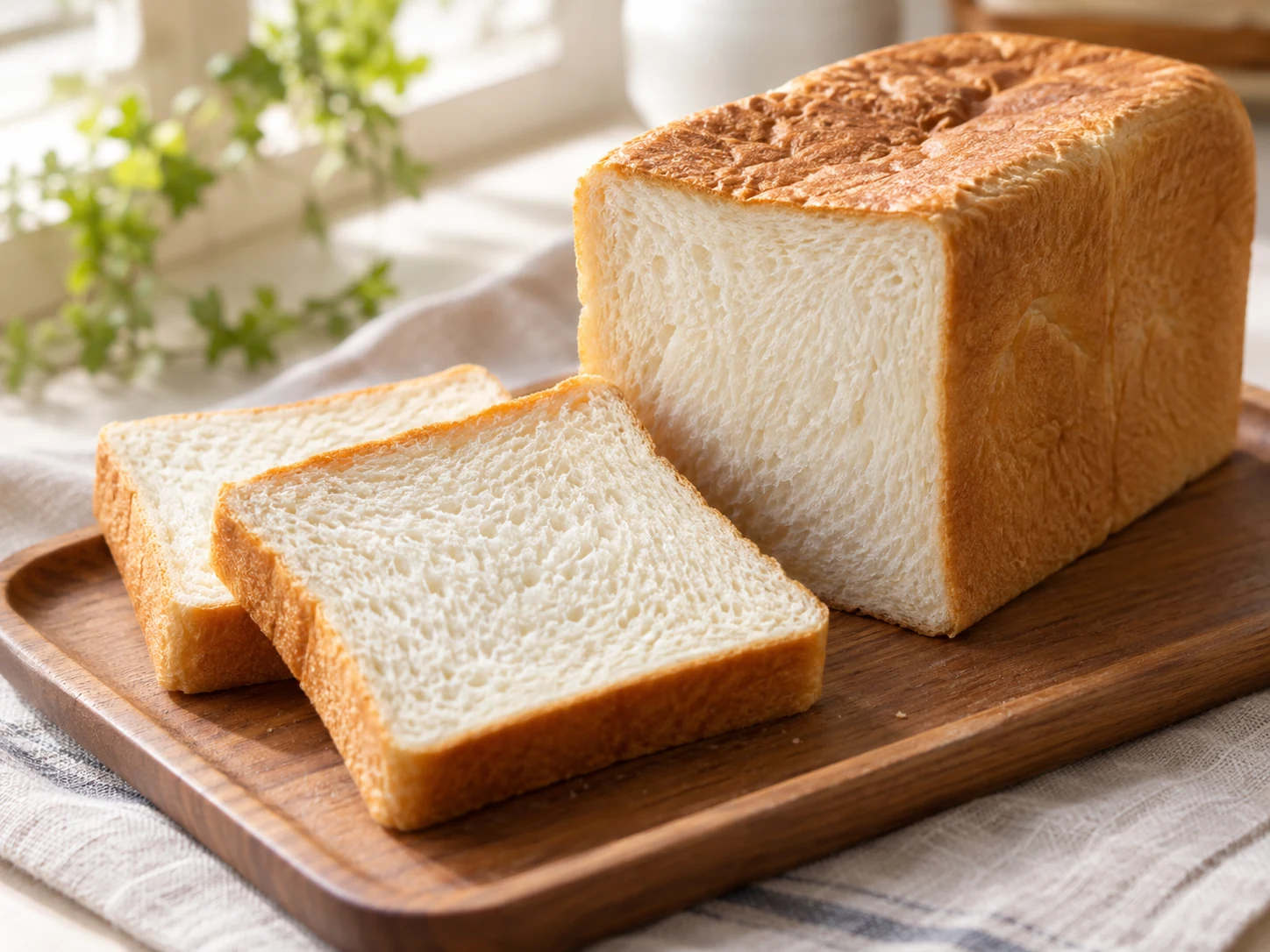
Our sandwich loaves use the yudane method: mixing some of the flour with boiling water to gelatinize its starch before adding it to the dough. This retains moisture, gives the crumb a soft, springy texture, and helps it keep longer. We mix our crusty breads the evening before and let them ferment overnight in the refrigerator. Every dough takes at least 14 hours from mixing to baking, and our sandwich loaves take 18 hours.
Baking — an oven in every shop
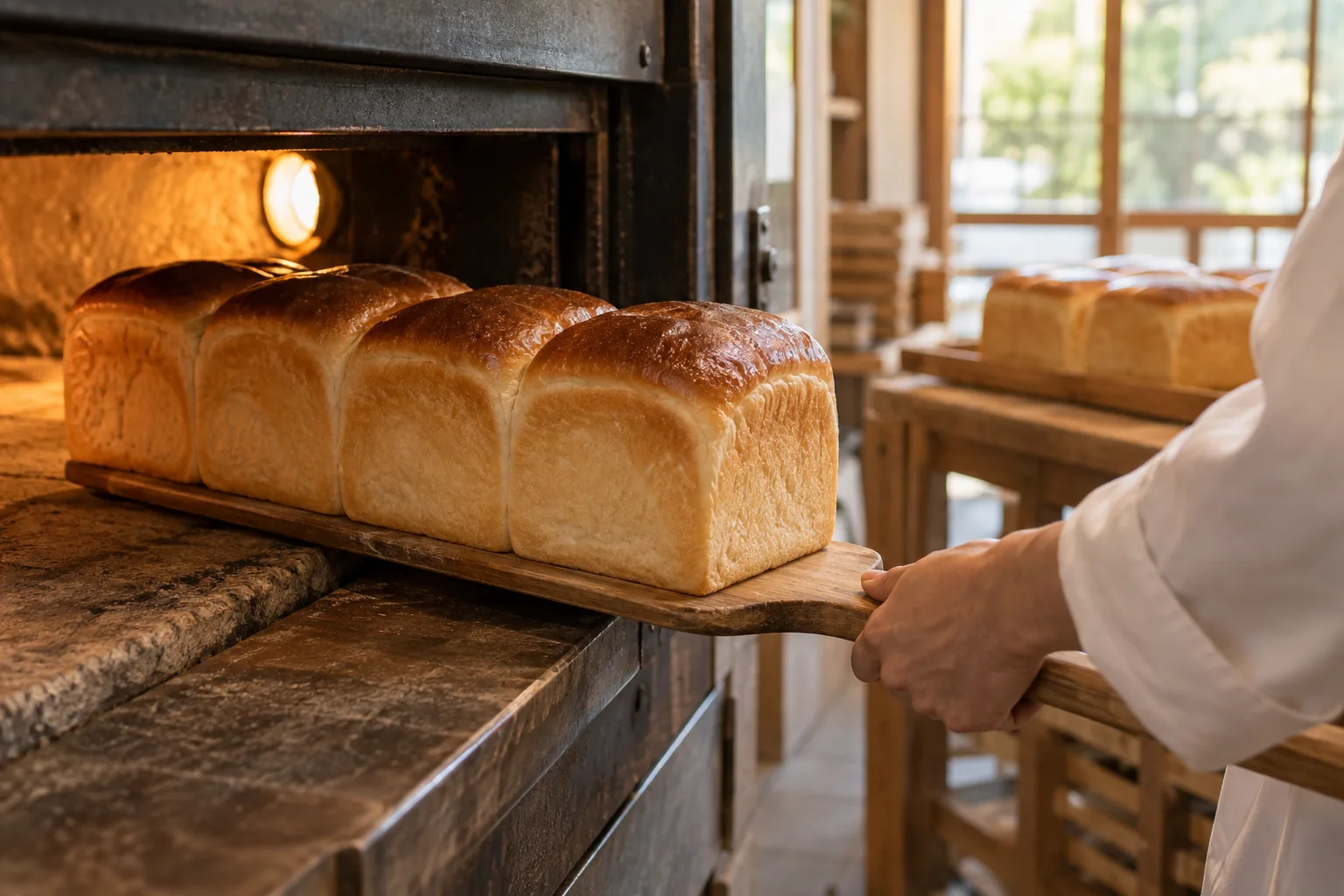
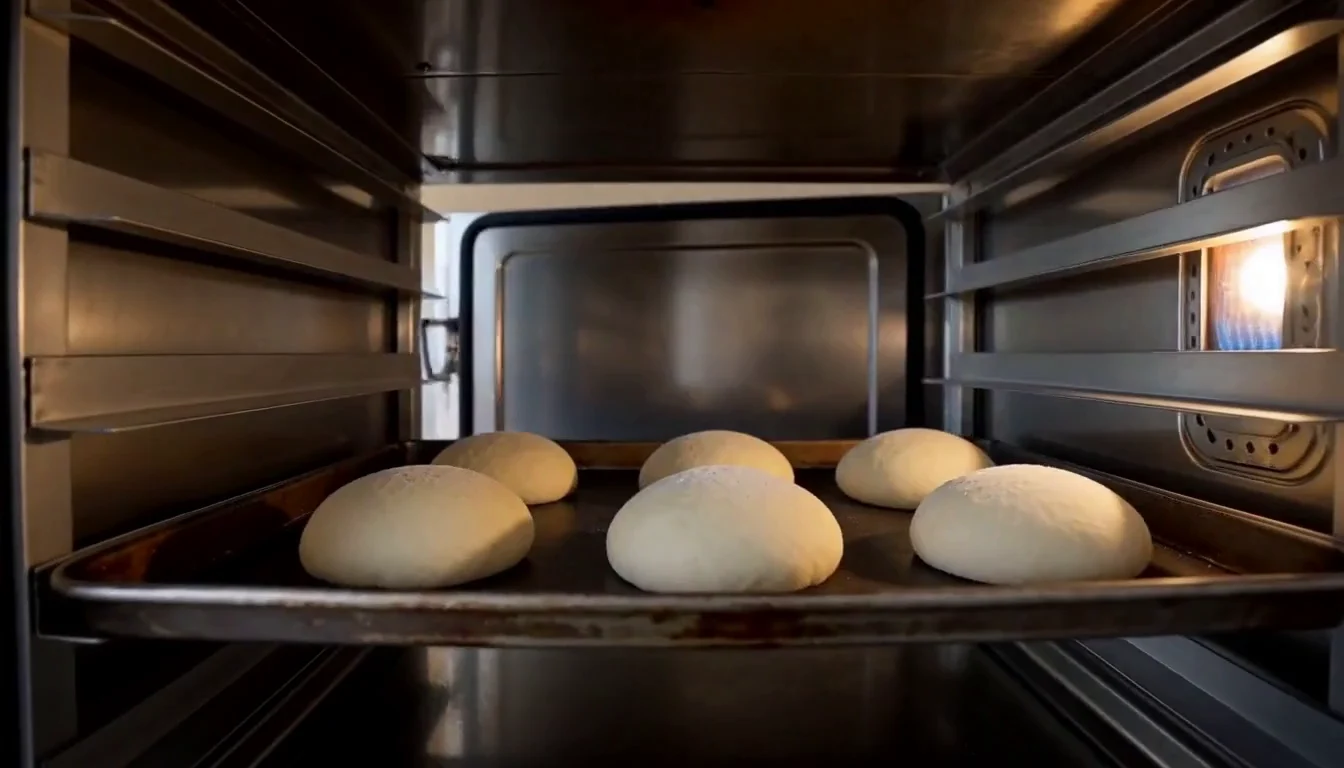
We do not buy in frozen dough. Each of our four shops has a stone-deck oven. Dough is mixed at our main bakery and delivered to the shops to be baked on site. We adjust the water by up to three percentage points and the final proof by up to 40 minutes according to the day's temperature and humidity. Even the same bread goes into the oven at different times as the seasons change.
Hygiene
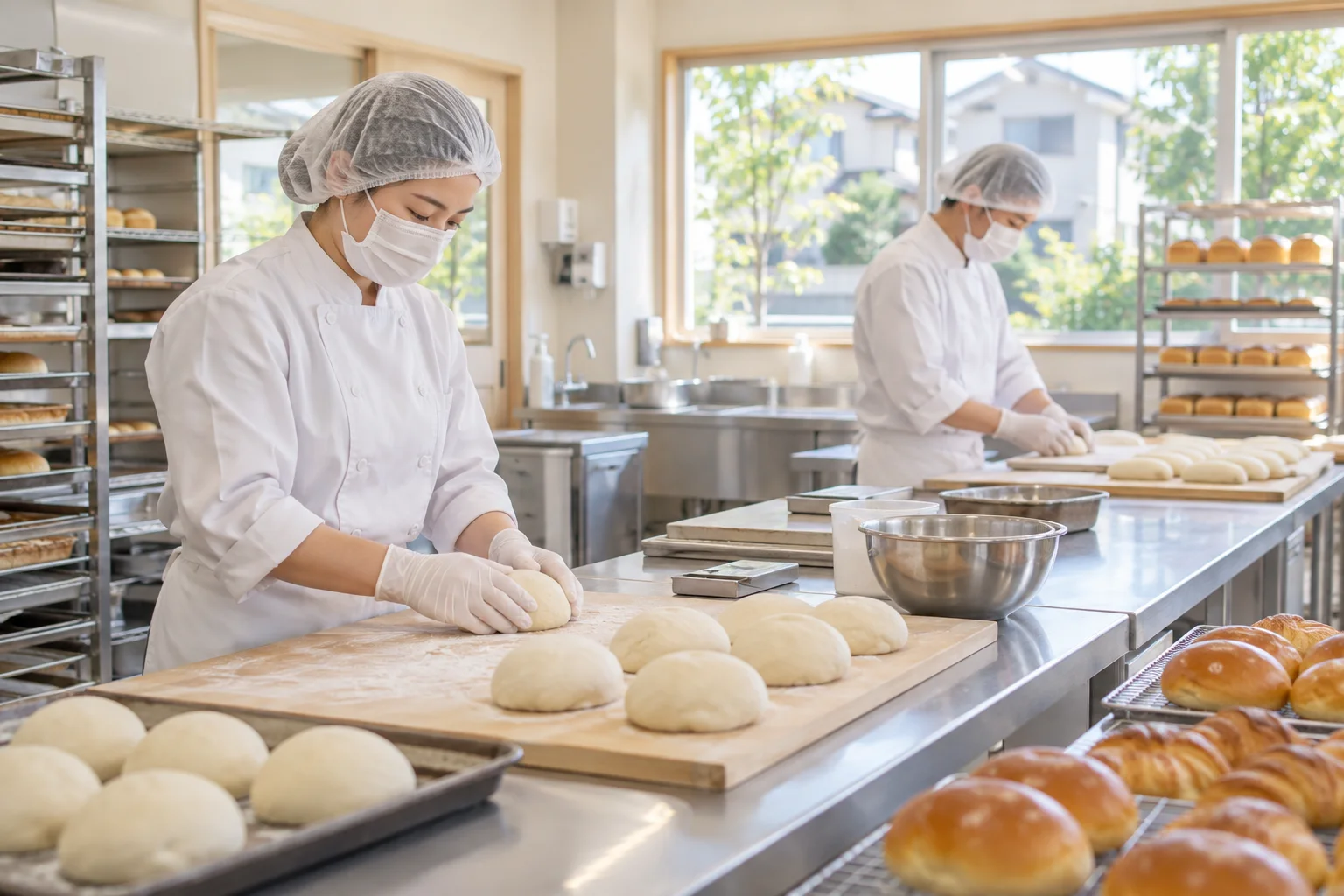
When we rebuilt our main bakery in 2019, we reorganized the workflow in one direction, from receiving ingredients to dispatch. We retain temperature and time records for every production batch for seven years. Doughs containing allergens are handled on dedicated lines with dedicated tools. When changing products, we stop the line, clean it, and record the cleaning.