
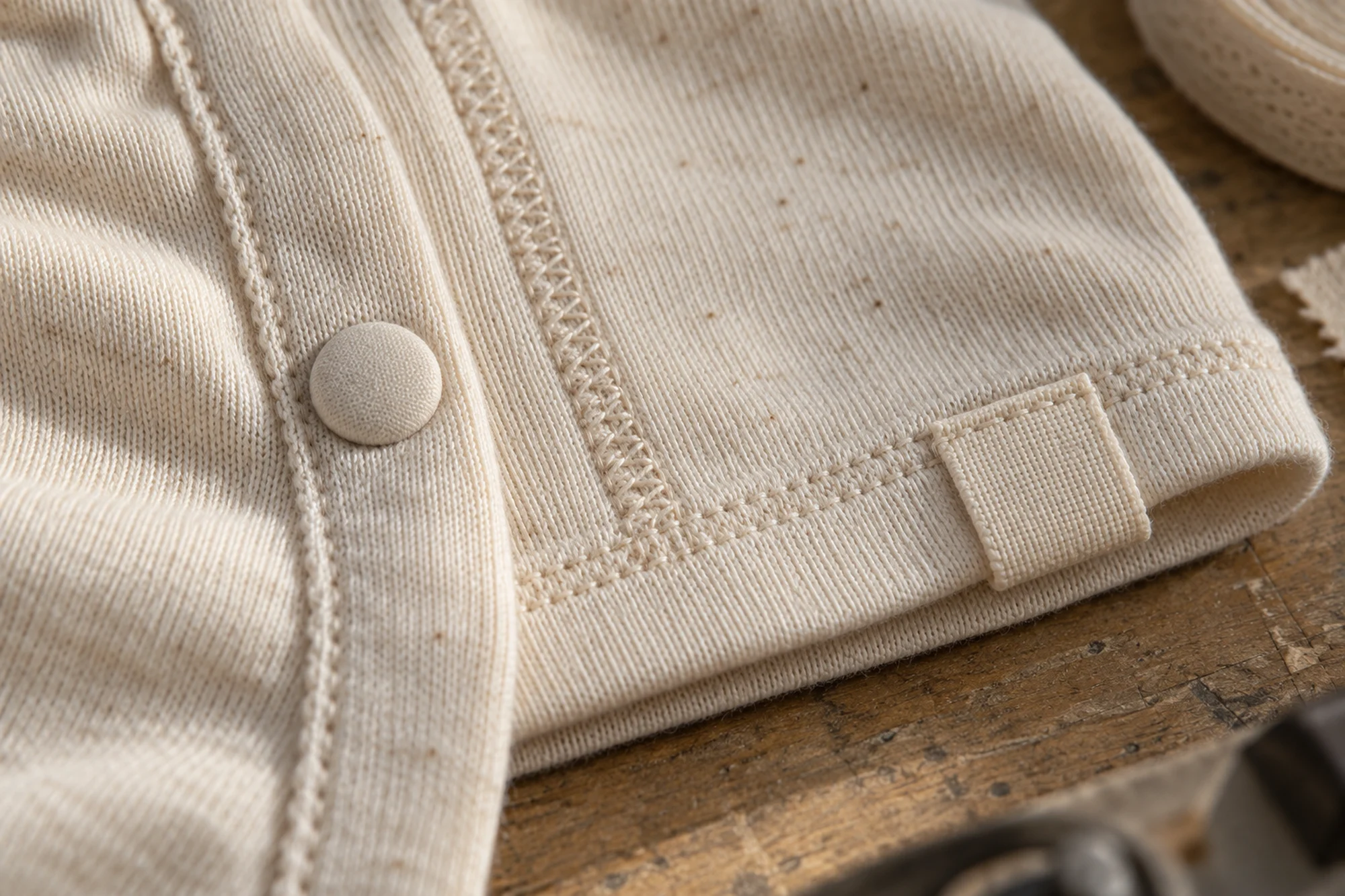
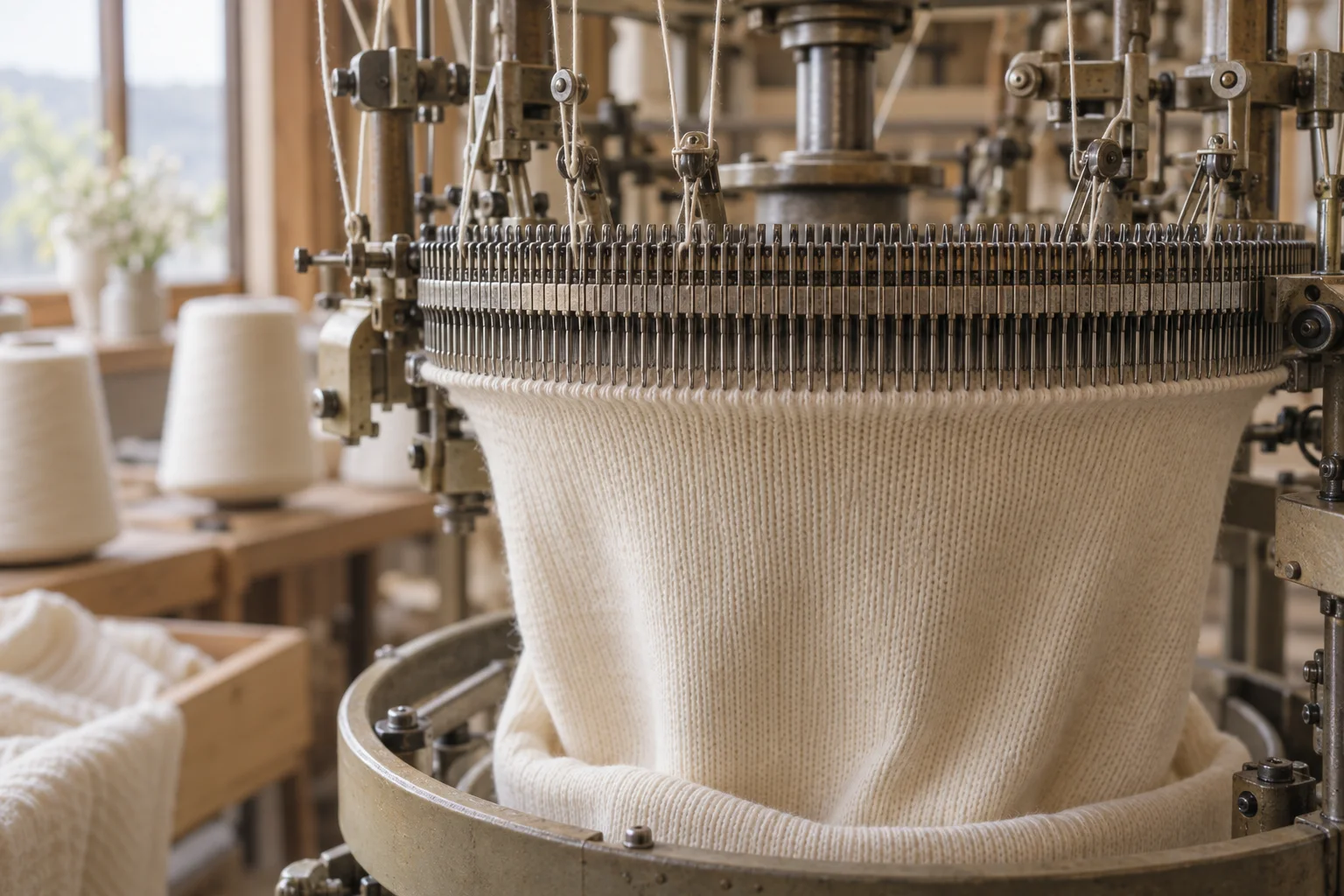
Our main material is cotton yarn organically grown on certified farms overseas, without chemical fertilizers or pesticides during cultivation, and harvested by hand. We add an extra scouring step to reduce stray cotton waste. With no bleaching or dyeing, the fabric retains cotton's natural cream color. The shade varies between batches because it has not been color-treated.
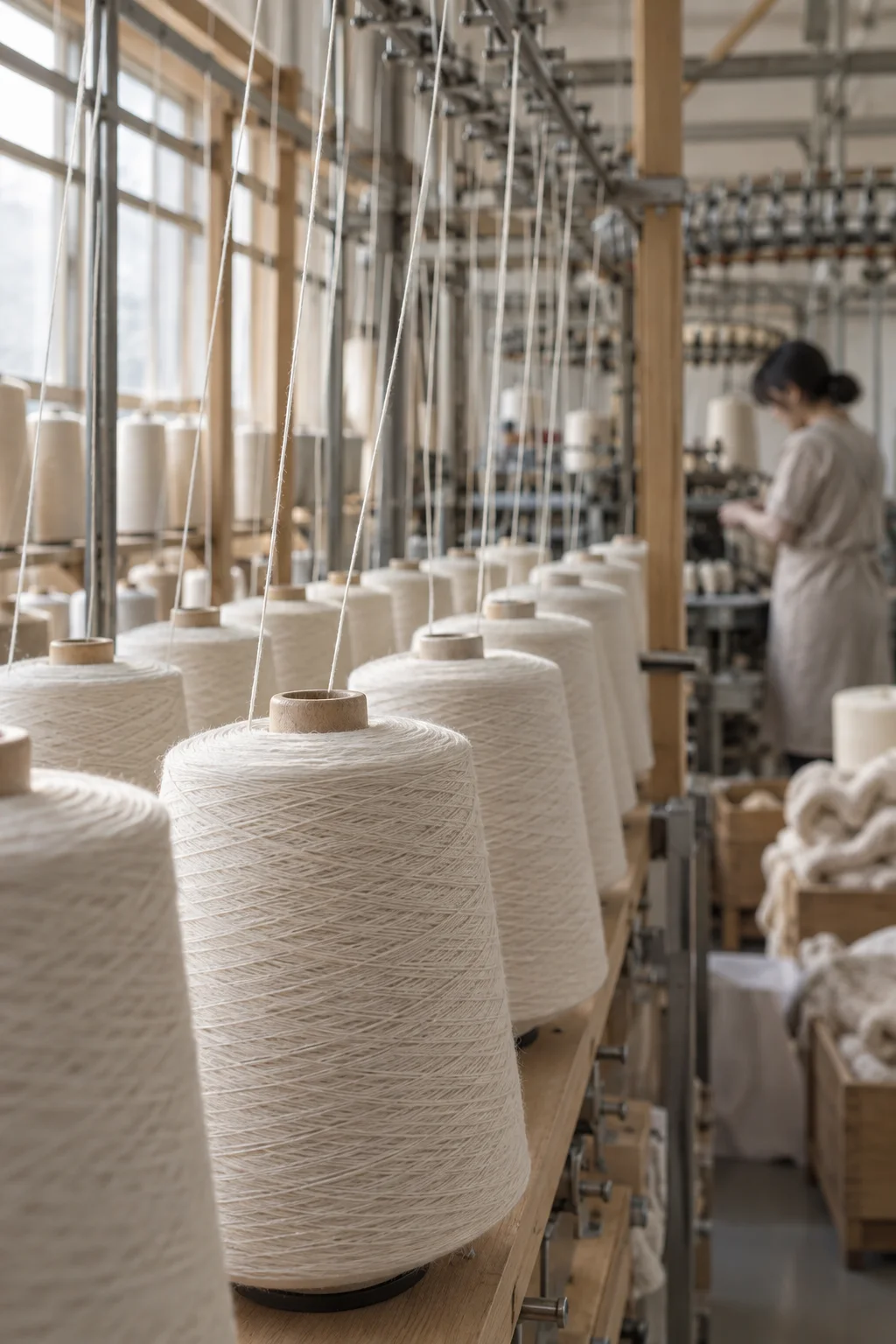
Our materials
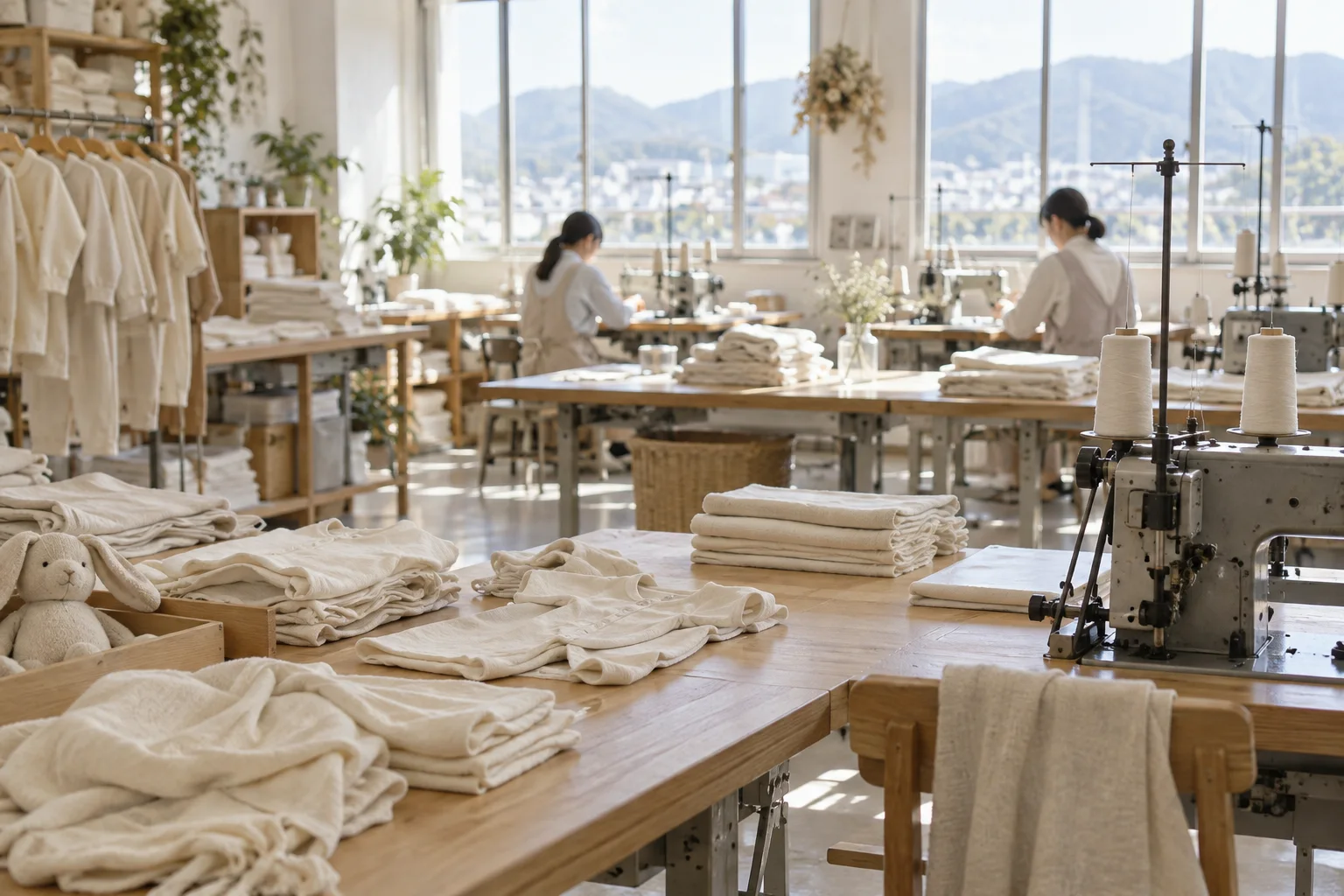
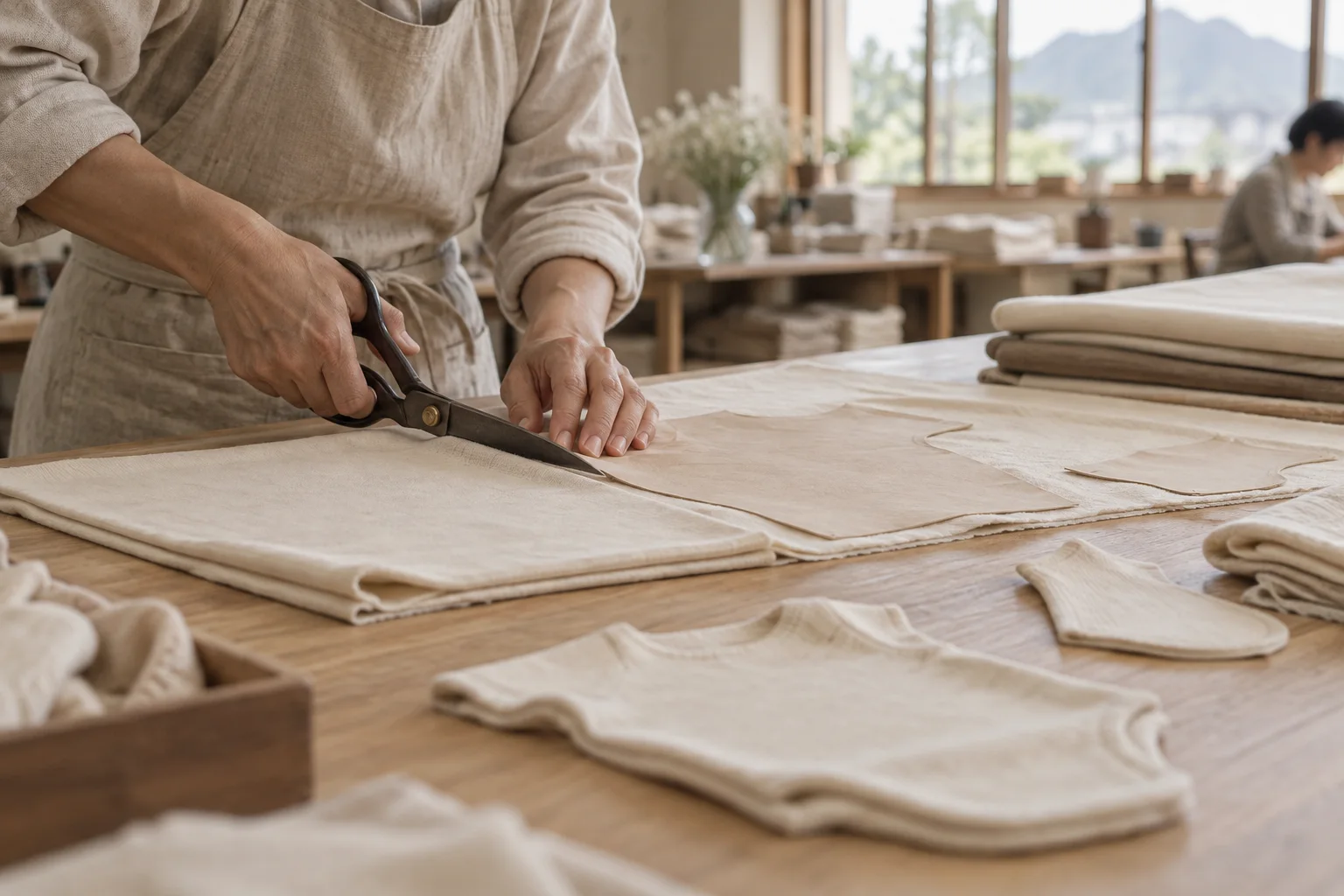
Made in one place
Receiving yarn, circular knitting, cutting, sewing, inspecting and packing all happen at our own factory in Wakayama City. Keeping these steps in-house lets us adjust quickly. A change of 5 g in fabric weight or 1 mm in seam thickness can be tried in a sample the next day. That is the value of being a brand with its own factory.
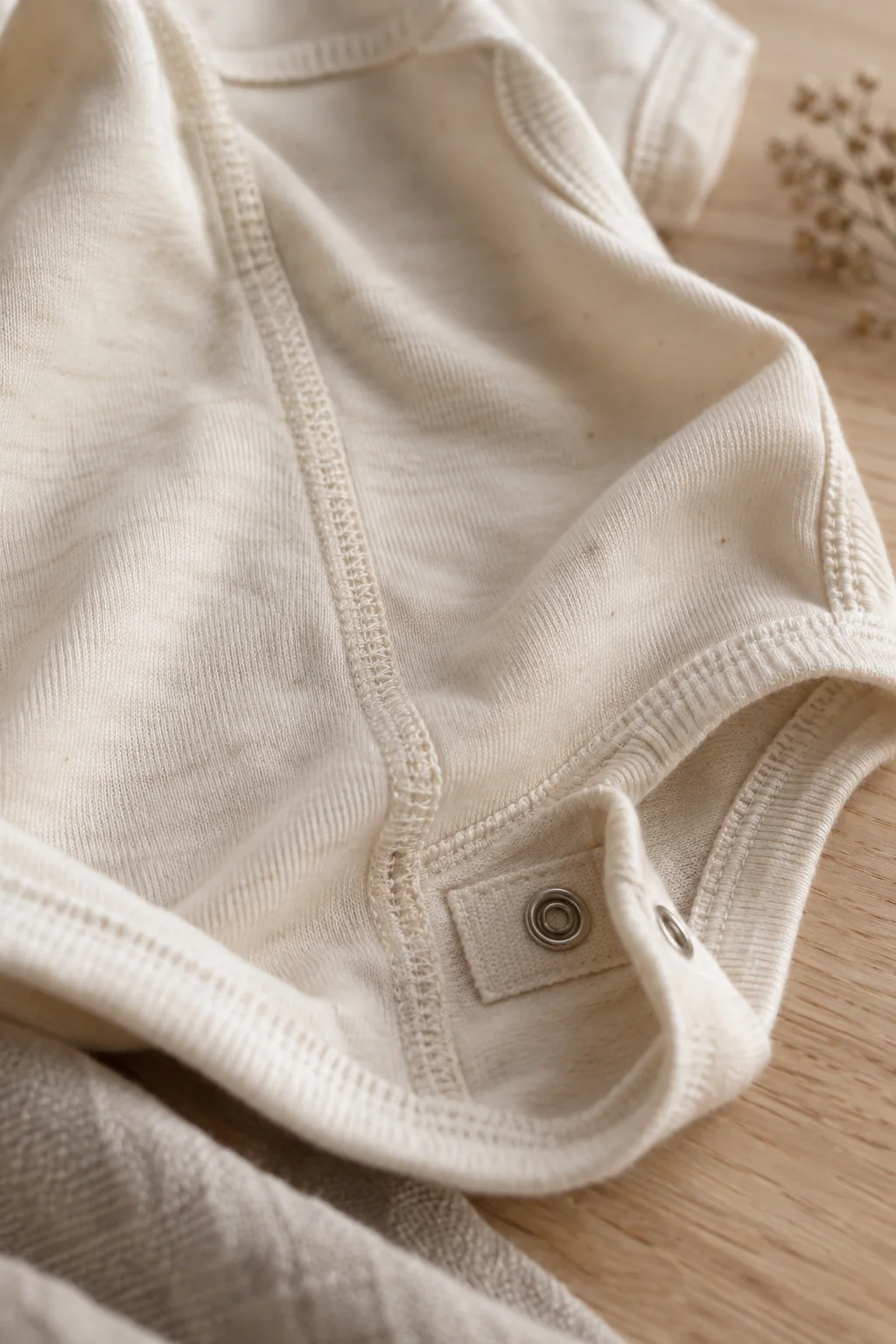
Designed for comfort
- Care labels sit outside the hem, away from the neck.
- Flatlock seams keep the inside surface smooth.
- Matching fabric backs each snap to prevent direct contact with metal.
- Cuffs and hems use the stretch of the knit instead of elastic.
- Ties are no longer than 7 cm to help prevent swallowing or entanglement.
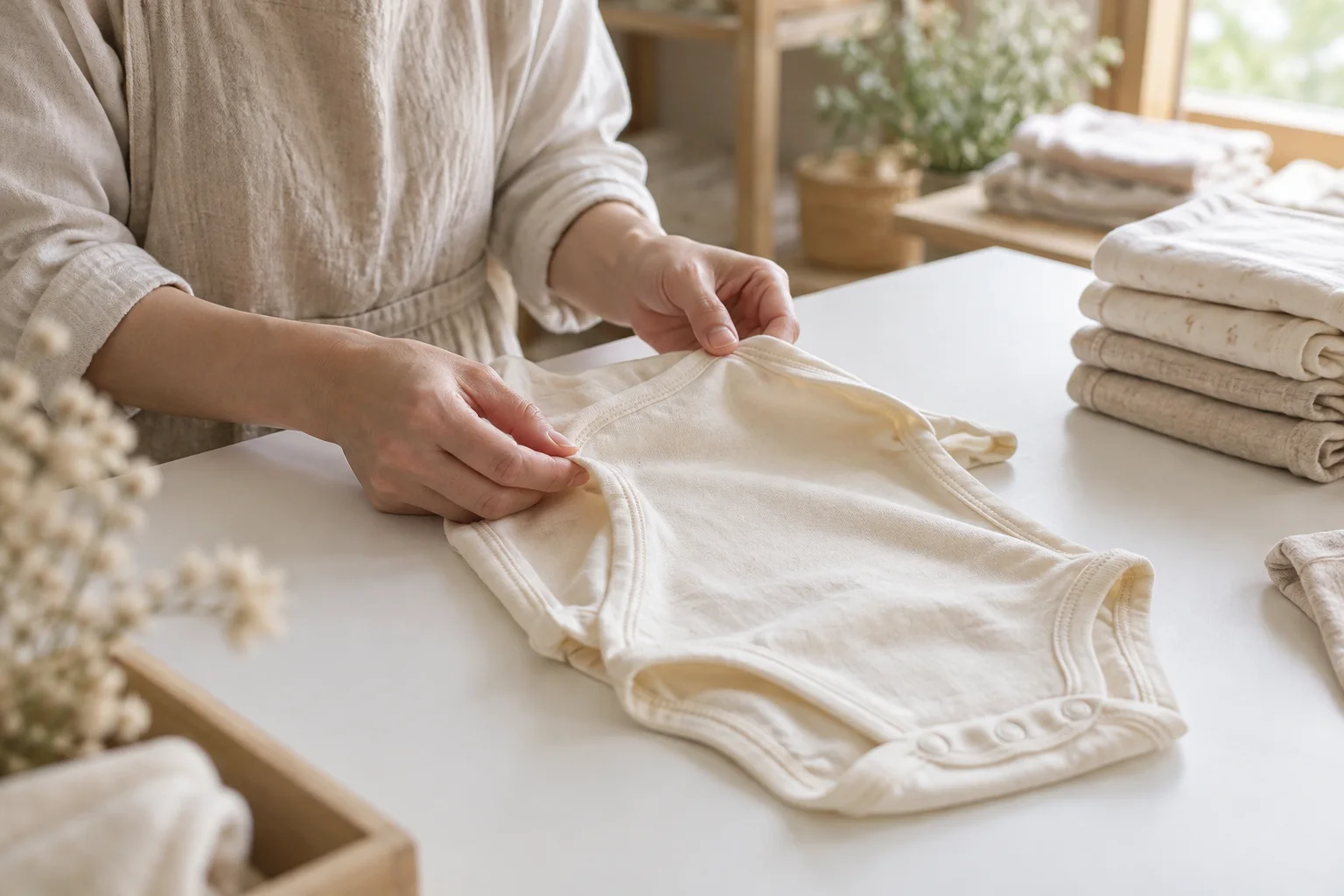
Checked by hand
Every item is inspected by eye and by hand. We check seam strength, snap pull resistance and the absence of needle fragments, then turn the garment inside out and run our fingers over the surface that touches the skin. This final step still cannot be replaced by a machine. Twice a year, an external laboratory also tests for formaldehyde under the infant-product standard of no detectable formaldehyde.
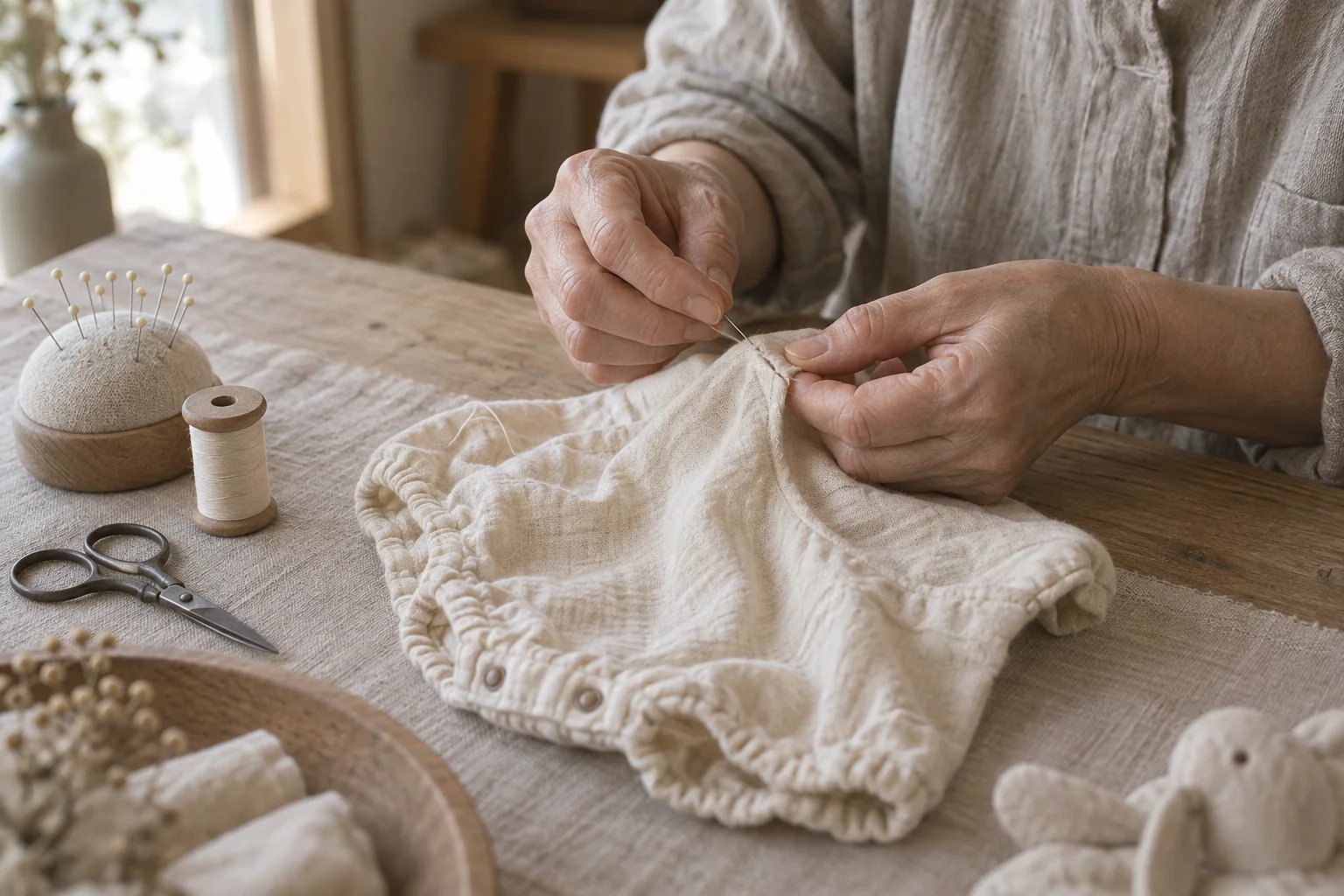
Repairs
We repair loose seams and detached snaps free of charge for one year after purchase. Clothes wear as they are worn, and we see that as a sign they have been chosen and used. Items returned to the factory are repaired by the person who sewed them. After the first year, repairs are available at cost, from ¥1,000.