Web Services / Peer-to-peer resale marketplace
Furimanbo
Measure the box.
Know the shipping cost.
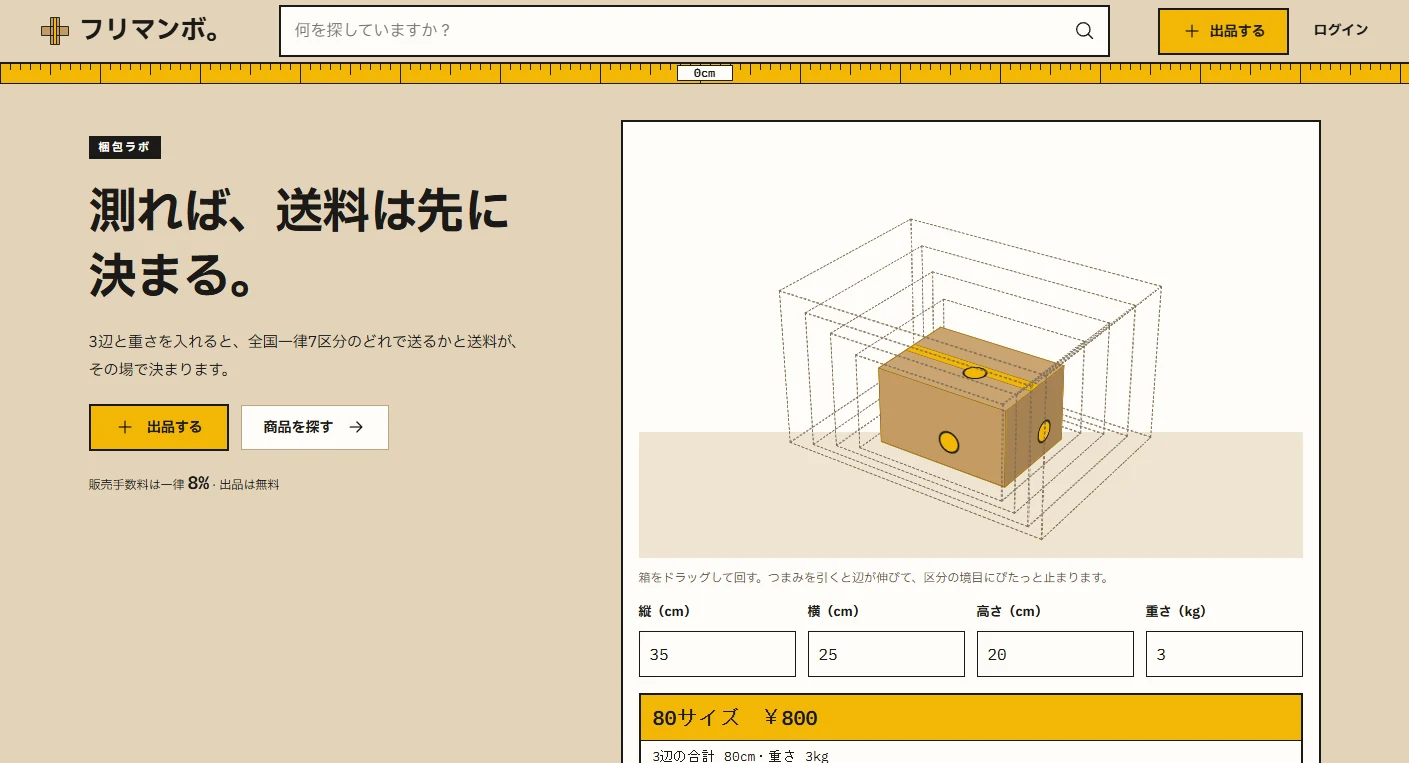
A peer-to-peer resale marketplace for a fictional operator. A rotatable cardboard box on the homepage calculates one of seven nationwide flat-rate shipping tiers from the packed item's three dimensions and weight. Measuring the box starts a continuous flow through listing, purchase, transaction completion and operator support.
View the live projectThis work is an original adaptation of a commissioned project. Payments, shipping and transfers are simulated; no real transactions take place.
No shipping surprises
after the sale.
The starting point was a common frustration: discovering after listing that shipping costs more than expected. Because rates depend on box size and weight, sellers are prompted to measure the box before setting a price.
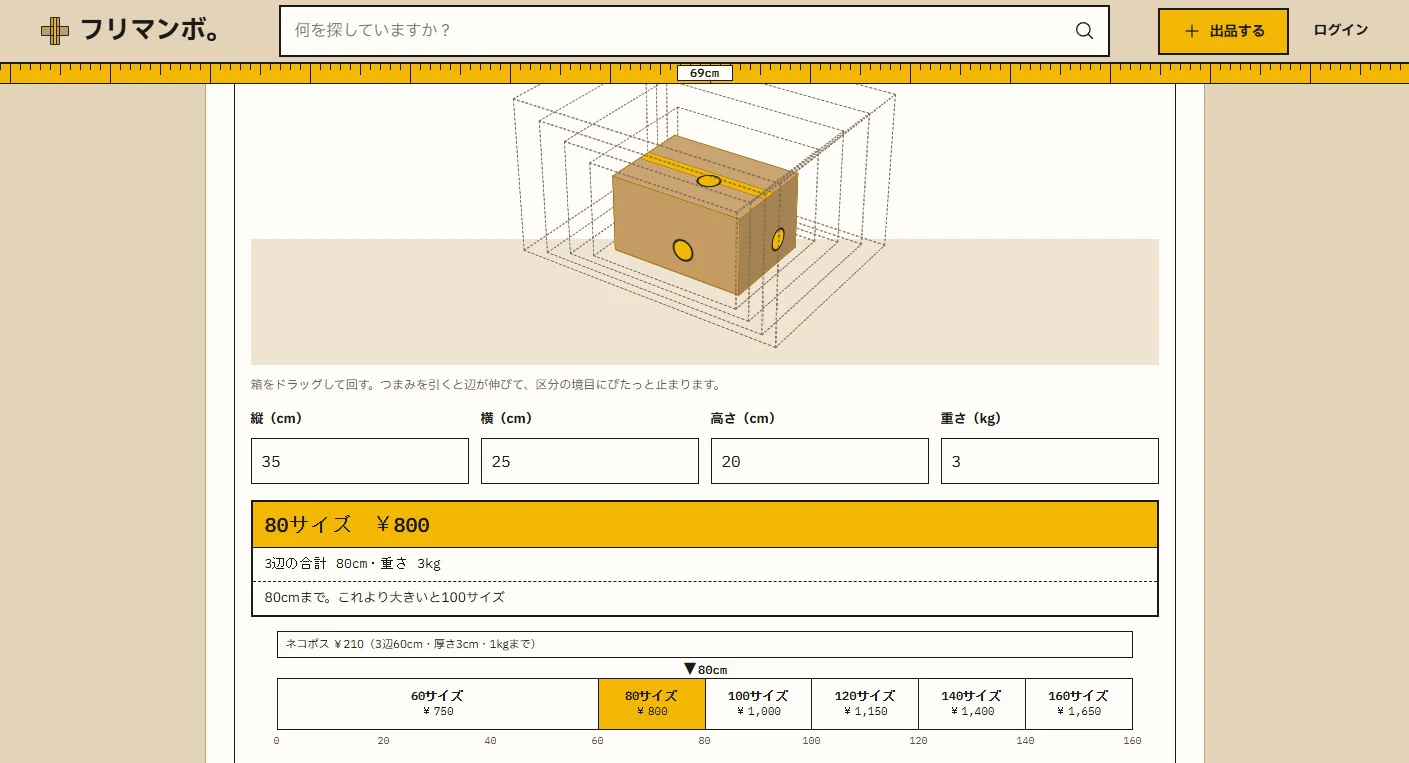
There are seven tiers, from Nekopos, a compact parcel delivery service in Japan, to size 160. The shipping label shows the current tier and the remaining margin before the next one, updating with each entry so sellers can see how many more centimeters will fit within their current rate.
White space, red bands
and blue markers.
White backgrounds and light gray borders keep color focused on red listing and purchase buttons, red label bands and blue selection markers. This familiar marketplace palette leaves the illustrated cardboard box in its natural brown. Sans-serif headings and monospaced dimensions and prices give the layout the clarity of shipping labels and measurement charts.
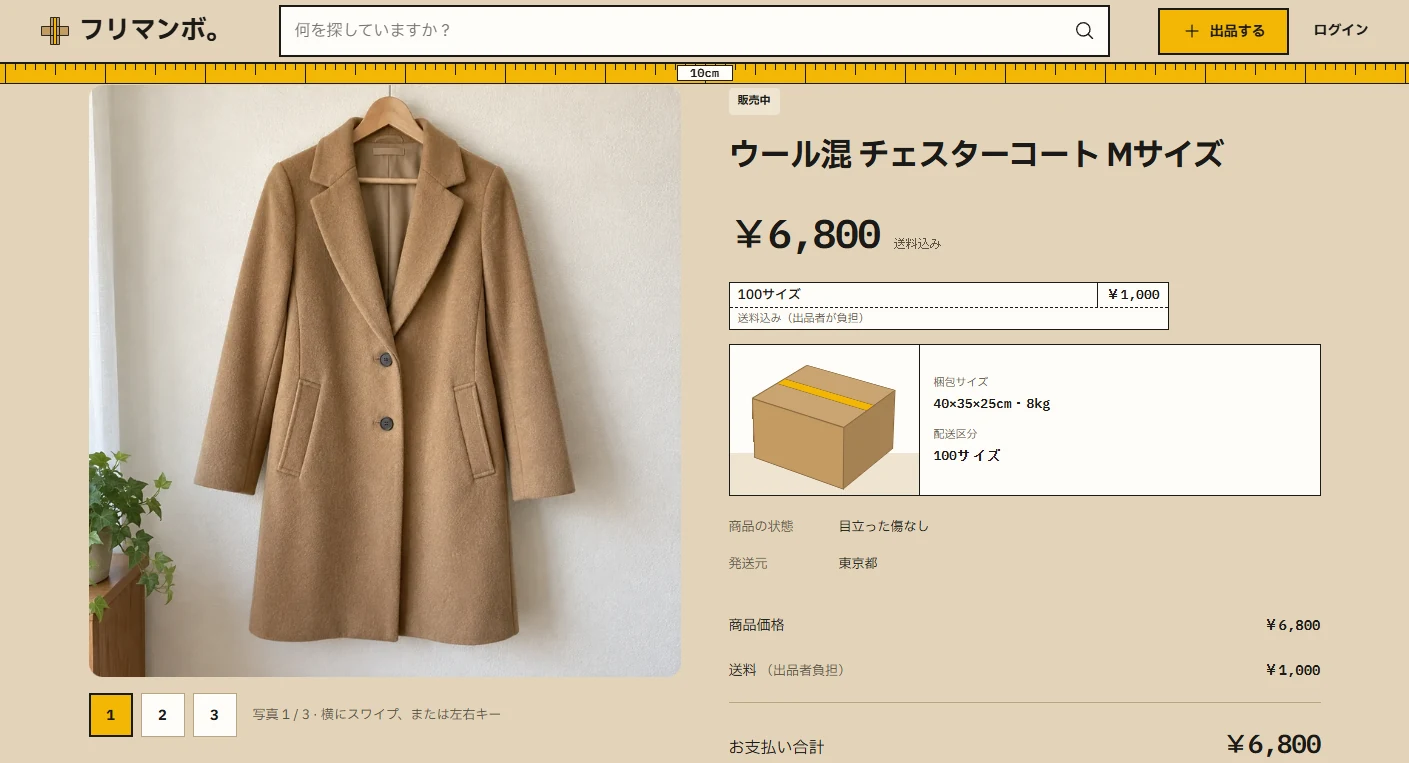
A measuring tape marked in centimeters runs along the header's lower edge. Its scale moves as the page scrolls, with a central tag showing positions such as 42cm. Product pages place the price and shipping label beside the photo, with a small box diagram showing packed dimensions.
Rotate the box.
Resize it to fit a tier.
The packing simulator uses CSS 3D transforms and pointer controls, without three.js. Dragging rotates the box; pulling edge handles updates its shape and length, width and height fields together. Edges snap at tier boundaries, and the label explains limits such as a combined 80cm, beyond which size 100 applies.
Listing has three steps: measure the box, add photos, then set the price and description. A homepage diagram follows payment from purchase to the operator's holding stage, shipment, receipt and buyer feedback, then release to the seller. Money and parcels travel along separate lines. Switch between buyer, seller and operator to try purchasing, confirming receipt and handling reports. Payments, shipping and transfers are simulated; no goods or money move.
The same rotating box
on a smaller screen.
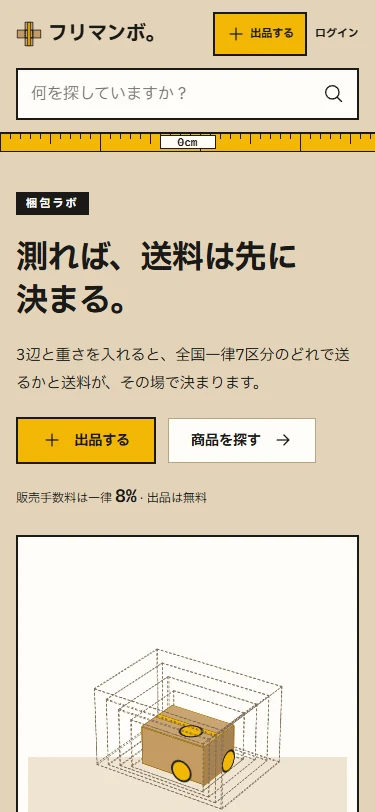
On mobile, search moves below the logo and listing button. The heading and buttons sit below the measuring tape, followed by the rotating box. Horizontal swipes rotate the box while vertical swipes scroll the page, avoiding interruptions to scrolling.
Project details
- Version
- 0.1.0
- Project type
- Fictional service
- Scope of work
- Planning, architecture, visual design & development
- Technologies
- TypeScript / React / Next.js
Node.js / SQLite - Supported screen sizes
- Desktop, tablet & mobile